Our Vet Visit imaginary play was such a hit that we added a new component this week:
A prescription form--in Mandarin, of course!
Click here to download the character version Click here to download the pinyin version
How can you use this form?
1. Have your child, the "doctor," fill it out:
- Fill in the name of the medicine (药的名字,yào de míngzì),
- Circle when the medicine should be taken: morning (早上, zǎoshang) or evening (晚上, wǎnshàng)
- Note the number of times the medicine should be taken (几次, jǐ cì)
- Sign their "doctor" name (医生名字,yīshēng míngzì)
- Write in the date (日期,rìqí)
2. Learn to write some of the characters on the form:
- We talked about the character 医 (yī, medicine), how it is an "arrow" (失,shǐ) inside a "container" (匸,xǐ) because a regular task of early doctors in China was pulling arrows out of wounded soldiers' chests (read about it here).
3. Act the part of the "doctor's assistant"
It's your job to fill out the form, but to do so, you need to ask the "doctor" for the information on the form. This is a great chance for your child to practice their Mandarin listening and speaking skills. Ask:
What is the name of the medicine? Yào de míngzì shì shénme? 药的名字是什么?
Doctor, what is your name? Yīshēng nǐ jiào shénme míngzì? 医生,你叫什么名字?
When will she take her medicine? Tā shénme shíhòu chī yào? 他什么时候吃药?
What is today's date? Jīntiān shì jǐ yuè jǐ hào? 今天是几月几号?
These are just ideas to get you started. It's imaginary play, so let your imagination go play!
How do you use imaginary play to practice Mandarin in your home?

Research has shown that imaginary play helps young children's language development, cognitive processes, and creativity, amongst many other things. (Here's a 2012 article from Psychology Today about all of its important benefits.)
But how about about foreign language learning? Can imaginary play help kids (of all ages) learn Mandarin? I think so.
Over and over, I've seen how kids who are initially reluctant to practice their new Mandarin phrases suddenly begin talking when a puppet or stuffed animal is placed in their hands. Something magical happens!They become so focused on the play acting, that they lose their fear of trying to say something new.
I decided to build on this phenomena--as well as my 9yo and her BFF's love of imaginary play to help them practice our recent vocab and phrases about visiting a doctor:
But instead of acting out a doctor's appointment (like we had in our previous lesson), we thought it would be more fun for them to act out taking their stuffed animals to the vet.

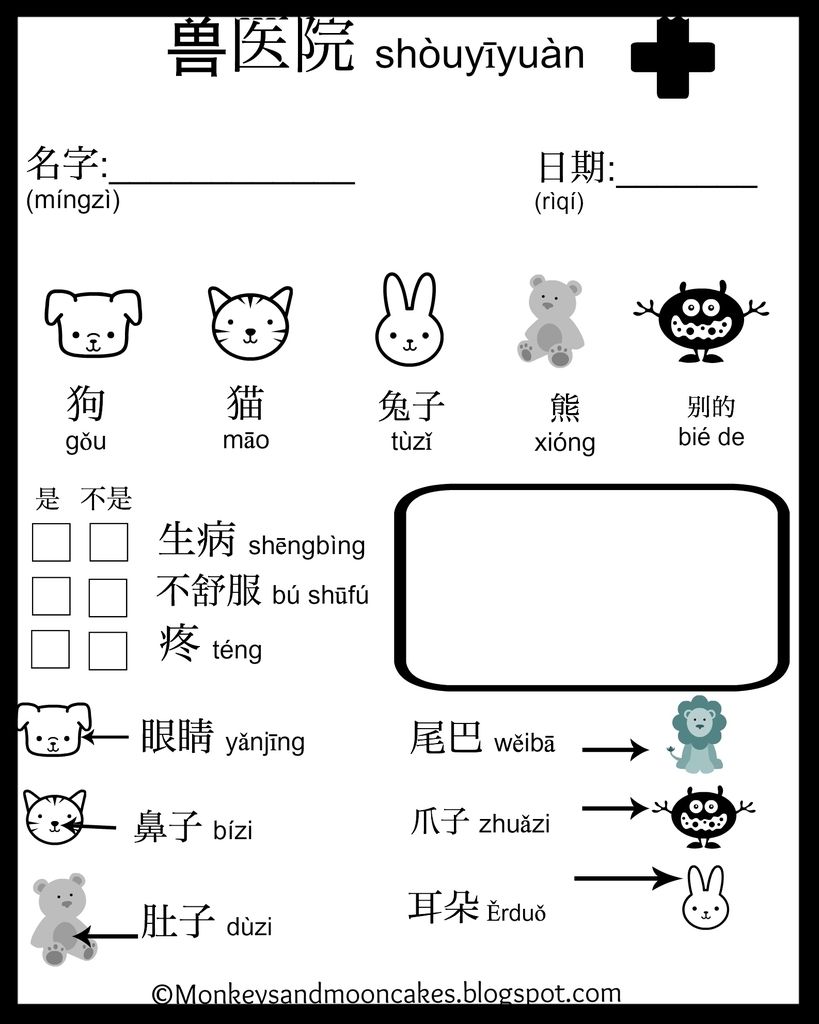
Inspired by some of the imaginary play printables I saw on Pinterest, I made a Mandarin version of a health form from a veterinary hospital (shòuyīyuàn, 兽医院). The girls took turns playing the part of the vet and pet owner. The vet asked the pet owner questions in Mandarin, filling in the form as she went, and the pet owner responded in Mandarin about her pet bear, wolf, turtle, etc...
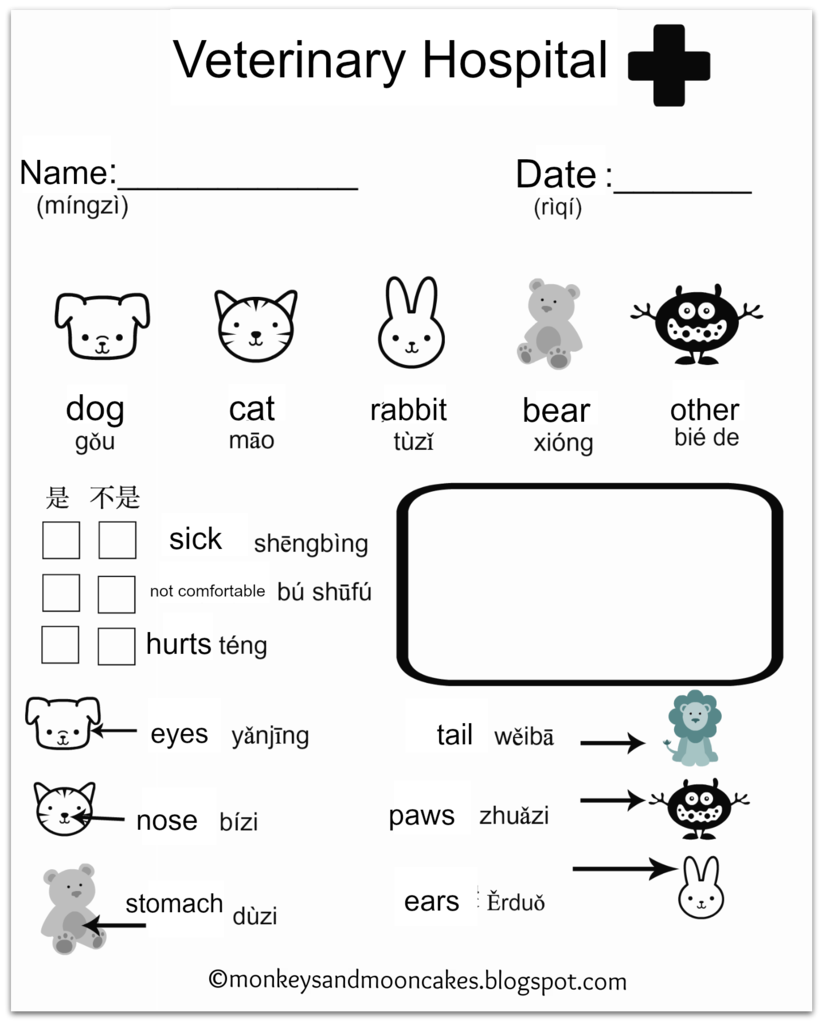
Here's the health form I designed (on Picmonkey) for their Mandarin vet visit (Click here to download for free). It's black and white printer-friendly (except for the green lion--sorry! Picmonkey was acting up), and there's a small box in the middle for the "doctor" to make notes or drawings based on his or her diagnosis.
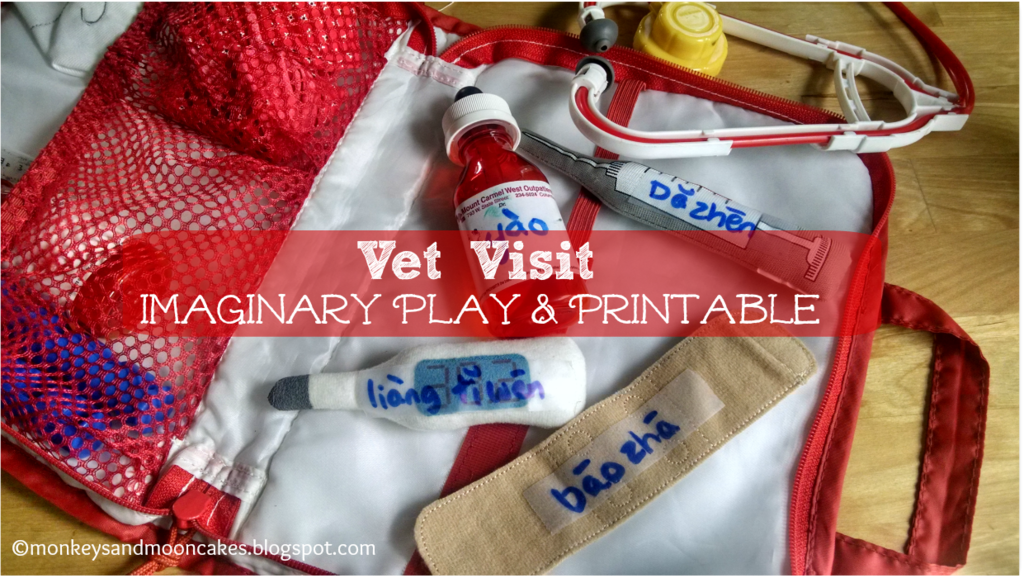
Their poor animals, of course, needed treatment, so I labeled a small veterinary medicine kit we picked up at IKEA years ago with pinyin translation (see above image).
....And the play-acting was a hit! I think we will do this again next week--the more they practice, the more confident they become in their Mandarin speaking ability. This is one of my goals as a home-teacher!
How do you incorporate imaginary play in your Mandarin lessons?
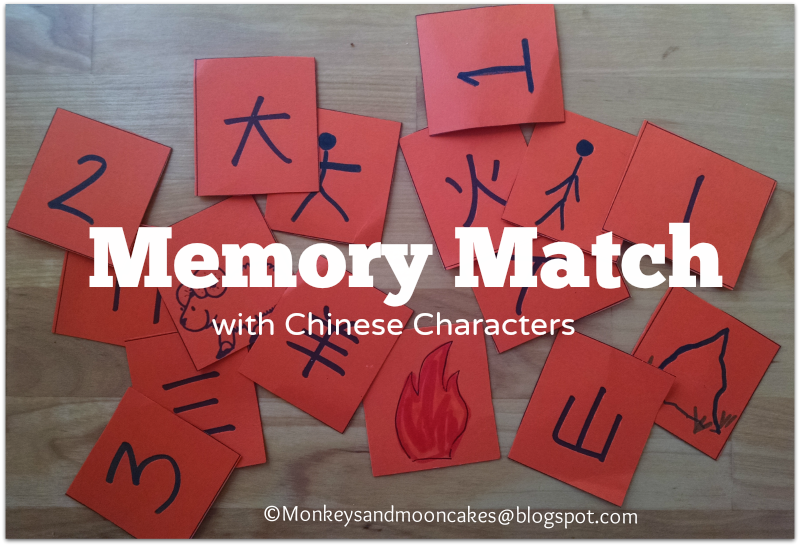
I am always on the lookout for fun and simple ways to review the Chinese characters we learn each week. After a few months, the number of characters start to add up and without the review, they quickly become forgotten.
Here is one easy-peasy-lemon-squeezy (as my kids would say) way to review Chinese characters.
How to play:
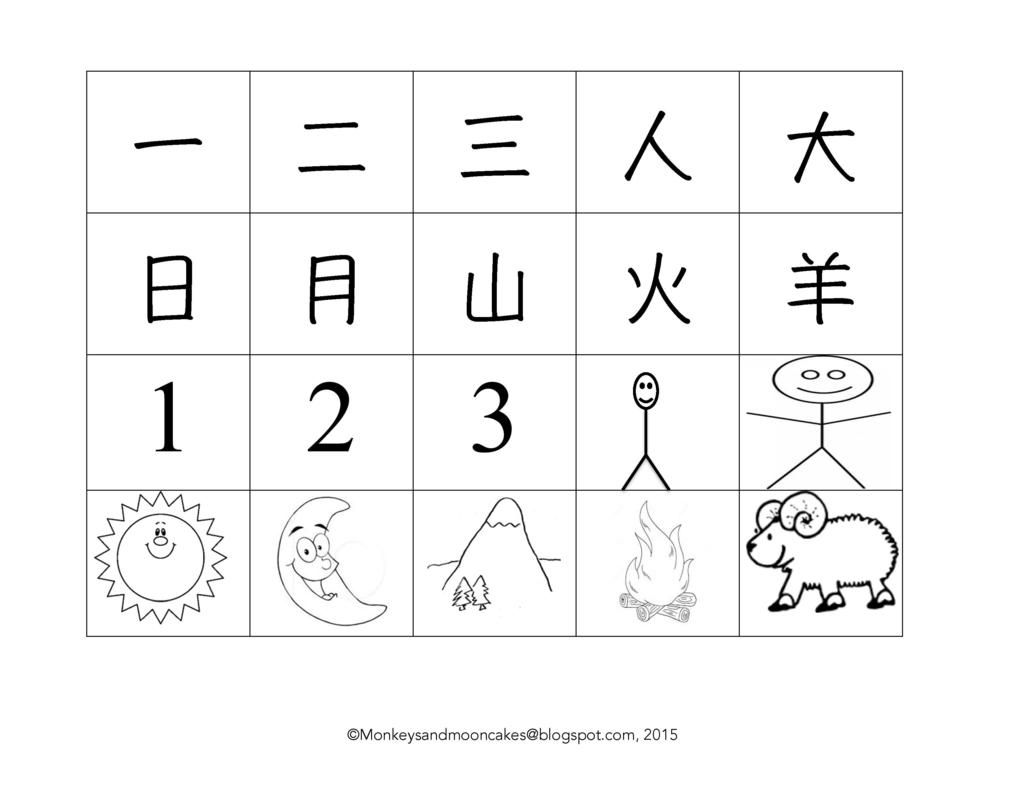
- Type up and print out the Chinese characters you have been learning. Use font that is large (I used 60 pt) and easy to ready (I used Hannotate SC because it looks like the characters are handwritten).
- Draw their picture match, or if you are artistically-challenged (like me=) print out clip art.
- Gluestick characters and pictures on to cardstock squares or love the earth and re-use cards from an old memory match game.
OR
- Forget steps 1-3 and print out this set:
Helpful hints:
- If you want to review Chinese characters that are not simple pictographs, match Chinese characters with their English translations.
- Start small. (My K-2 kids match 10 characters-20 cards total, at the end of each 6-week class.) Once they master a few, add to it. It will be a great way to reinforce their character recognition.
Why this works:
- My kids (and probably yours too) have been playing this game since they were little tykes. They know the rules and are able to easily adapt to playing with Chinese characters.
- It's flexible: Play as a group or individually. Play with 10 cards or 100. Change the characters on the cards as your kids' character memory bank grows.
How do you review Chinese characters in your home?