Image Map

Wednesday, April 8, 2015

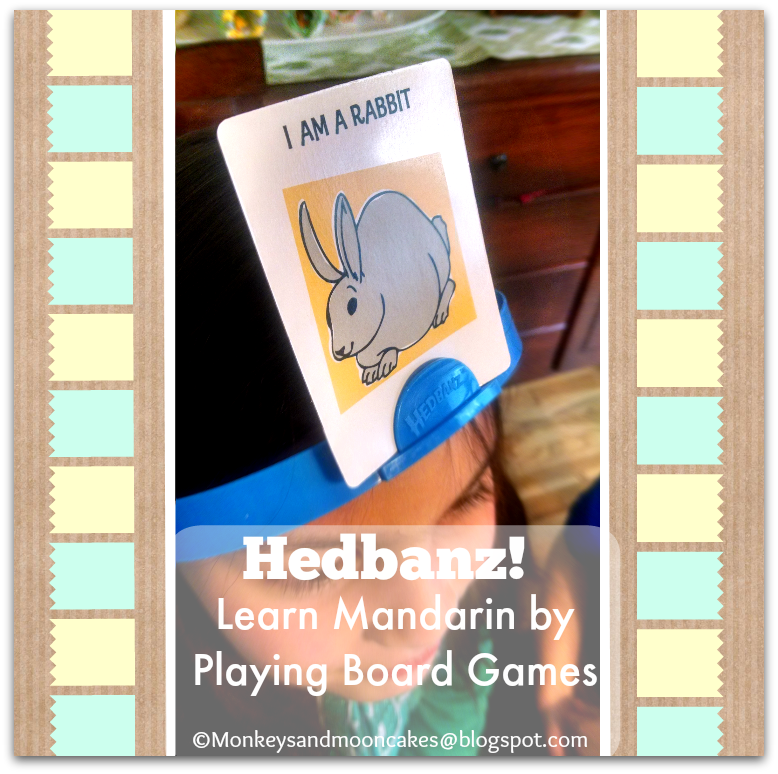
HedBanz! Learn Mandarin by Playing Board Games


A few weeks ago, we discovered that the game HedBanz (by Spin Master Games) is a great way to practice asking questions in Mandarin. 

We had been studying question patterns like these:

你是不是 green olive?            Nǐ shìbùshì green olive? 
                                               Are you or are you not a green olive?

你喜不喜欢吃 green olives?   Nǐ xǐbùxǐhuān chī green olives? 
                                               Do you like or not like to eat green olives?

你有没有 green olives?          Nǐ yǒuméiyǒu green olives?  
                                               Do you have or not have green olives?


Click here to read more about how to ask affirmative-negative questions in Mandarin.

So what does this have to do with playing Hedbanz? 

This is how we played:

The kids asked questions about the card on their headband, as if they were playing the game by the original rules. But instead of asking questions in English, they practiced their new, fancy affirmative-negative questions patterns, and asked questions like this: 
  • 我是不是 mammal?    Wǒ shìbùshì mammal?     Am I or am I not a mammal?
  • 我喜不喜欢跑步?      Wǒ xǐbùxǐhuān pǎobù?   Do I like or not like running?
  • 我有没有尾巴?          Wǒ yǒuméiyǒu wěibā?    Do I have or not have a tail?
They swapped in English words for any they did not know how to say in Mandarin, which was absolutely fine with me because the point of the game was to get them comfortable with asking these types of questions. 


Our one round lasted a good 15 minutes, which was slower than if we had played the game in English. It took time for them to think about how to say what they wanted to say in Mandarin, but they did not lose interest in the game. In fact, when I suggested stopping, they pleaded, "Just one more question!" 

We will definitely revisit this game when we need to review this question pattern or whenever we need a fun warm-up/change of pace. 


What games to you play to practice your mad Mandarin skills? 
post signature

Friday, March 20, 2015

7 Great Resources for Learning Chinese Visually


This past year, I've stumbled upon all sorts of resources--videos, apps, websites, and books--that teach Chinese characters through colorful graphic art and design. 

It's a beautiful thing--this coming together of educators and graphic artists to create these new resources.

I have found their ideas to be so effective in my home. My kids love having a visual image to link to the characters they are learning.

Here's a quick review of 7 Great Resources that teach Chinese characters visually:
  

1. Chineasy

What it is: 
  • This website is dedicated to teaching people about the Chineasy method, which was developed by Shao Lan as a way to teach people to read Chinese easily by recognising characters through simple illustrations.
What they offer: 
  • The Chineasy approach introduces building blocks (simple pictographs), and then compounds (made up of 2 or more building blocks), and finally phrases (consisting of 2 or more independent characters)
  • She's fully connected to social media--You can follow Chineasy on Facebook, Twitter, Pinterest, GooglePlus, or subscribe to the website.
What I love:
  • The beautiful, boldly-colored graphic illustrations created by graphic designer Noma Bar. These are works of art!
A Wish:
  • I wish there were more characters offered!! Maybe a Volume 2?


2. chi.guru

What it is: 
  • This is a subscription-based website from Switzerland that uses videos for teaching Chinese language and "picture stories" for teaching Chinese characters.  
  • The picture stories are illustrations/graphic depictions of characters and the different radicals that make up the characters. For example, the character 四 (four) is made up of the character for child (儿) and mouth (口). 
What they offer: 
    • I have not subscribed to their site, and have not viewed their teaching videos, but they offer access to a number of "picture stories" for free. 
    What I love:
    • The simple illustrations effectively convey the meaning of the characters. 
    A Wish:
    • I wish they offered downloadable or print materials of their picture stories for purchase--they are the real gems of the website. 


    3. The Learning Lotus Project 

    What it is: 
    • This is described as a "visual-based learning system for reading and writing Chinese characters" 
    • Created by an educator, graphic designer, and developer, they describe the purpose of their project as "sharing the richness of the characters' form through visual illustrations and the fascinating logic and cultural insight behind each character."
    What they offer: 
    • They post illustrations of radicals, pictographs, and compound characters.
    • You can follow them on Facebook, Twitter, Instagram. Images can be Pinned.
    What I love: 
    • Their graphic illustrations of the characters are beautiful--multi-colored, and cleverly designed. They convey the meaning of the characters easily within one illustration. 
    A Wish:
    • Again, I wish that some of these images were offered in print or downloadable form. It would be wonderful to use them in the classroom. 


    4. choumeizai Youtube Channel 

    What it is: 
    • They describe themselves as "A fun and easy way to learn Hanzi."
    What they offer: 
    • Short videos that show the evolution of Chinese characters from oracle bone inscriptions to modern characters.
    What I love: 
    • I've found some of these videos really helpful in showing students how the meaning of the characters is linked to the ancient oracle bone characters.
    • The background music for each video is very catchy--It will get stuck in your head! 

    5. Monki Chinese Class by Monkimun

    What it is: 
    • An app that teaches kids how to write beginning Chinese characters through tracing  characters on the screen with their finger. When the character is properly traced 2 times, a graphic illustration of the character (pictograph) appears behind the character. 
    What they offer: 
    • 2 levels of tracing speed/difficulty 
      • Level 1: They show you how to write the character and you trace over the still-visible character. 
      • Level 2: They show you how to write the character, and then it disappears. With the help of directional arrows, your write the character with your finger.
    What I love: 
    • When the character is twice correctly traced, the illustrations become animated: The "mouth" tries to bite your hand. The "door" swings open to show a growling monster--very cute!
    A Wish
    • Only 10 characters are offered with the free version. For $4.99 you can buy the full version, but this only gives you 10 more characters. Fantastic idea...just wish more characters were offered!


    6. The Pet Dragon by Christoph Niemann

    What it is: 
    • A picture book about a little girl named Lin Lin and the dragon she receives as a gift.
    • Illustrator, author, and graphic designer Christoph Niemann depicts the meaning of Chinese characters by drawing them into his illustrations: the character 父 (fu, father) becomes Lin’s angry father’s eyebrows and mustache.
    What I love: 
    • The illustrations are super creative, reinforcing the meaning of Chinese characters in a cute story about a girl and her dragon.


    7. Chineasy by Shao Lan Hsueh and Noma Bar

    What it is: 
    • The book behind Shao Lan's Chineasy method. 
    What it offers: 
    • She includes building blocks, compounds, phrases, and advanced sentences in the book, as well as the classic story of Peter and the Wolf told by using the graphic-illustrated Chinese characters--This is brilliant!
    • See my review for more a more detailed review of the book.
    What I love:
    • Noma Bar's beautiful graphic illustrations, and did I mention that the story Peter and the Wolf is included? ; )

    What resources do you use for learning and teaching Chinese visually? 


    post signature

    Friday, February 27, 2015

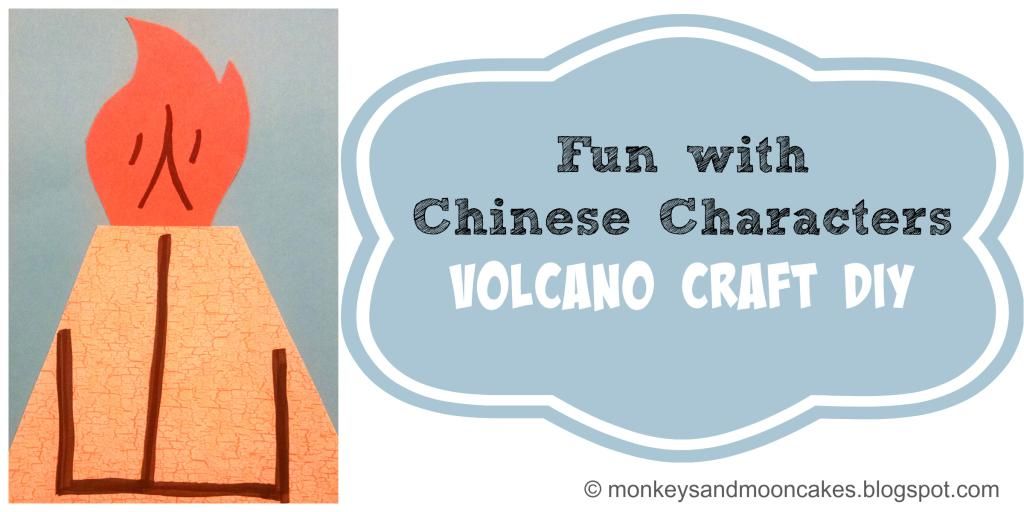
    Volcano Craft DIY

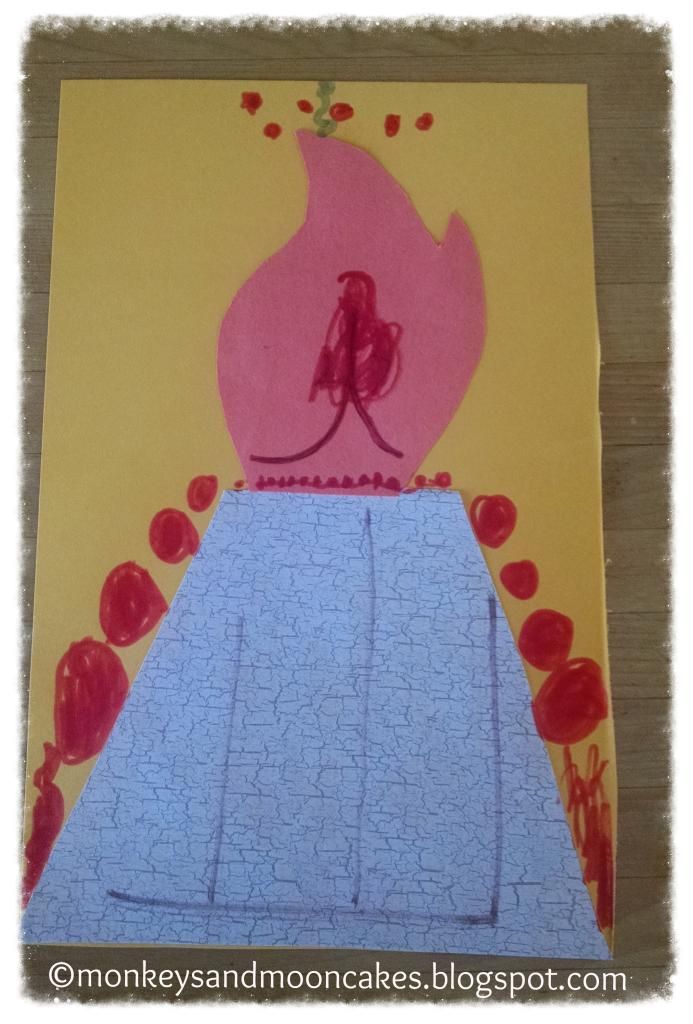
    We have been getting creative learning about Chinese characters that are pictographs. This week we learned how to write the characters for fire (火, huǒ) and mountain (山, shān). I loved watching their little eyes light up as they realized that when you combine these characters, you get the word for volcano (火山, huǒshān ).

    I was inspired by ShaoLan's fire and mountain graphic illustrations (on her Chineasy website) to create this simple craft to help the kids remember these characters.

    What we used for this project:

    • cardstock or construction paper
    • scissors
    • gluestick
    • markers

    What we did: 


    I prepped the project by cutting out the three pieces:
        1. the background: an 8 X 11 cut in half (width-wise)  
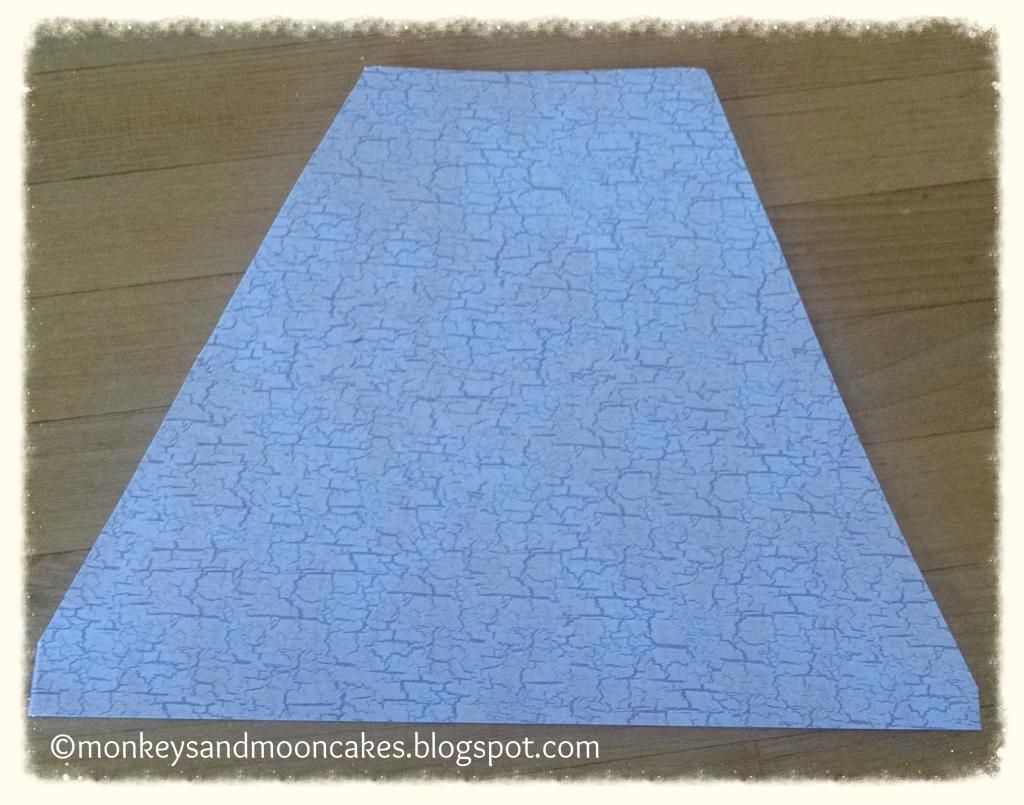
       2.  the mountain: We used cool rock-looking 8 X 11 paper cut into quarters 
                (snip off edges to shape into a volcano).


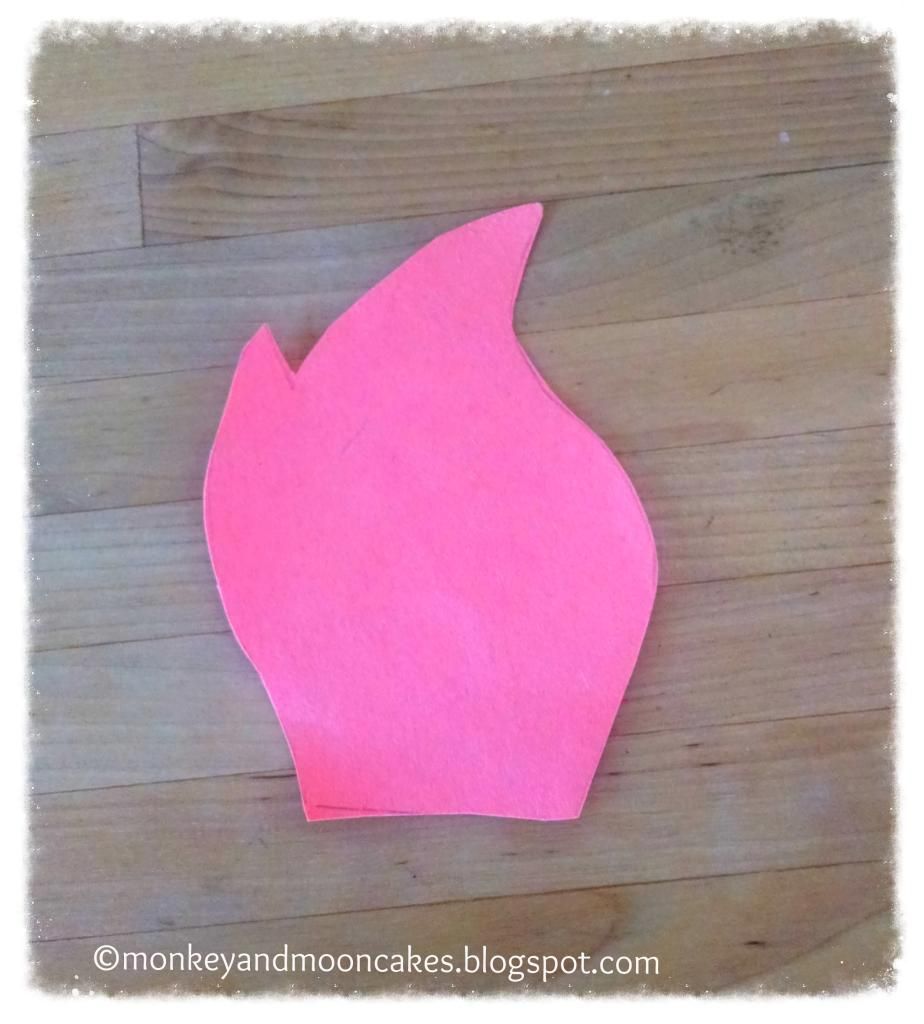
           3. the flame: I just free-hand drew a template and then traced/cut out copies.

    The kids wrote the character for fire on the flame and mountain on the volcano, and then pasted the two pieces on the card stock background.


    One more thing...
    don't forget the smoke and lava! 

    Don't you love their creativity??


    What art projects with Chinese characters are you creating?


    post signature


    Thursday, February 12, 2015

    Year of the Goat Fun: Craft and Book Review

    This week I've been exploring some great resources for celebrating 羊年 (Yáng nián), the Year of the Sheep/Goat/Ram. The New Year begins on Thursday, Feb. 19 this year and ends on Lantern Festival, March 5.

    Here are two we've brought into our home this year:

    1. Artsy Craftsy Mom's Year of the Goat Car Hanging Craft 
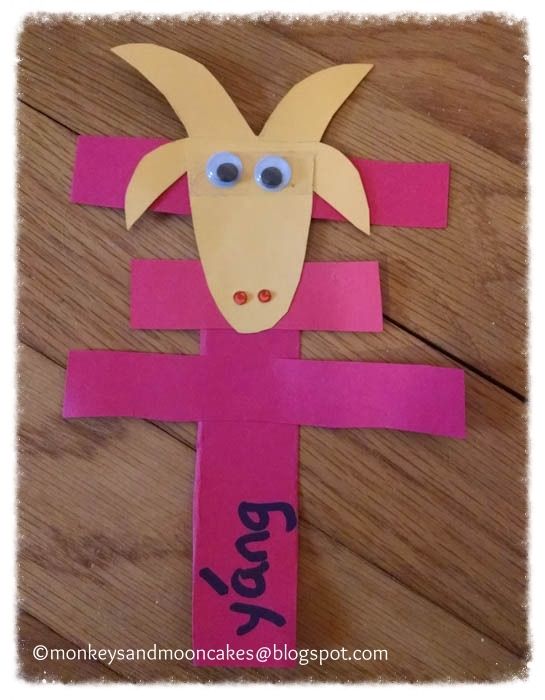
    Our version of Artsy Craftsy Mom's Year of the Goat Car Hanging Craft 
    I saw Artsy Craftsy Mom's super cute, super simple Year of the Goat Car Hanging Craft on Pinterest and decided to adapt it for my elementary Mandarin class. 

    How we adapted it: 
    • We used strips of red card stock for the bottom part of the character (because we were out of craft sticks) and glue stick'ed them together. 
    • We used card stock for the yellow pieces (so they would stick to the red pieces) and then layered them on top of each other (3 in all: horns, ears, and head). 
    • We added some jeweled nostrils to make our goats fancy. 
    • We wrote the pinyin pronunciation on it. 
    Why this craft is great: 
    • It familiarizes kids with the Chinese character for sheep/goat (羊), while reminding them of the character's meaning (the horns of the goat are the two strokes at the top of the character).
    • Kids love googly eyes--After adding googly eyes, my students' goats came to life, and before I knew it, the goats were introducing themselves to each other (in Mandarin!)

    Artsy Craftsy Mom posted this as part of Multicultural Kid Blogs Chinese New Year Series. Check the rest of the series for more CNY crafts, book reviews and recipes.

    ******

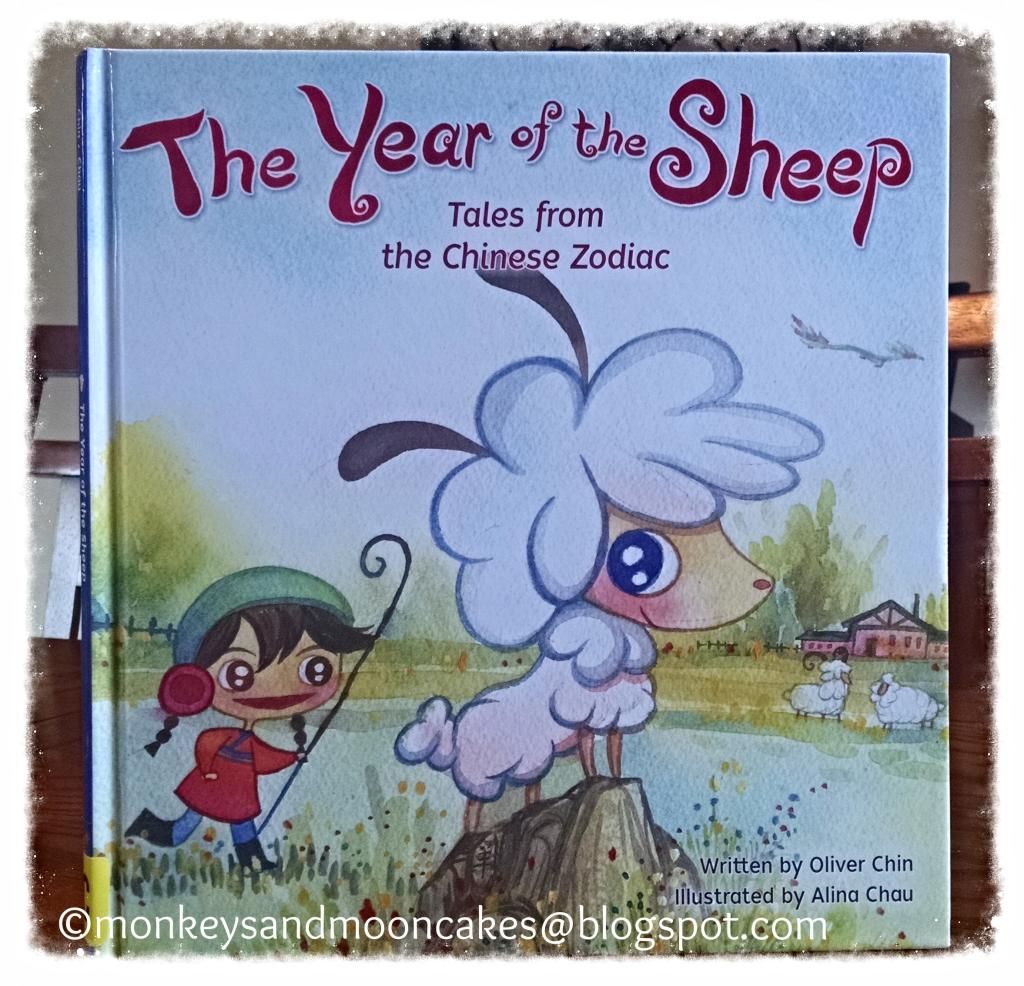
    2. The Year of the Sheep: Tales from the Chinese Zodiac, written by Oliver Chin and illustrated by Alina Chau (published by Immedium)
    The Year of the Sheep: Tales from the Chinese Zodiac
    The Year of the Sheep: Tales from the Chinese Zodiac is the tenth book in Oliver Chin's Tales from the Chinese Zodiac series. He publishes one new book each year, coordinating with the Chinese Zodiac. 

    This book tells the story of the little lamb Sydney whose curiosity leads her, along with Zhi-- the shepherd's daughter, to discover a logjam that threatens the local ecosystem after a storm. Sydney brainstorms a creative solution to the problem, and the twelve animals of the zodiac work together to restore the flowing river. 

    Why this book is great:
    • The little lamb saves the day through her creative thinking.
    • Zodiac animals appear on almost every page. Can you find them? 
    • Alina Chau's beautiful, whimsical watercolor illustrations. 

    Check out Immedium's website to download free coloring pages of Sydney and Zhi.

    How will you be celebrating the Year of the Sheep in your home?


    post signature

    Thursday, January 29, 2015

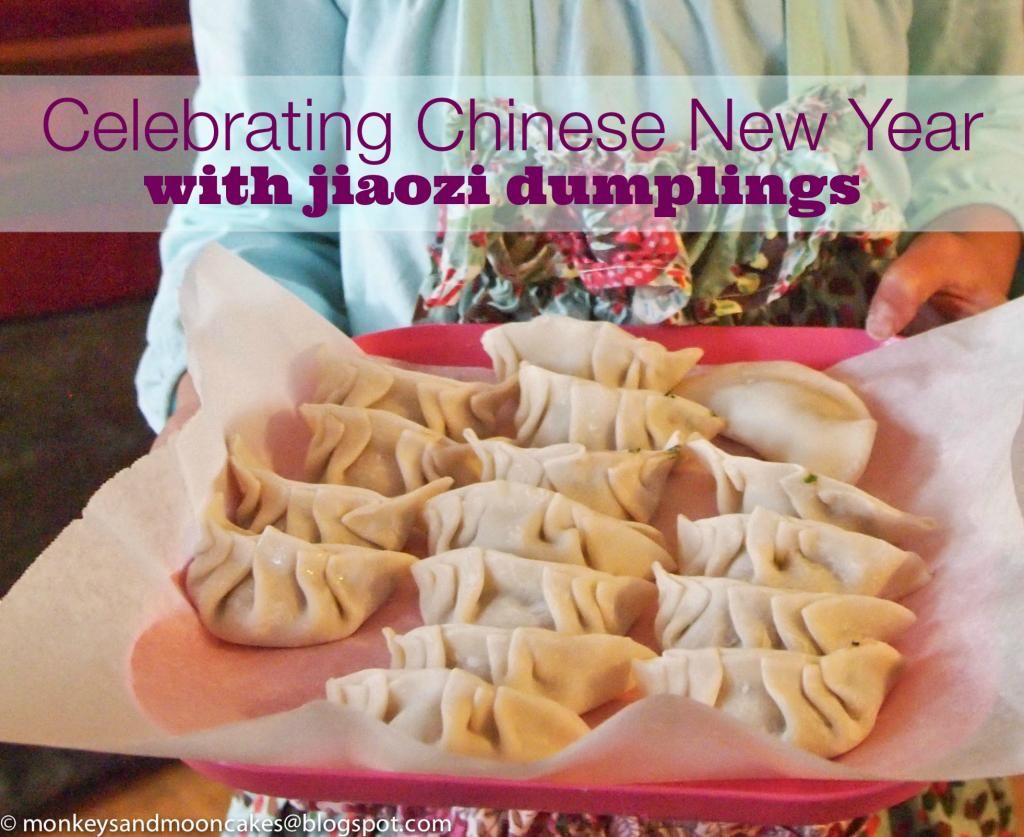
    Celebrating Chinese New Years with Jiaozi Dumplings

    With Chinese New Years just around the corner (Feb. 19), I have dumplings on my mind... 

    In 2012, I shared a post about dumplings  (jiǎozi, 饺子) and family togetherness on my Rice and Pasta, Please! blog. Since dumplings and spending time with my family are some of my favorites things about the holiday, I decided to share a revised version of the post with you! 
    **********************

    The phrase tuántuán yuán yuán (团团圆圆) is often used to describe Chinese New Year (CNY). It literally means "the family is happy and together" because CNY is a time when families come together--to cook, eat and celebrate the beginning of the Lunar New Year.  

    Making dumplings (jiǎozi, 饺子) is a wonderful togetherness activity to do with your friends and family during CNY.  The wrapping process can take several hours so it's a great time to 
    chat and catch up. 

    Although our family's CNY's traditions change from year to year--some years we eat out and 
    watch a lion dance, other years we invite friends over for a big Chinese feast--we always 
    manage to include at least one jiǎozi-making event into our celebrations. 


    So you want to makejiǎozi at home? Wonderful! 


    What you need to know:

    1. You can make your own dumpling wrappers. Really. We've rolled out and wrapped jiǎozi 
    in homemade wrappers before (made by someone else), but this year, I'd love to make our own homemade wrapper recipe. I'll let you know how it goes!

    2. Don't want the hassle of making your own wrappers? No problem! You can buy 
    pre-made wrappers (in the freezer section of your local Chinese supermarket). 

    -->We use pre-made dumpling wrappers for jiǎozi that are boiled, but prefer the thinner 
           wonton wrappers for dumplings that are fried. It's personal preference really, but just know 
           that there are both types out there.

    3. There are infinite ways to wrap jiǎozi--well, maybe not infinite...but a lot! 
    -->There is the pleat method. In this technique, each side of the outer wrapper is pleated 
            toward the center. Pleats are then pressed firmly to the bottom wrapper. 

    -->There is the fold and crimp method (like a tortellini). Check out Beijing Gourmand's 
            explanation of this one.

    -->Feeling creative? Design your own signature fold. Just make sure the seal is tight enough 
           so that the filling won't sneak out when it's tossed into the pot of boiling water.

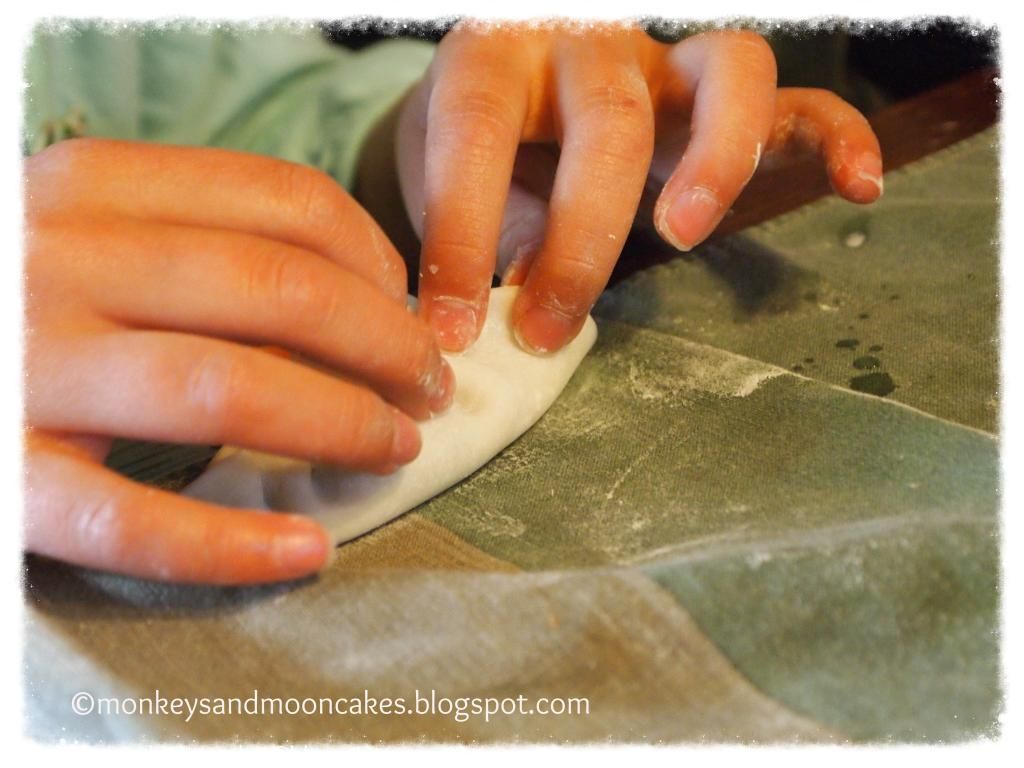
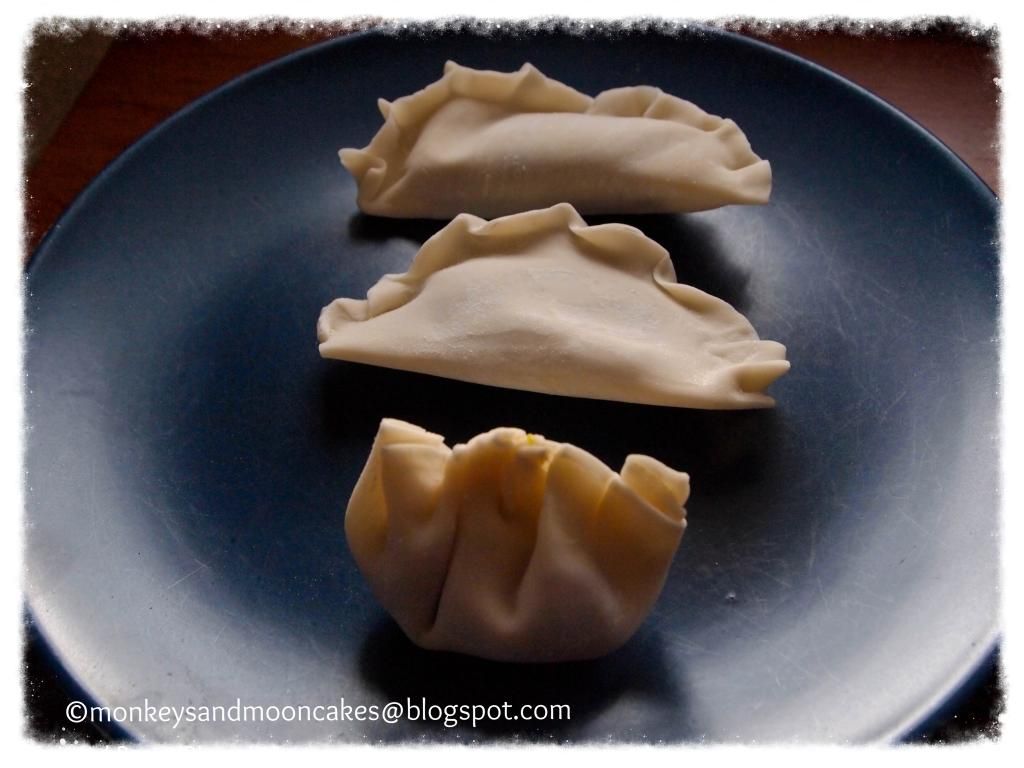
                                 Here are some of our inventions: the stegosaurus and the purse


    4.  No matter how you wrap your dumplings, each method requires a little extra moisture 
    for a tight seal (this seems especially true with frozen wrappers). Dip your index finger into a 
    small bowl of water, and run your finger along the edge before starting to pleat the wrappers.

    5. Need a recipe for a good filling? I've got you covered. Check out Chinese jiaozi two ways from Madame Huang's Kitchen for beef and pork/shrimp recipes. 

    6. Last thing: Chinese dumplings freeze wonderfully (for at least a month).  When you want to use them, just drop them frozen into boiling water (no need to thaw!)


    How will you celebrate with family and friends this CNY?


    post signature

    Thursday, January 22, 2015

    Bridge Builder: Chinese Character Review Game


    Every time we return from a break from Mandarin lessons, it takes us a few weeks to get the "wheels turning" and remember all the characters/vocab from weeks past.

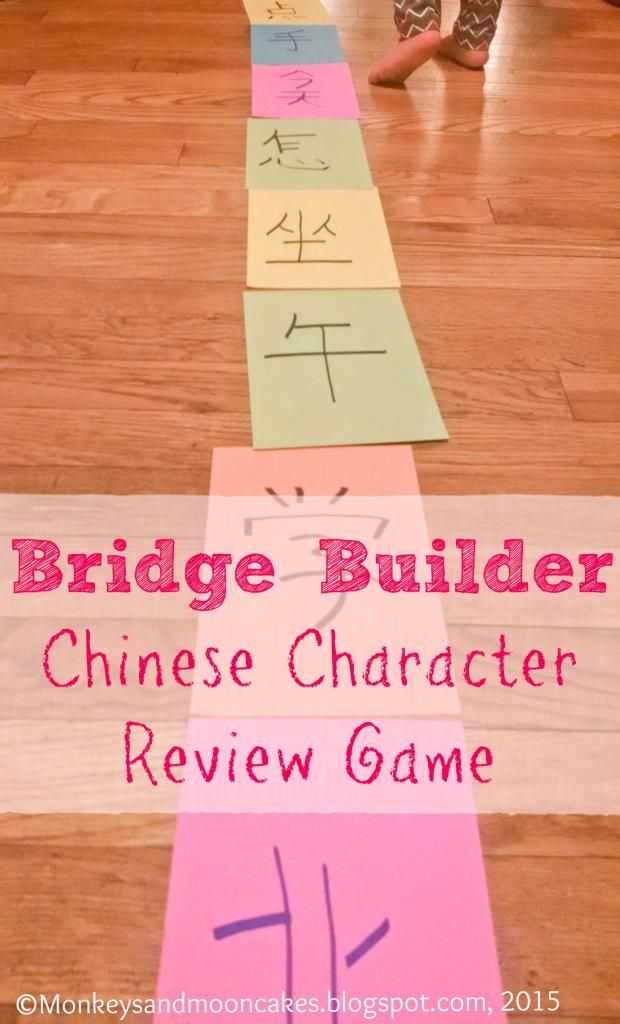
    This week we adapted a vocab review game from Genki English called Island Hopping to review our Chinese characters. I called our game "Bridge Builder."


    This is how we played the game:


    1. Type or write the Chinese characters you want to review on pieces of paper or notecards. 
    • I chose 24 characters to review and wrote them with a big sharpie on 5X7 notecards.

    2. Each player must "build a bridge" from a pre-selected starting line to a finish line by placing the cards down on the ground, one after the other. 
    • We built bridges from one end of the rug to the other. 

    3. The cards cannot be placed until the player says the name of the character out loud. 
    • For reference, I let the girls use their Character binders, which contain all of the characters they have learned (pinyin, translation, etc...). 

    4. The first player to cross the finish line wins!

    When we played the game, I gave each player a stack of different characters, but the game could easily be played using several copies of the same characters (i.e. 4 of each). I'm going to try it this way next time as a way to help the girls quickly recognize and review some of our recent characters. 

    Try this out and let me know what you think! 

    Was this game an effective way to review Chinese characters? 

    Are there other games you play in your home? 


    post signature

    Wednesday, January 7, 2015

    Happy New Years! 新年好! Xīnnián hǎo!

    Happy 2015! I hope that you had a wonderful holidays with your loved ones. 

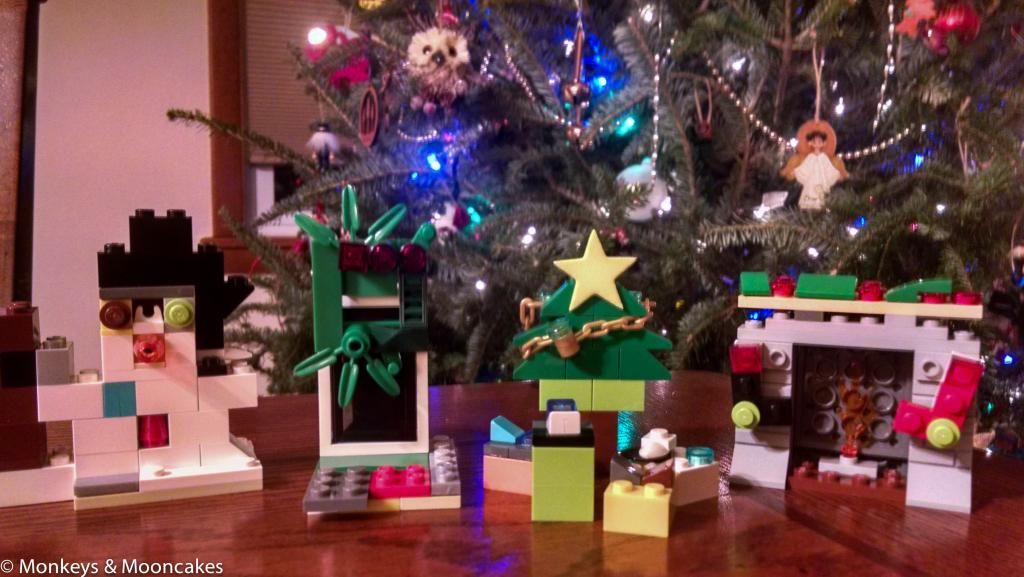
    Our holiday break began like this:


    and this:


    but then it started to look like this:


    The flu hit us all! But by the time New Years rolled around, we were finally all healthy again, and ready to start thinking about the exciting times ahead of us. 

    *******************

    This past week, I've been exploring some new materials and brainstorming lots of great activities and games to use my kids' Mandarin lessons. I can't wait to share these with you in 2015!

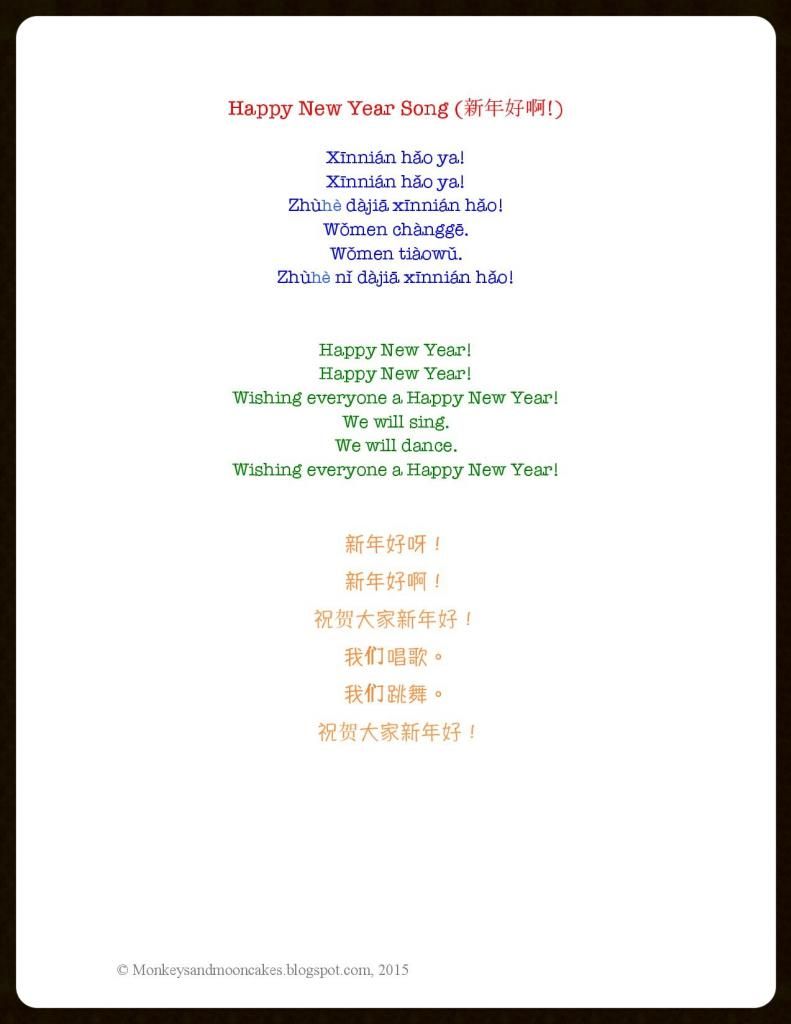
    Until then, let me leave with a New Years song: The Happy New Year Song (sung to the tune of "Oh My Darling, Clementine"). It's technically a Chinese New Year's Song--CNY is Thursday, Feb. 19 this year. Put it on your calendar! But we are going to sing it this week because singing is a great way to practice our Mandarin. 

    Here are the lyrics:


    Click here to download these lyrics for FREE!

    And then, watch this video of Learn Chinese with Emma to hear how to sing it. She gives a great explanation of the vocab in the song as well!


    Happy New Years to you and your family!


    post signature