Image Map
Showing posts with label Learning Chinese Characters. Show all posts

Thursday, February 12, 2015

Year of the Goat Fun: Craft and Book Review

This week I've been exploring some great resources for celebrating 羊年 (Yáng nián), the Year of the Sheep/Goat/Ram. The New Year begins on Thursday, Feb. 19 this year and ends on Lantern Festival, March 5.

Here are two we've brought into our home this year:

1. Artsy Craftsy Mom's Year of the Goat Car Hanging Craft 
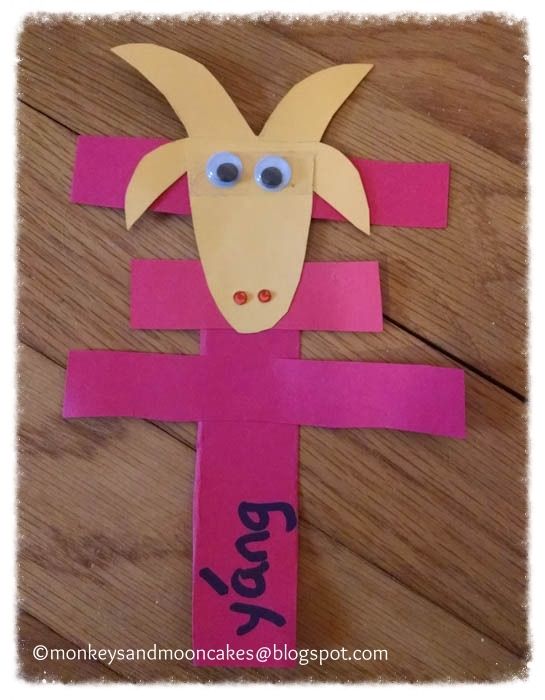
Our version of Artsy Craftsy Mom's Year of the Goat Car Hanging Craft 
I saw Artsy Craftsy Mom's super cute, super simple Year of the Goat Car Hanging Craft on Pinterest and decided to adapt it for my elementary Mandarin class. 

How we adapted it: 
  • We used strips of red card stock for the bottom part of the character (because we were out of craft sticks) and glue stick'ed them together. 
  • We used card stock for the yellow pieces (so they would stick to the red pieces) and then layered them on top of each other (3 in all: horns, ears, and head). 
  • We added some jeweled nostrils to make our goats fancy. 
  • We wrote the pinyin pronunciation on it. 
Why this craft is great: 
  • It familiarizes kids with the Chinese character for sheep/goat (), while reminding them of the character's meaning (the horns of the goat are the two strokes at the top of the character).
  • Kids love googly eyes--After adding googly eyes, my students' goats came to life, and before I knew it, the goats were introducing themselves to each other (in Mandarin!)

Artsy Craftsy Mom posted this as part of Multicultural Kid Blogs Chinese New Year Series. Check the rest of the series for more CNY crafts, book reviews and recipes.

******

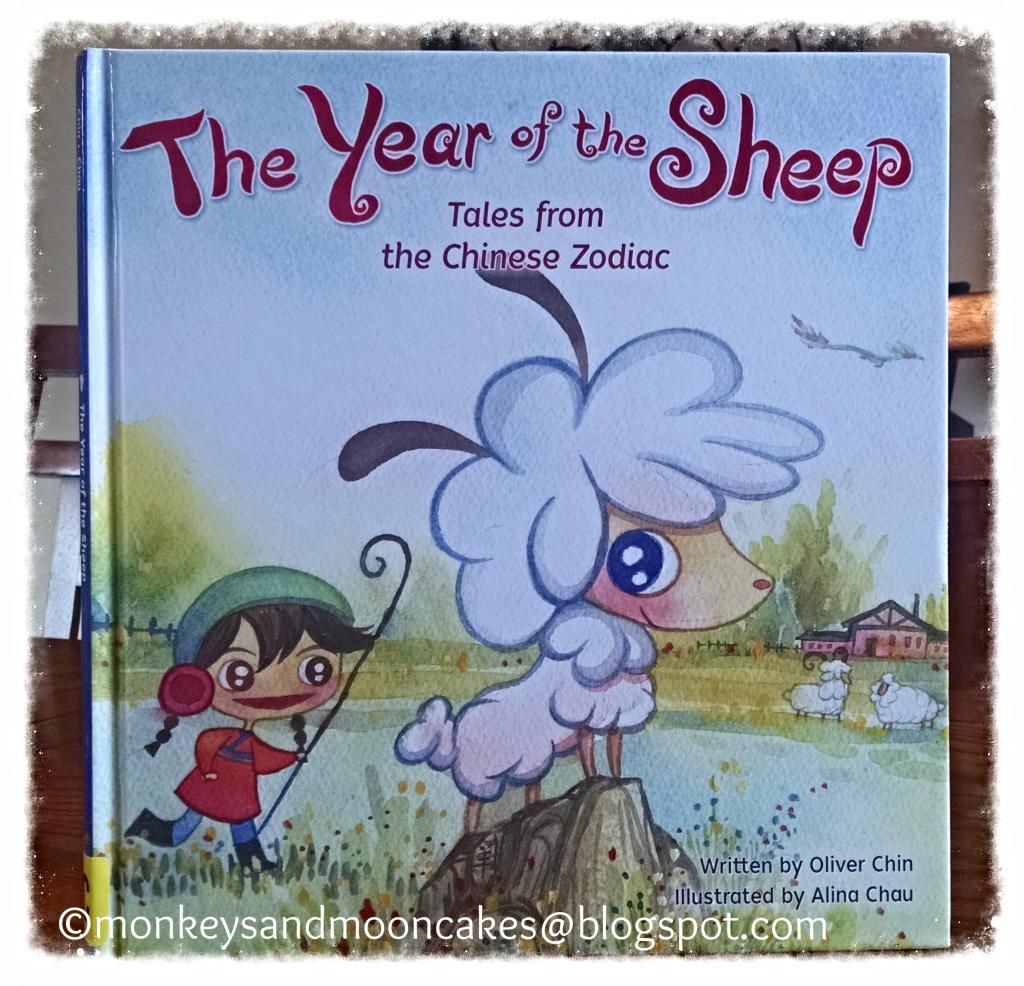
2. The Year of the Sheep: Tales from the Chinese Zodiac, written by Oliver Chin and illustrated by Alina Chau (published by Immedium)
The Year of the Sheep: Tales from the Chinese Zodiac
The Year of the Sheep: Tales from the Chinese Zodiac is the tenth book in Oliver Chin's Tales from the Chinese Zodiac series. He publishes one new book each year, coordinating with the Chinese Zodiac. 

This book tells the story of the little lamb Sydney whose curiosity leads her, along with Zhi-- the shepherd's daughter, to discover a logjam that threatens the local ecosystem after a storm. Sydney brainstorms a creative solution to the problem, and the twelve animals of the zodiac work together to restore the flowing river. 

Why this book is great:
  • The little lamb saves the day through her creative thinking.
  • Zodiac animals appear on almost every page. Can you find them? 
  • Alina Chau's beautiful, whimsical watercolor illustrations. 

Check out Immedium's website to download free coloring pages of Sydney and Zhi.

How will you be celebrating the Year of the Sheep in your home?


post signature

Thursday, January 22, 2015

Bridge Builder: Chinese Character Review Game


Every time we return from a break from Mandarin lessons, it takes us a few weeks to get the "wheels turning" and remember all the characters/vocab from weeks past.

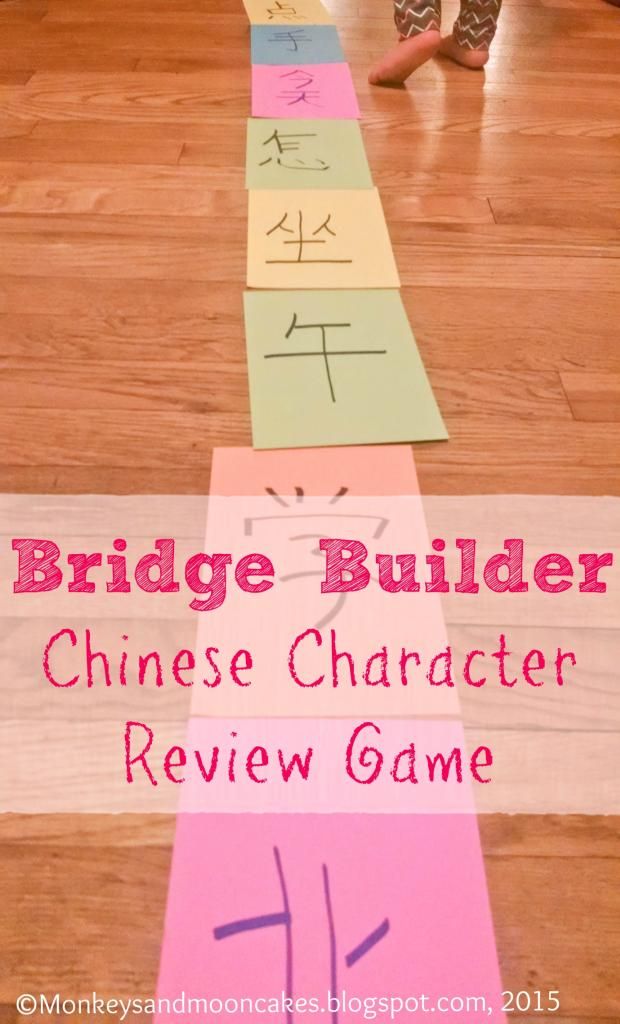
This week we adapted a vocab review game from Genki English called Island Hopping to review our Chinese characters. I called our game "Bridge Builder."


This is how we played the game:


1. Type or write the Chinese characters you want to review on pieces of paper or notecards. 
  • I chose 24 characters to review and wrote them with a big sharpie on 5X7 notecards.

2. Each player must "build a bridge" from a pre-selected starting line to a finish line by placing the cards down on the ground, one after the other. 
  • We built bridges from one end of the rug to the other. 

3. The cards cannot be placed until the player says the name of the character out loud. 
  • For reference, I let the girls use their Character binders, which contain all of the characters they have learned (pinyin, translation, etc...). 

4. The first player to cross the finish line wins!

When we played the game, I gave each player a stack of different characters, but the game could easily be played using several copies of the same characters (i.e. 4 of each). I'm going to try it this way next time as a way to help the girls quickly recognize and review some of our recent characters. 

Try this out and let me know what you think! 

Was this game an effective way to review Chinese characters? 

Are there other games you play in your home? 


post signature

Thursday, November 20, 2014

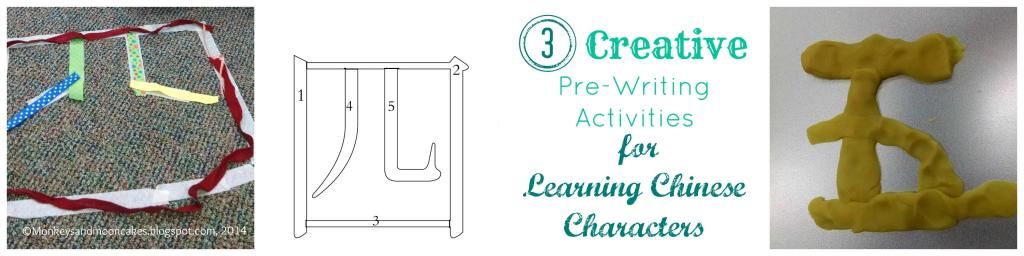
3 Creative Pre-Writing Activities for Learning Chinese Characters

This fall, I taught a fun 6-week after-school class at my kiddos' school. My students were all Kindergarteners (and one 2nd-grader).  At our first class,  I realized that this writing thing was pretty new to most of them. School had just started one month earlier, and the kindergartners were just adjusting to holding a pencil and writing their ABC's.  


Writing Chinese characters was a stretch for them, a good stretch--one that we would work on throughout the 6-week class. But I also wanted to give them a more accessible way to immediately experience the shapes of the characters. 


Here are 3 of their favorites:

1.  Tracing characters 

  • Have an adult or big kid help tape the shape of the character on the ground. Use masking tape or painter’s tape because it removes easily and comes in fun colors.  
  • Use ribbons, jump ropes, or shoelaces (basically anything long and shapeable) to follow the shape of the character. We used broken beaded necklaces from dress-ups and ribbons. 
  • This can also be done on a smaller scale with characters printed in large font (300/400).


***********************************************************************************


    2.  Color-by-number characters

  • Create a color-by-number character--either draw one by hand or make one using Word and PicMonkey (see my tutorial here). 
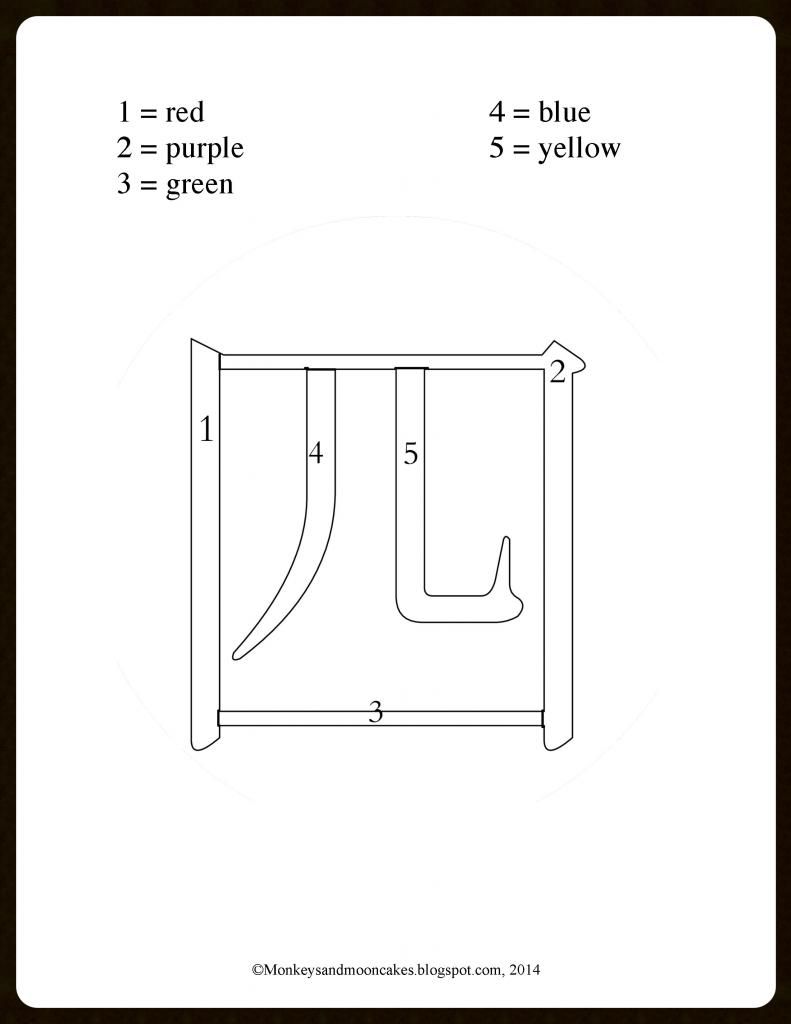
  • Click here to download the color-by-number page (pictured above) for the number four (四).
  • Grab some crayons and color the strokes of the character. 

*********************************************************************************


 3. Play dough characters

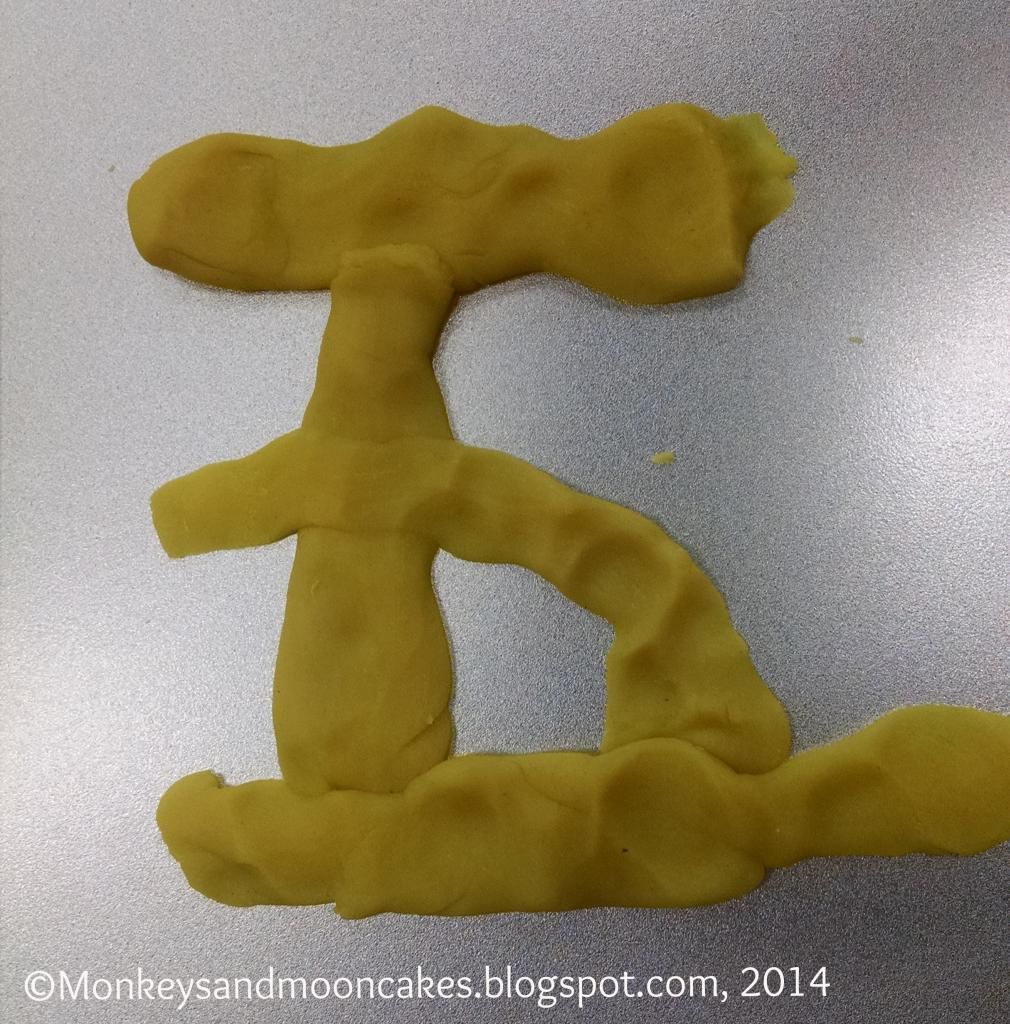
  • Form a character out of play dough by rolling "snakes" for each stroke and then assembling the strokes, or by mushing the play dough in to shape. 
  • Tip: Use a cookie sheet (we used small pans from the dollar store). These make clean up super easy and keep the play dough from rolling on the floor (which was important for us because we were using the library for our class!)

What type of pre-writing activities do you do at your home?

Check out my post 10 Sensory Activities for Practicing Chinese Characters for more ideas for character practice (including ideas that involve writing!). 
post signature

Friday, November 14, 2014

Color-by-number Chinese Characters: Free Printable & DIY


Earlier this fall, I searched for some pre-writing activities that could reinforce the Chinese characters I was introducing in an after school class I was teaching at my kids' school.

When I couldn't find exactly what I was looking for, I adapted an old standard: 


I discovered that the color-by-number idea works pretty well with beginning Chinese characters. And even better: it was accessible to the little ones in my class who were just getting used to writing with a pencil.

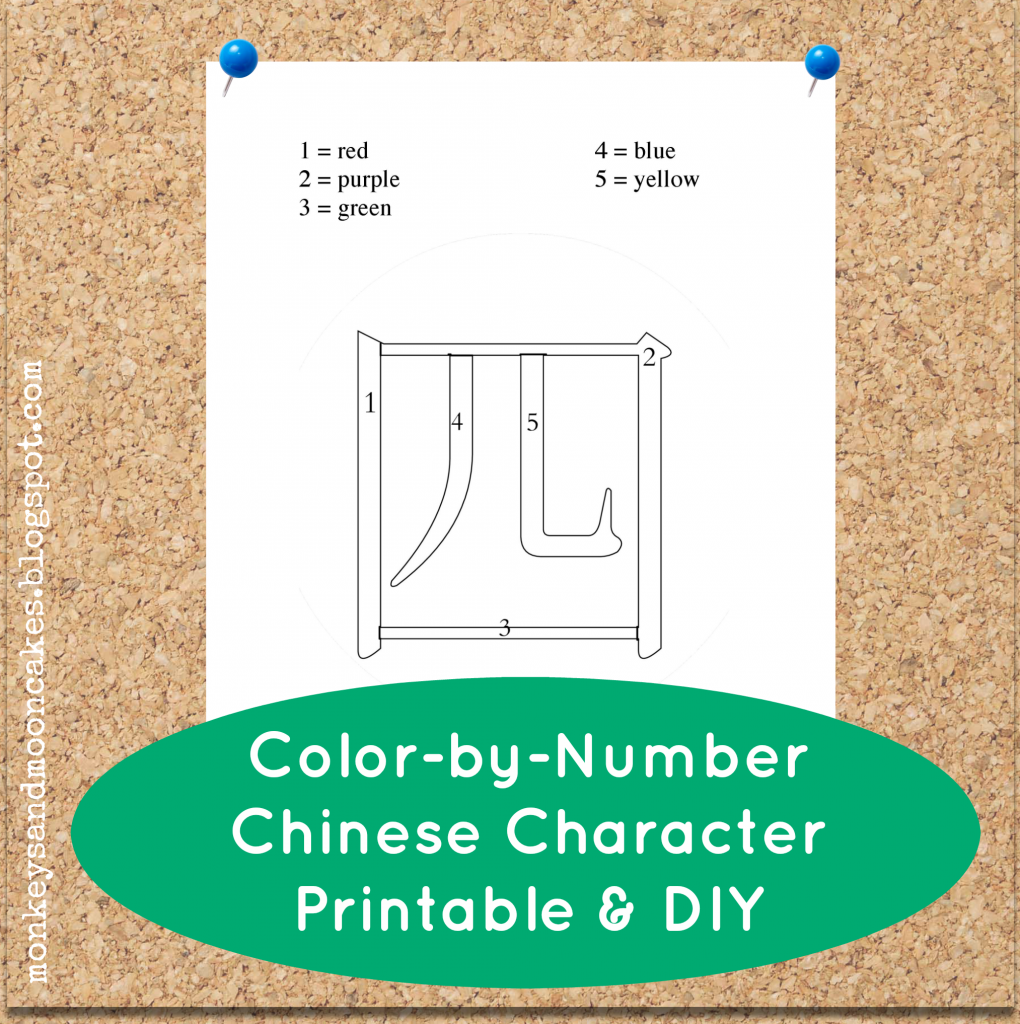
Click here to download the snazzy color-by-number printable above. I've numbered each stroke of the character (4, sì), so each stroke should end up a different beautiful color.


*****************************************************************************


If you want to make your own color-by-number Chinese character, here are 2 ways you can do this:


The first way is what I call the Easy Peasy Draw Your Own method.It's just as it sounds: Hand-draw your own color-by-number character. This is doable, even if you are just beginning to learn Mandarin. 

  1. Go to the dictionary at yellowbridge.com. You can input your word in English, Chinese characters, or pinyin. Then, after you've found the character you're looking for, click on "stroke order" to see how to write the character. 
  2. Write the character in outline form. 
  3. Section off the strokes, and number the sections.
  4. Write in your number/color designations (i.e. 1=yellow).
And Done!


************************************************************************


If you want a little more technical finesse in your final product...Turn it into WordArt!


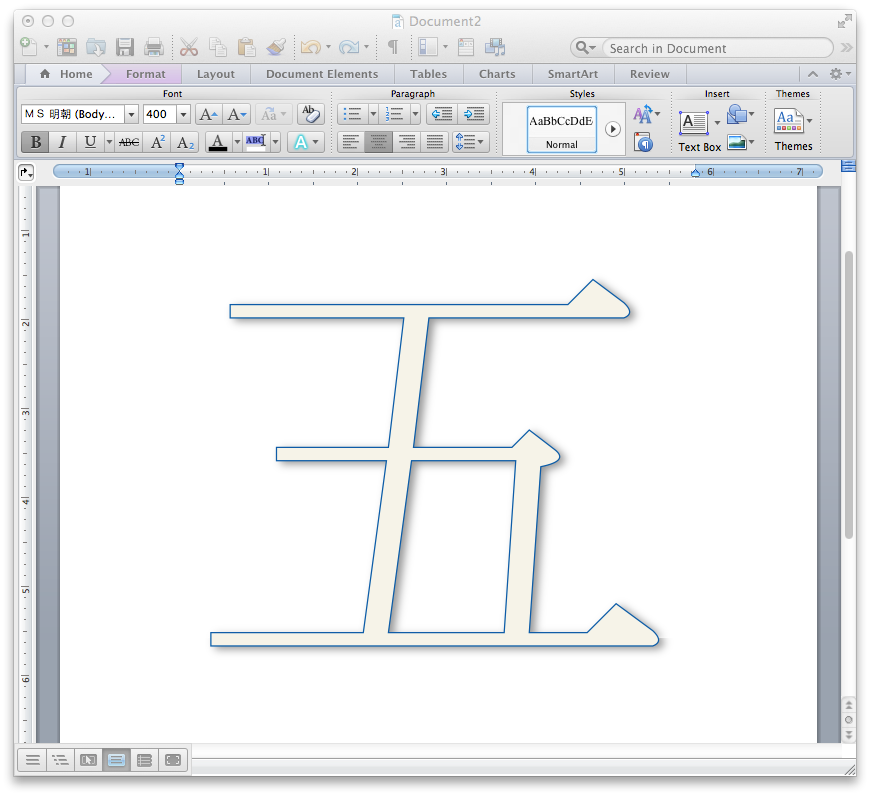
1.  Using your Chinese input on your computer, type your character in a new Word document. 

-->If you do not have Chinese input, you can type the pinyin into Google Translate, copy the Chinese character from Google Translate, and paste it into a Word document.

-->If you want to get fancy, choose a different Mandarin font for the characters. I used Hannotate TC Regular because it looks like handwriting.

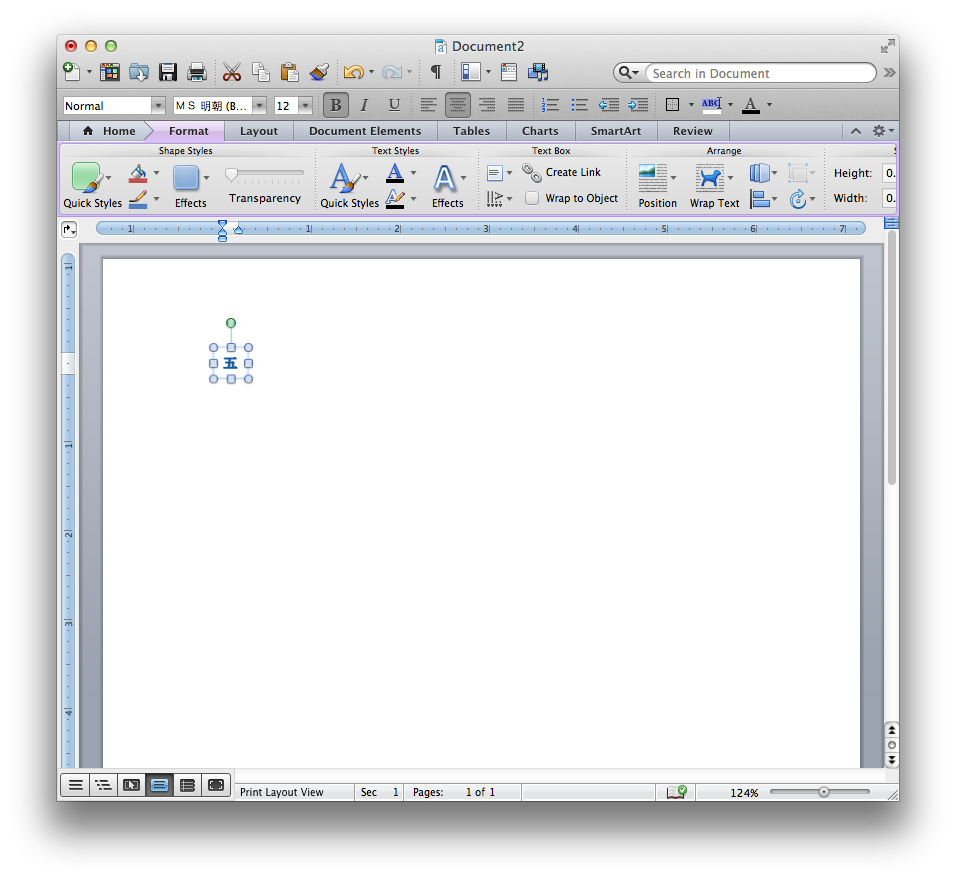
2.  Highlight the character you just typed or pasted in the Word document. Select "WordArt" under the Insert menu. You should now see the Chinese character that you typed in outline form.

-->This may look different on your computer depending on if you're using Mac/Windows and how recent your operating system is. Check out this link from Microsoft support to walk you through inserting WordArt in a Word document.

3.  Adjust the style of your WordArt according to your preferences in the WordArt/Formatting toolbar. Again, the location of this toolbar will be different depending on your computer. Refer to the Microsoft Support page if you get stuck. 

4. Adjust the size of the new WordArt according to your preferences. I resized mine to 400 pt. You may have to expand the size of the text box to accommodate the bigger size. 

5.  Now you have a choice to A. save, print, and then hand draw all the little dividing lines in to make it a color-by-number, or B. save as a PDF and upload to PicMonkey where you can do this on your computer.

-->If you choose Option A, well done! Enjoy your new, snazzy Chinese character outline.

-->If you choose Option B, very nice! Please read on for further instructions. 

6. The next step is to convert your PDF to jpg. There are lots of free PDF to jpg converters online. I'm not an expert here, but take a look. 

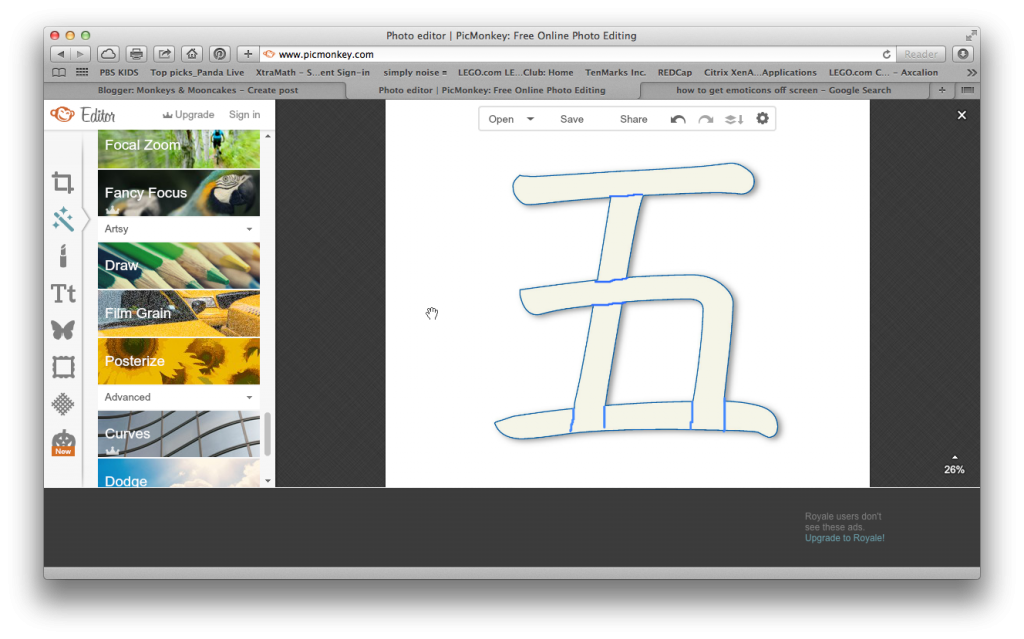
7. Once you have converted and saved the WordArt character you created as a jpg, go to Picmonkey.com, choose "edit" and upload the jpg. 

-->If you're not familiar with PicMonkey, it's awesome!!! It's a online photo editing tool. I use their free tools, but you can also pay a fee to access more tools (they're not paying me for this promo--I just really love the website=)

8. After you have uploaded your jpg, choose the tool on the left side of your screen that looks like a tube of lipstick and scroll down the list of tools until you see "draw"(under "Artsy").

9. Adjust the brush size and color according to preference, and then draw in any dividing lines (to separate strokes).
10. Next, click on "T" (for add text) and click on the "add text" button. When the text box appears, choose a font and type in the numbers that will dictate which color to use when your little ones color in. Position and resize as you see fit.

-->You will have to add a new text box for each number. 

10. Once you are finished, save to your computer.
And Done! You now have a nifty color-by-number Chinese character image that you can use in any document, using "insert picture." 


What pre-writing activities do you use in your home to teach Mandarin?

post signature

Sunday, September 7, 2014

Mid-Autumn Festival Moon Craft DIY

Mid-Autumn Festival (中秋节, Zhōngqiū jié) is tomorrow--Monday, Sept. 8th!  

We like to celebrate this Chinese holiday by reading stories about Chang E and Hou Yi (The kids like the version in Moonbeams, Dumplings, & Dragon Boats best=), nibbling on mooncakes or mooncake cookies, and staying up a little later than usual to gaze at the moon.

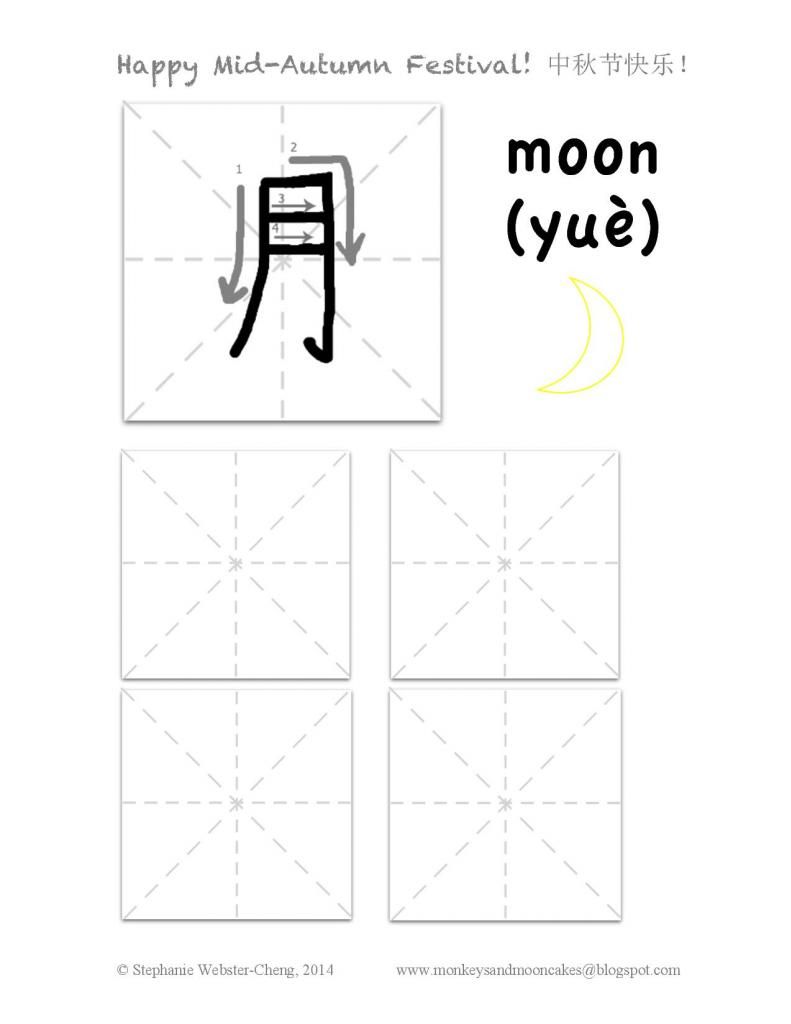
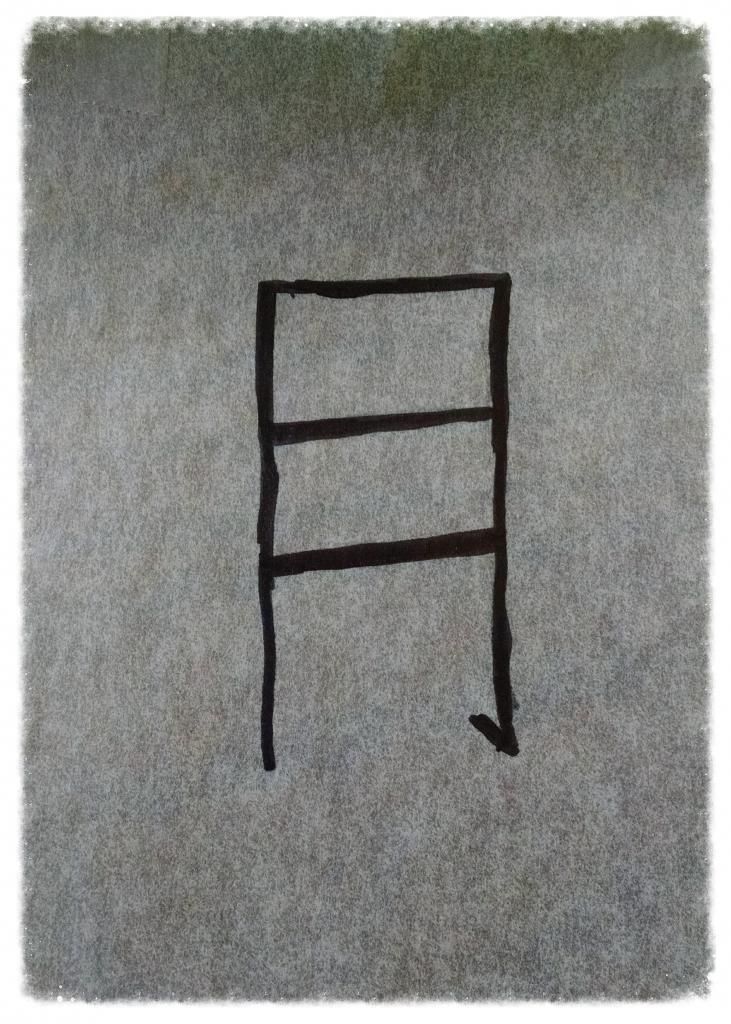
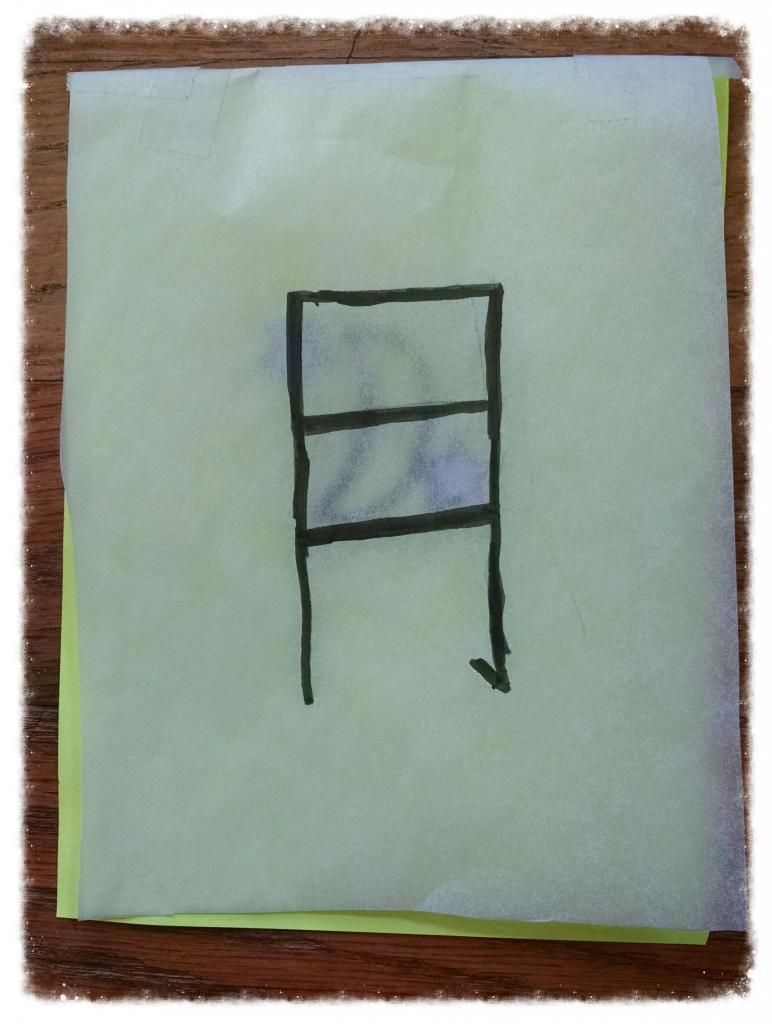
This year, I shared about the holiday with Monkey #1's 4th grade class. They listened to a story, nibbled on moon cakes, and learned how to write the character for "moon" (月,yuè).
Click here to download this printable. 

Before sharing with her class, I scoured Pinterest and Google, looking for creative ways for the kids to practice writing this character. 

The criteria were: 
  • must be simple (5 or fewer steps; 5 or fewer minutes to complete)
  • must use few materials and not be messy 
  • and most important of all--must be interesting enough to a 4th grader that it will help them remember how to write the character and what it means. 
And...with 60 minutes left on the clock...this is what I came up with:

Materials: 
tracing paper
bright card stock or construction paper
magic tape
big sharpie
scissors
star stickers (optional)
Step 1
:  
Cut a piece of tracing paper in half or quarters (depending on how large you would like your "window"). My tracing paper was 8X11 so I cut it in quarters to get the most "bang for my buck."

Step 2: 
With a thick sharpie, write the Chinese character for moon on it (see above printable for instructions). It can be as large or small as you want.


Step 3:
Cut a brightly-colored piece of construction paper or card stock to the same size as your tracing paper. 

Step 4: 
Tape the tracing paper to the top of the card stock, using a piece of magic tape.

Step 5:
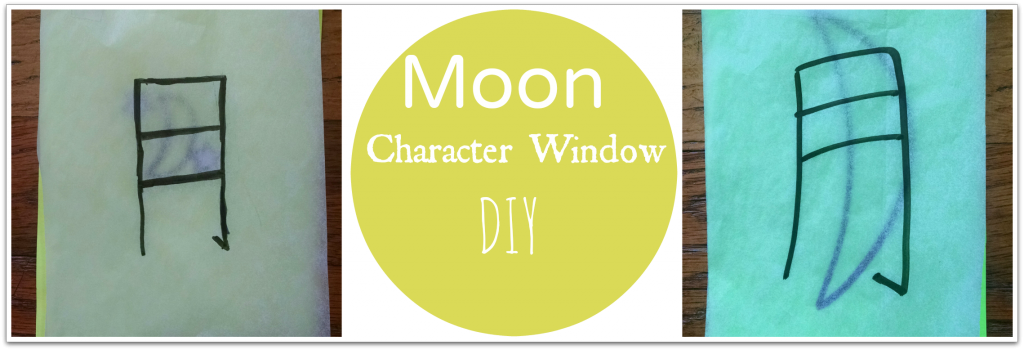
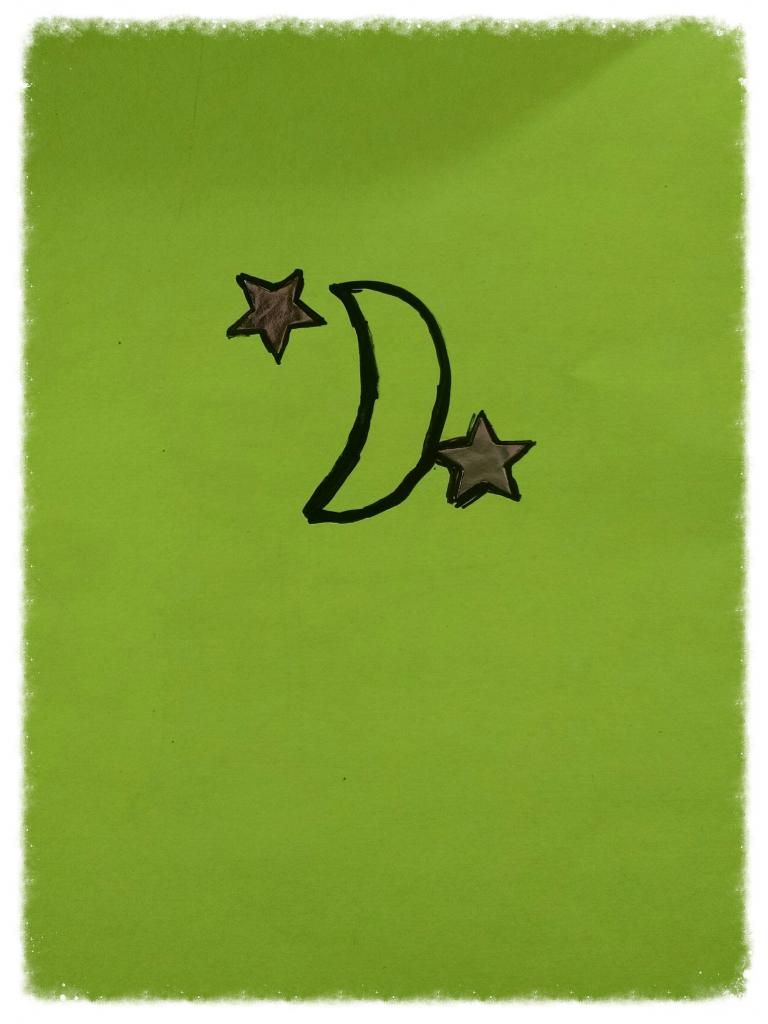
Noting the location of the character, draw a moon with a sharpie on the colored card stock. Your moon can appear behind the entire character (like the one below, left), or just appear in the top half of the character, as if seen through a window (below, right). 
And done!


Simple?  Yes!
Easy to remember?  Yes!
Fun for a 4th grader? Let's just say, the neon paper helped=)


Wishing you a very Happy Mid-Autumn Festival! 中秋节快乐!

post signature

Monday, July 21, 2014

Practice Your Chinese Characters! Beach Edition


One of our favorite beach activities is writing in the sand. Names, secret messages, long squiggly lines--there's something just plain fun about a long blank canvas of wet beach sand that resets itself with each crashing wave. 


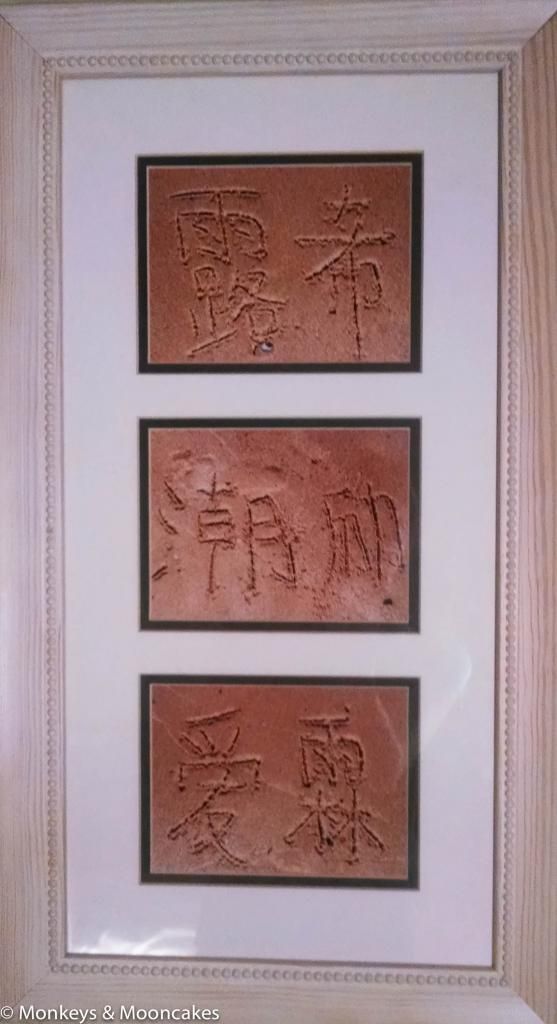
On a recent beach outing, Monkey #1 and I practiced writing Chinese characters (family names) in the sand. She practiced her Chinese name, 露希 Lùxī--literally "dewdrop, hope", and I practiced her brother's, Cháolì--"tide, encouragement," and sister's, Àilín--"love, heavy rain."  


Monkey #2 would have joined in the fun, but he was too busy throwing his body into the crashing waves--it was a good wave-jumping day. 

Can writing in the sand really be that fun? It was. We had to rush to finish the two characters that made up each name before the waves washed them away, leaving us giggling (because we could never seem to finish them in time) and staring at a wet, blank canvas ready for more sand writing. 


What I love about this activity:

1.  The act of writing Chinese characters in the sand is tactile. You feel each stroke as you carve it in the sand. This repetitive carving process helped the characters "stick" in my memory.

2.  As you write these large characters, you focus on each component of the character. 
As I wrote Monkey #3's Chinese name (above, right), I found myself speaking the parts of the characters: hand, roof, friend; rain and forest. This helped me really learn how to write her name (something I should know as her momma=)  
     
3.  It is a challenge! Monkey #1 and I raced against the waves--trying to carve full names before the waves washed them away--and lost almost every time. 


Variations: 

Play with a friend and race the waves. See who can first carve their full name or another set of characters (legibly) before the waves wash them away. 

Which materials work the best? We tried sticks, beach grass, and gnarled roots.

Take photos of the sand characters--turn them into memories to hang in your home. I'm working on this (on the right) because I'm obsessed with beach photography. 

Instead of writing in the sand, form your character with found items from the beach. Monkey #1 used bits of seaweed, beach grass and stones to form the first character of her name.

What Mandarin learning activities are you doing this summer
post signature

Friday, June 13, 2014

Not your typical Chinese language textbook

Summer has hit, which for us means that my kiddos are taking a well-deserved break from formal Chinese lessons. This also means that I get to start reviewing materials and activities for next year.


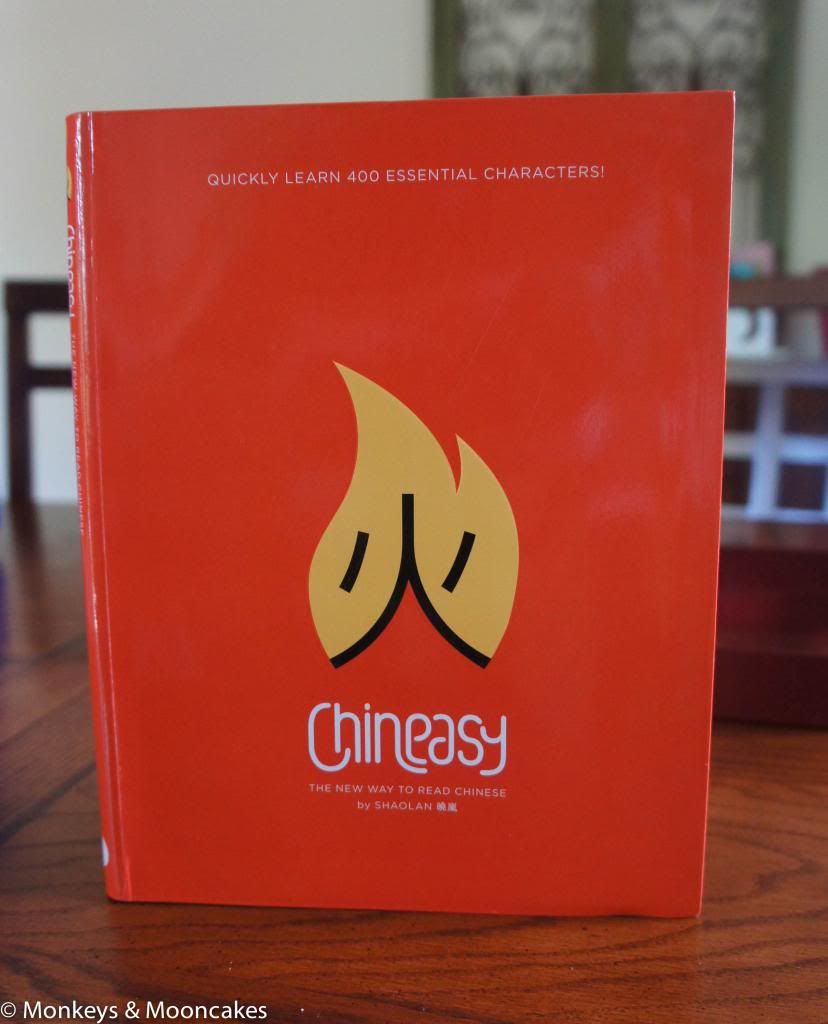
This is not your typical Chinese language textbook. It’s not a textbook at all, really, more of an exquisitely beautiful book designed to teach you the meaning of Chinese characters while enchanting you with ingenious to-the-point graphics.

The book is divided into four sections 

  1. Where the author introduces herself, her method, and how to use the book
  2. This is the main part of the book—where characters are introduced as either building blocks, compounds, phrases, or advanced sentences.
  3. The classic story Peter and the Wolf is told using her method of illustrated Chinese characters (my phrase).
  4. Reference, where building block plates are listed for quick reference, and Chinese characters and phrases are indexed (by English translation only).

Her Method

If I had to describe ShaoLan’s method, I would call it illustrated Chinese characters. She takes a Chinese radical such as 人 (rénperson--her building block) and then draws an image on or behind it to illustrate the meaning of this character (i.e. 人 is turned into a walking person). 

Then, she shows other characters that make use of this radical, such as 从 (cóng, follow--a compound), and illustrates these characters also to show the new meanings  (从 becomes two walking people).

Instantly, two characters make perfect sense and become easy to remember. This, my friends, is the simple genius of this method.

What I love about this book 

·         While some of the ideas for these illustrated characters are not new (they pick up on the ancient etymology of the character; for example, 火--huǒ,fire--was once drawn to actually resemble a fire), others are ShaoLan’s own creative inventions. Check out her building block plate for 女 (nǚ, woman).  

     ✔ The graphics themselves, created by the super-talented graphics artist Noma Bar, are beautiful--simple, yet striking, in a happy color scheme. This book could easily be a coffee table book, yet it is better than your average coffee table book, because if you put it out, people will learn something.

✔ Shaolan’s notes on each character are super helpful. She explains the construction of the character and gives cultural insights to the character’s meaning. For example, she explains how the character 羔 (gāo, lamb) is a combination of lamb over a fire, which is how  lamb would be prepared in certain parts of China.  She also includes snappy little phrases that will help you remember characters. For the character 众 (zhòng, crowd): "two’s company, three’s a crowd.” 

How you can use Chineasy


✔  Supplement your daily/weekly lessons. The book is chock-full of ideas for teaching certain characters. A lot of this information is already on the web but this book brings it all together in one place with simple, yet visually appealing color graphics.

✔  Put it out on your coffee table. It’s fun for guests to browse and can be a good conversation starter. And have I mentioned how beautiful these graphic illustrations are? Your guests will be surprised that they will be able to recognize a bunch of Chinese characters in just a few minutes.

✔  Use the accompanying Chineasy website where you can listen to the pronunciation of the characters, watch a TED Talk where ShaoLan describes her method, andsee a video in which Chinese characters are animated and explained.


The bottom line

This is a really great tool for teaching Chinese characters. This likely will not be your only tool because it doesn’t teach all the characters, but its approach is super creative, beautiful, and intuitive. Shaolan, I look forward to Volume 2!

Disclaimer: Neither ShaoLan nor Harper Design gave me anything to endorse their book. My fabulous friend Jill gave it to me because she is just that awesome—thanks, Jill! 

post signature