Image Map
Showing posts with label Character Practice. Show all posts

Thursday, November 20, 2014

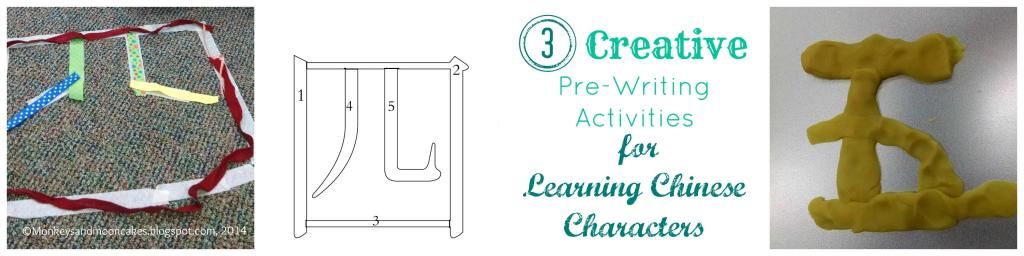
3 Creative Pre-Writing Activities for Learning Chinese Characters

This fall, I taught a fun 6-week after-school class at my kiddos' school. My students were all Kindergarteners (and one 2nd-grader).  At our first class,  I realized that this writing thing was pretty new to most of them. School had just started one month earlier, and the kindergartners were just adjusting to holding a pencil and writing their ABC's.  


Writing Chinese characters was a stretch for them, a good stretch--one that we would work on throughout the 6-week class. But I also wanted to give them a more accessible way to immediately experience the shapes of the characters. 


Here are 3 of their favorites:

1.  Tracing characters 

  • Have an adult or big kid help tape the shape of the character on the ground. Use masking tape or painter’s tape because it removes easily and comes in fun colors.  
  • Use ribbons, jump ropes, or shoelaces (basically anything long and shapeable) to follow the shape of the character. We used broken beaded necklaces from dress-ups and ribbons. 
  • This can also be done on a smaller scale with characters printed in large font (300/400).


***********************************************************************************
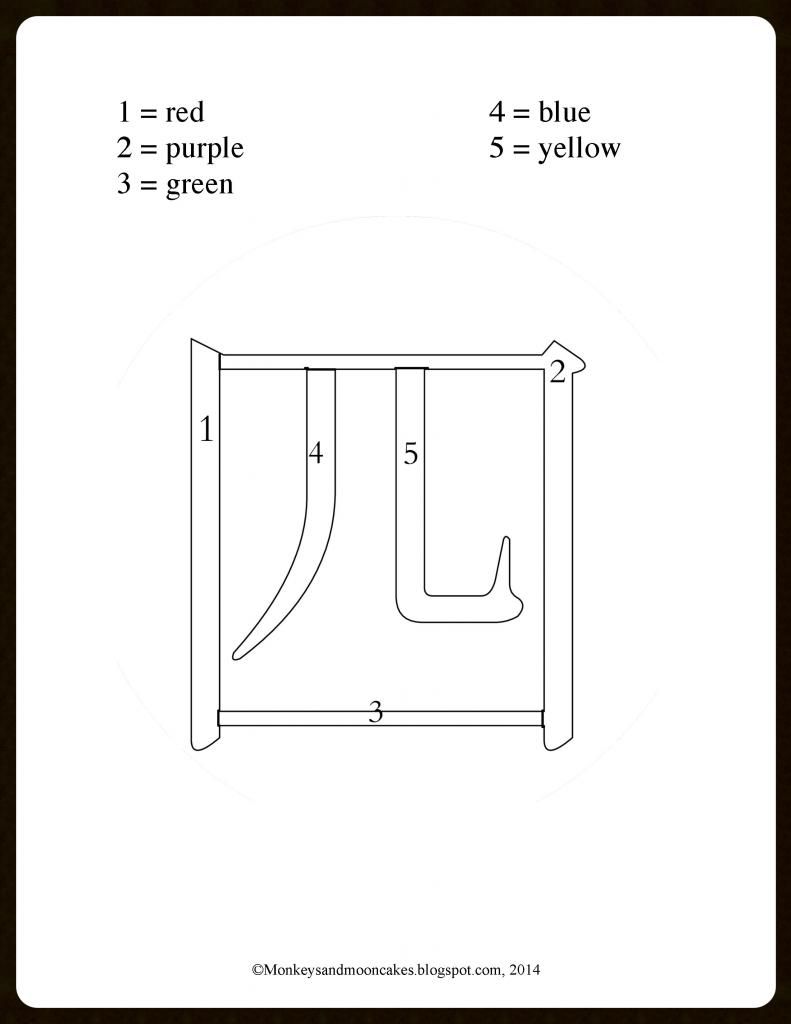


    2.  Color-by-number characters

  • Create a color-by-number character--either draw one by hand or make one using Word and PicMonkey (see my tutorial here). 
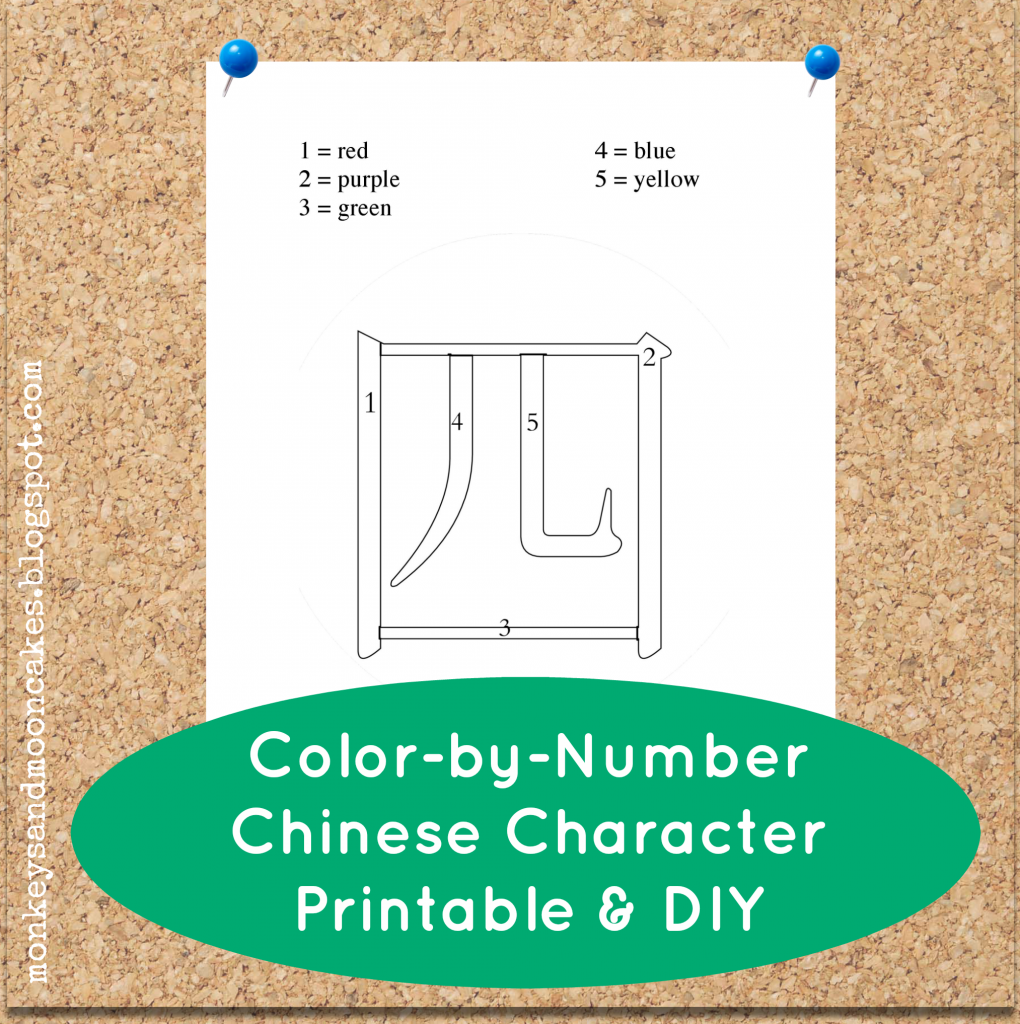
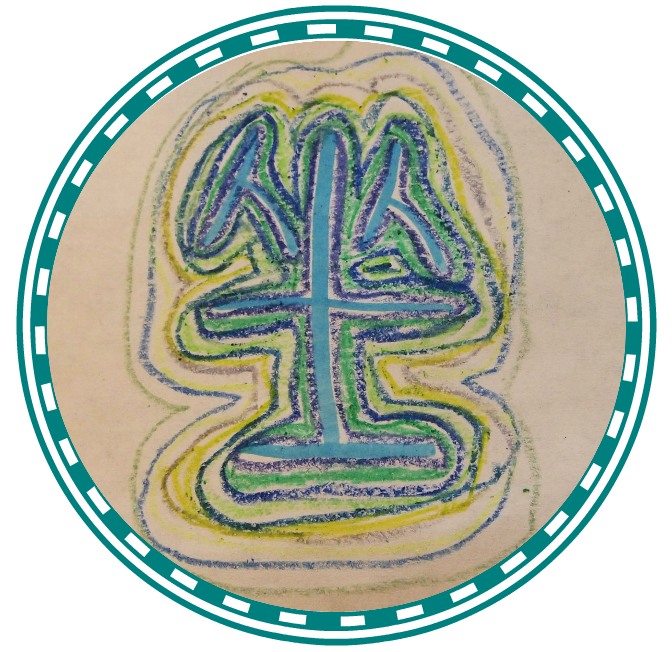
  • Click here to download the color-by-number page (pictured above) for the number four (四).
  • Grab some crayons and color the strokes of the character. 

*********************************************************************************
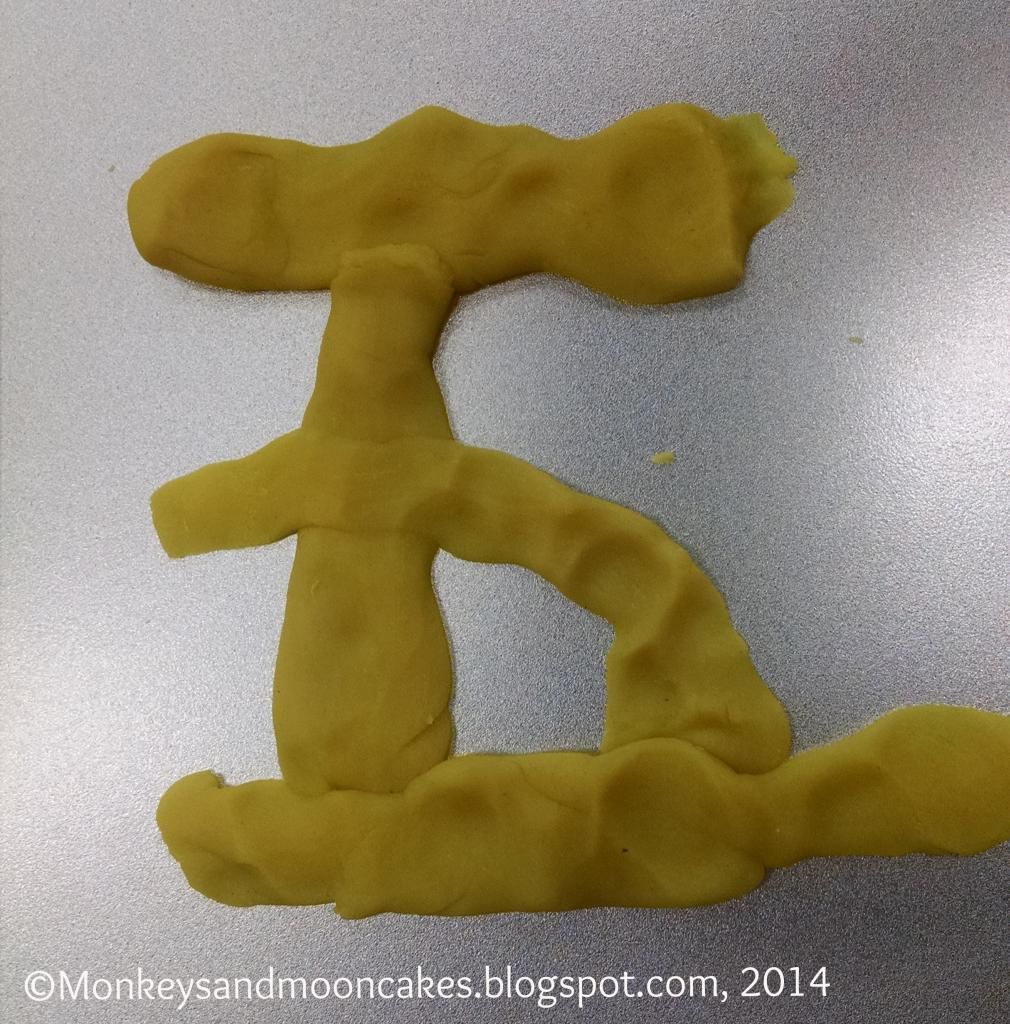


 3. Play dough characters

  • Form a character out of play dough by rolling "snakes" for each stroke and then assembling the strokes, or by mushing the play dough in to shape. 
  • Tip: Use a cookie sheet (we used small pans from the dollar store). These make clean up super easy and keep the play dough from rolling on the floor (which was important for us because we were using the library for our class!)

What type of pre-writing activities do you do at your home?

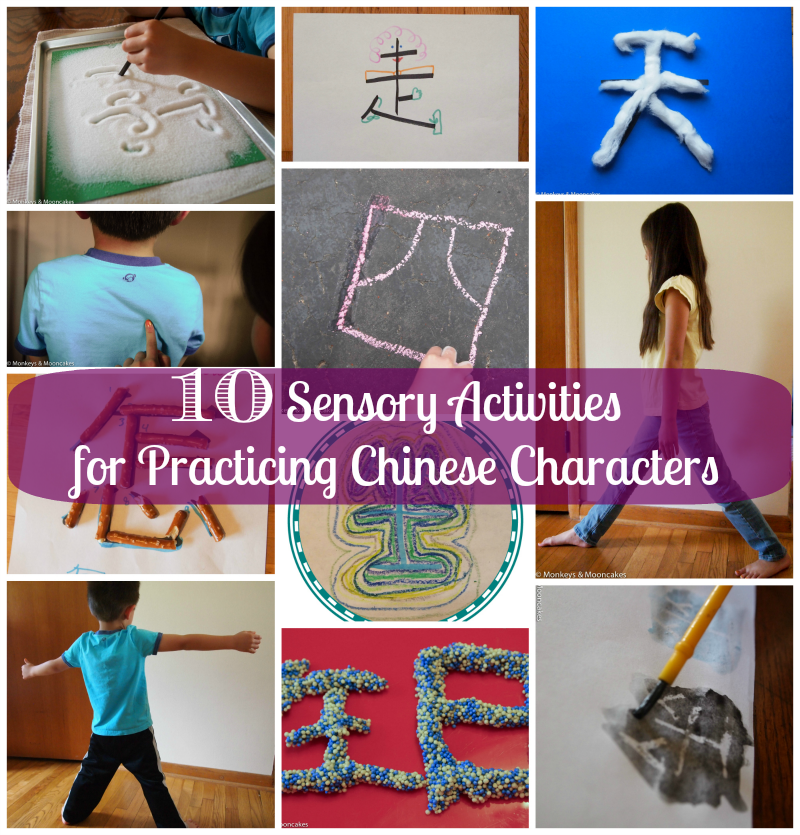
Check out my post 10 Sensory Activities for Practicing Chinese Characters for more ideas for character practice (including ideas that involve writing!). 
post signature

Friday, November 14, 2014

Color-by-number Chinese Characters: Free Printable & DIY


Earlier this fall, I searched for some pre-writing activities that could reinforce the Chinese characters I was introducing in an after school class I was teaching at my kids' school.

When I couldn't find exactly what I was looking for, I adapted an old standard: 


I discovered that the color-by-number idea works pretty well with beginning Chinese characters. And even better: it was accessible to the little ones in my class who were just getting used to writing with a pencil.

Click here to download the snazzy color-by-number printable above. I've numbered each stroke of the character (4, sì), so each stroke should end up a different beautiful color.


*****************************************************************************


If you want to make your own color-by-number Chinese character, here are 2 ways you can do this:


The first way is what I call the Easy Peasy Draw Your Own method.It's just as it sounds: Hand-draw your own color-by-number character. This is doable, even if you are just beginning to learn Mandarin. 

  1. Go to the dictionary at yellowbridge.com. You can input your word in English, Chinese characters, or pinyin. Then, after you've found the character you're looking for, click on "stroke order" to see how to write the character. 
  2. Write the character in outline form. 
  3. Section off the strokes, and number the sections.
  4. Write in your number/color designations (i.e. 1=yellow).
And Done!


************************************************************************


If you want a little more technical finesse in your final product...Turn it into WordArt!


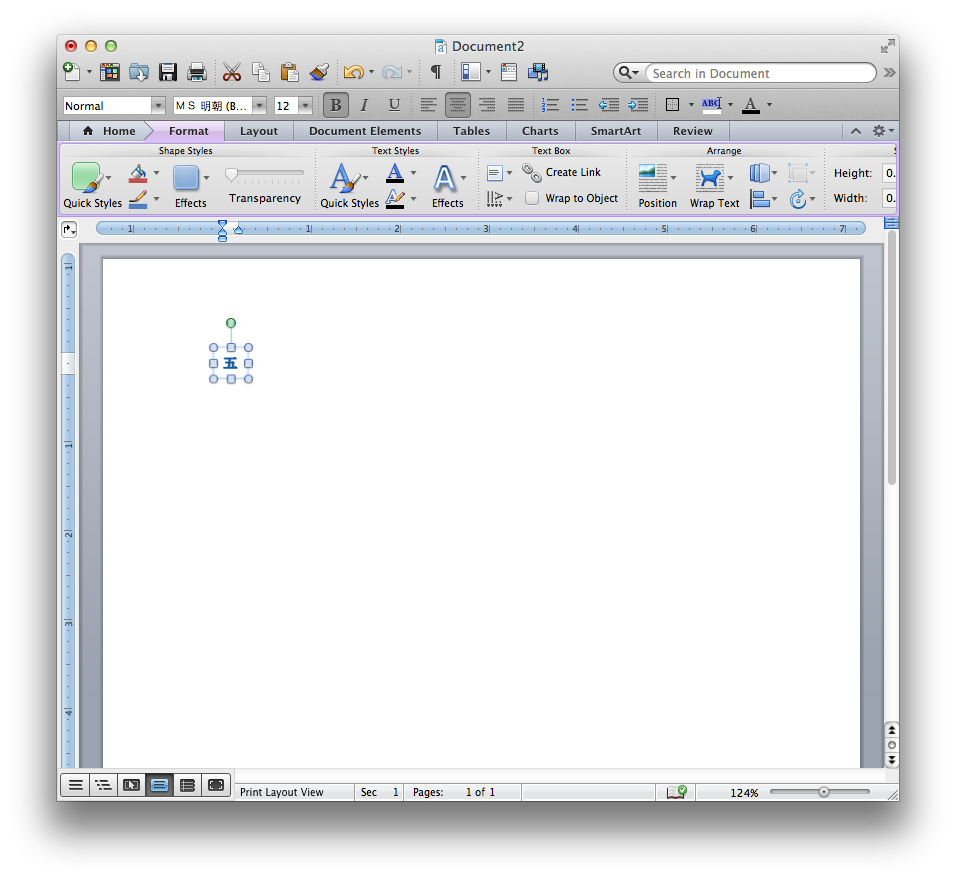
1.  Using your Chinese input on your computer, type your character in a new Word document. 

-->If you do not have Chinese input, you can type the pinyin into Google Translate, copy the Chinese character from Google Translate, and paste it into a Word document.

-->If you want to get fancy, choose a different Mandarin font for the characters. I used Hannotate TC Regular because it looks like handwriting.

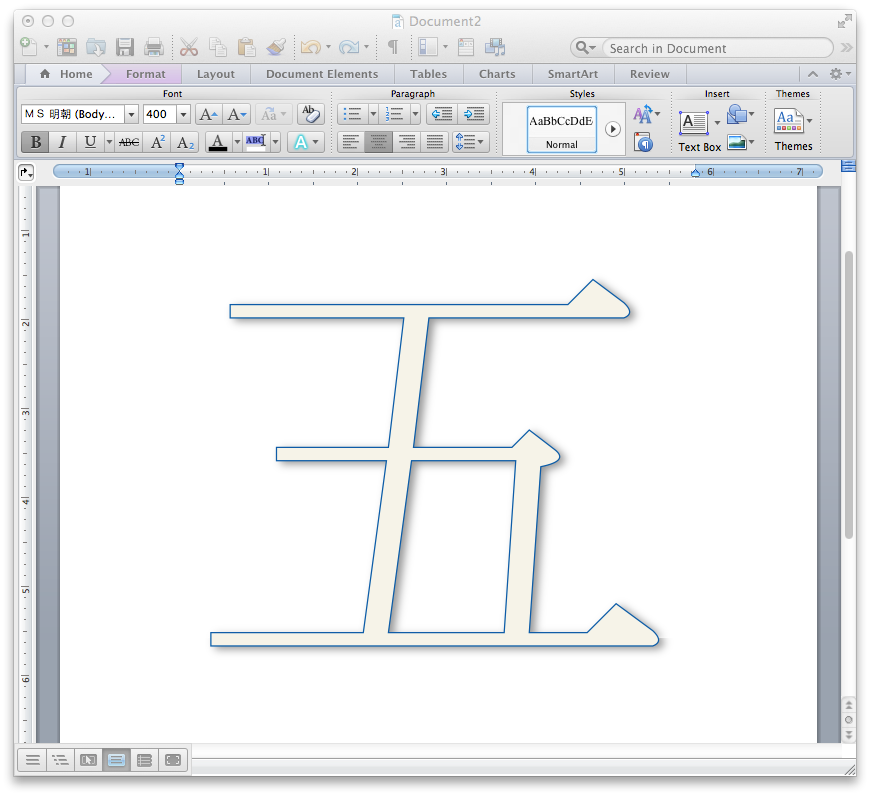
2.  Highlight the character you just typed or pasted in the Word document. Select "WordArt" under the Insert menu. You should now see the Chinese character that you typed in outline form.

-->This may look different on your computer depending on if you're using Mac/Windows and how recent your operating system is. Check out this link from Microsoft support to walk you through inserting WordArt in a Word document.

3.  Adjust the style of your WordArt according to your preferences in the WordArt/Formatting toolbar. Again, the location of this toolbar will be different depending on your computer. Refer to the Microsoft Support page if you get stuck. 

4. Adjust the size of the new WordArt according to your preferences. I resized mine to 400 pt. You may have to expand the size of the text box to accommodate the bigger size. 

5.  Now you have a choice to A. save, print, and then hand draw all the little dividing lines in to make it a color-by-number, or B. save as a PDF and upload to PicMonkey where you can do this on your computer.

-->If you choose Option A, well done! Enjoy your new, snazzy Chinese character outline.

-->If you choose Option B, very nice! Please read on for further instructions. 

6. The next step is to convert your PDF to jpg. There are lots of free PDF to jpg converters online. I'm not an expert here, but take a look. 

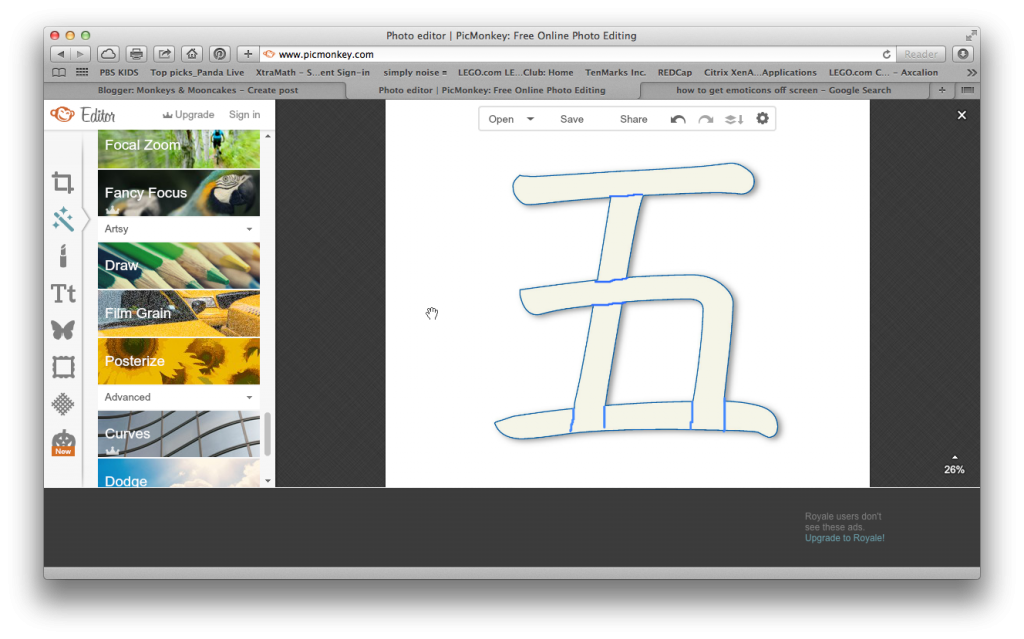
7. Once you have converted and saved the WordArt character you created as a jpg, go to Picmonkey.com, choose "edit" and upload the jpg. 

-->If you're not familiar with PicMonkey, it's awesome!!! It's a online photo editing tool. I use their free tools, but you can also pay a fee to access more tools (they're not paying me for this promo--I just really love the website=)

8. After you have uploaded your jpg, choose the tool on the left side of your screen that looks like a tube of lipstick and scroll down the list of tools until you see "draw"(under "Artsy").

9. Adjust the brush size and color according to preference, and then draw in any dividing lines (to separate strokes).
10. Next, click on "T" (for add text) and click on the "add text" button. When the text box appears, choose a font and type in the numbers that will dictate which color to use when your little ones color in. Position and resize as you see fit.

-->You will have to add a new text box for each number. 

10. Once you are finished, save to your computer.
And Done! You now have a nifty color-by-number Chinese character image that you can use in any document, using "insert picture." 


What pre-writing activities do you use in your home to teach Mandarin?

post signature

Sunday, September 7, 2014

Mid-Autumn Festival Moon Craft DIY

Mid-Autumn Festival (中秋节, Zhōngqiū jié) is tomorrow--Monday, Sept. 8th!  

We like to celebrate this Chinese holiday by reading stories about Chang E and Hou Yi (The kids like the version in Moonbeams, Dumplings, & Dragon Boats best=), nibbling on mooncakes or mooncake cookies, and staying up a little later than usual to gaze at the moon.

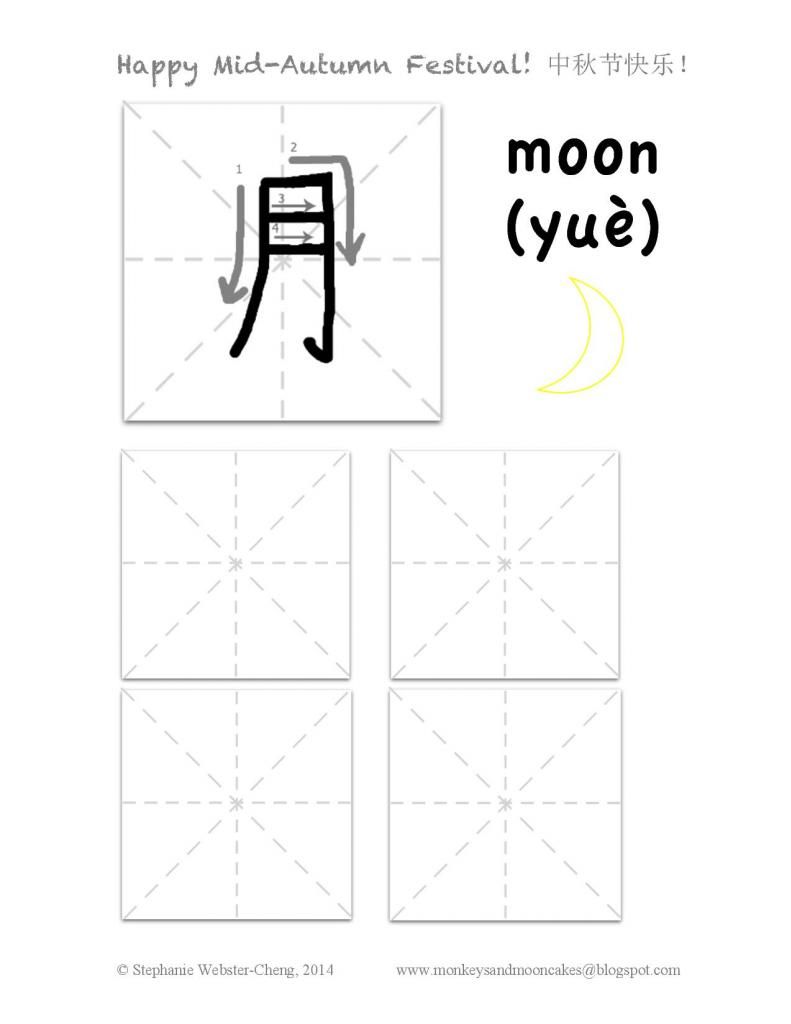
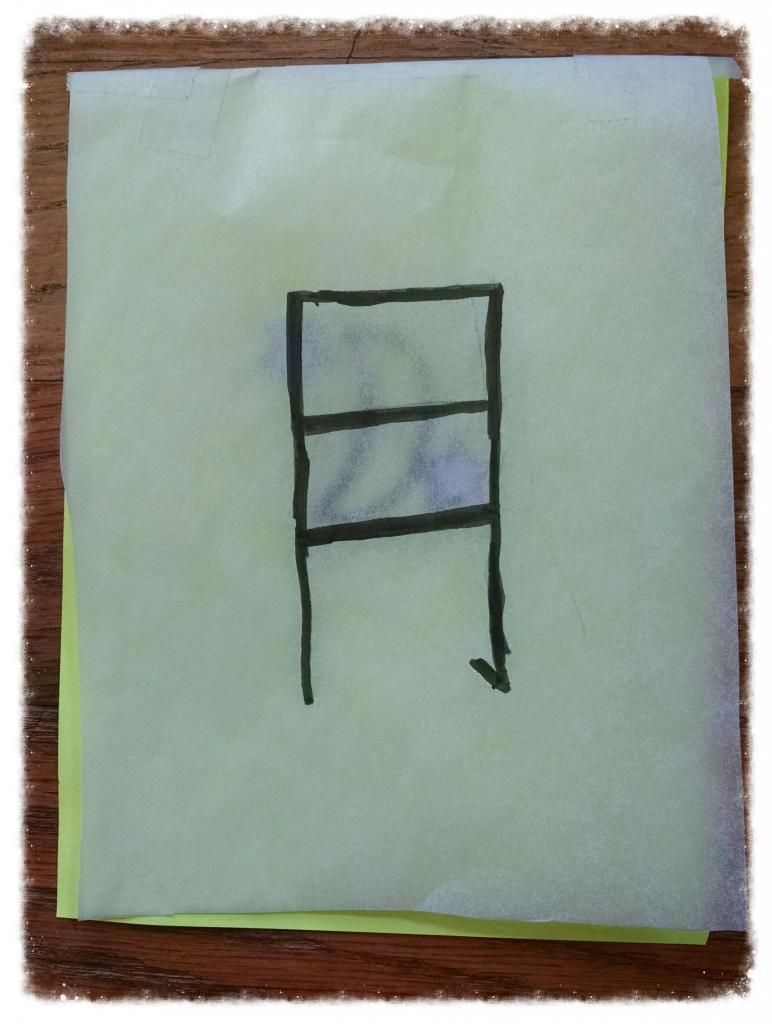
This year, I shared about the holiday with Monkey #1's 4th grade class. They listened to a story, nibbled on moon cakes, and learned how to write the character for "moon" (月,yuè).
Click here to download this printable. 

Before sharing with her class, I scoured Pinterest and Google, looking for creative ways for the kids to practice writing this character. 

The criteria were: 
  • must be simple (5 or fewer steps; 5 or fewer minutes to complete)
  • must use few materials and not be messy 
  • and most important of all--must be interesting enough to a 4th grader that it will help them remember how to write the character and what it means. 
And...with 60 minutes left on the clock...this is what I came up with:

Materials: 
tracing paper
bright card stock or construction paper
magic tape
big sharpie
scissors
star stickers (optional)
Step 1
:  
Cut a piece of tracing paper in half or quarters (depending on how large you would like your "window"). My tracing paper was 8X11 so I cut it in quarters to get the most "bang for my buck."

Step 2: 
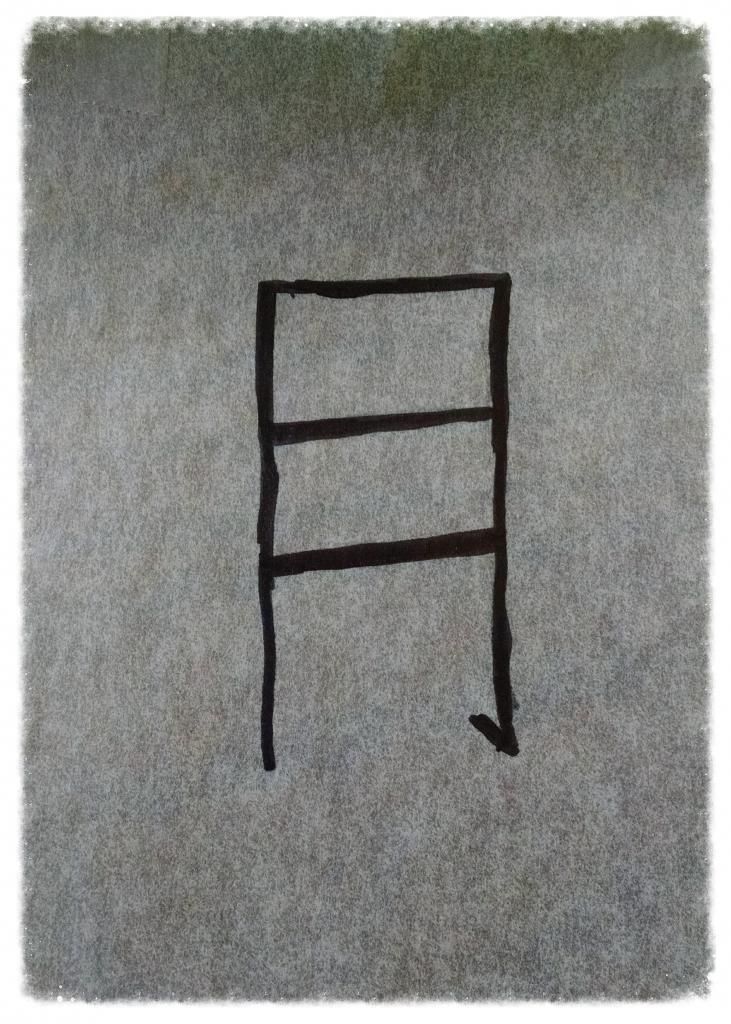
With a thick sharpie, write the Chinese character for moon on it (see above printable for instructions). It can be as large or small as you want.


Step 3:
Cut a brightly-colored piece of construction paper or card stock to the same size as your tracing paper. 

Step 4: 
Tape the tracing paper to the top of the card stock, using a piece of magic tape.

Step 5:
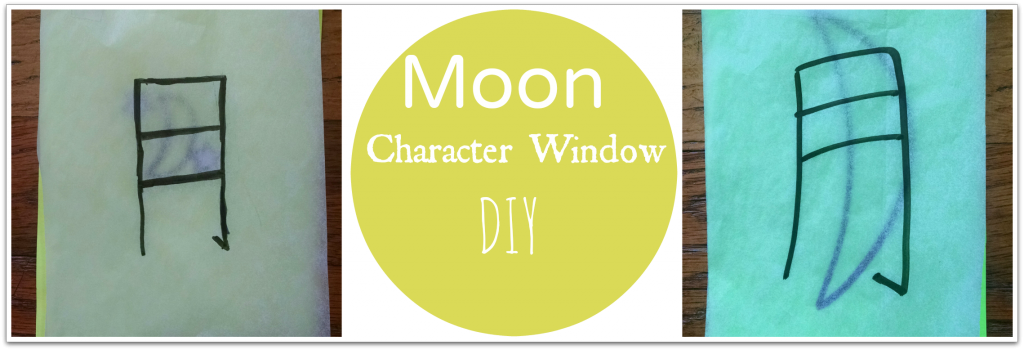
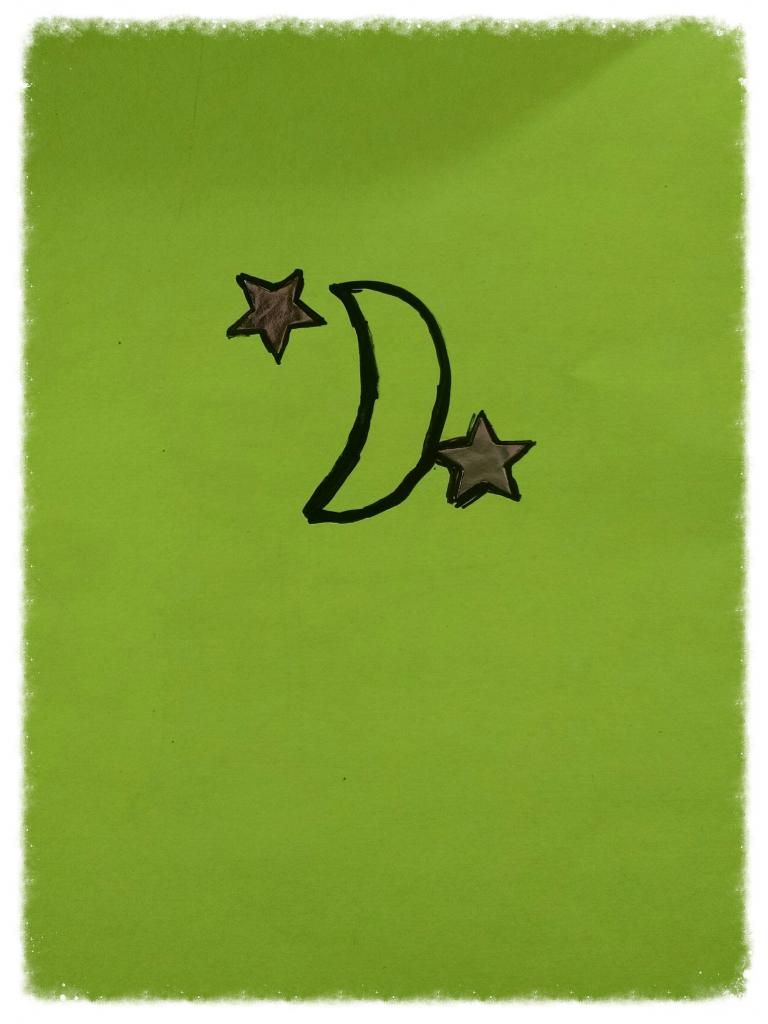
Noting the location of the character, draw a moon with a sharpie on the colored card stock. Your moon can appear behind the entire character (like the one below, left), or just appear in the top half of the character, as if seen through a window (below, right). 
And done!


Simple?  Yes!
Easy to remember?  Yes!
Fun for a 4th grader? Let's just say, the neon paper helped=)


Wishing you a very Happy Mid-Autumn Festival! 中秋节快乐!

post signature

Tuesday, August 26, 2014

Back-To-School Printable:

How to Write Numbers 1-10 in Chinese Characters

If you're just joining me here at Monkeys & Mooncakes, Welcome! I'm so glad you're here. Click here to read a little about this blog, or continue reading this post for a great back-to-school printable. 

It's hard to believe that we are already in Week 2 of Back to School! While the big kids are in class (and the little one is napping), I've been working on curriculum for a K-2 Level 1 Mandarin class I'll be teaching later this fall. 

This week I combed the web for character practice printables that showed both stroke order and direction. I was totally surprised when I couldn't find anything that fit the bill, except of course, for some websites that offered printables that I could download for a hefty yearly membership fee--Yikes! The cheapskate in me was not ready for this.  

So, I decided to use my new-found love of Picmonkey and make them myself. And because I want other people to have access to this resource, I am sharing them with you!

Click here to download. 
FAQ
What's included in the printable? 
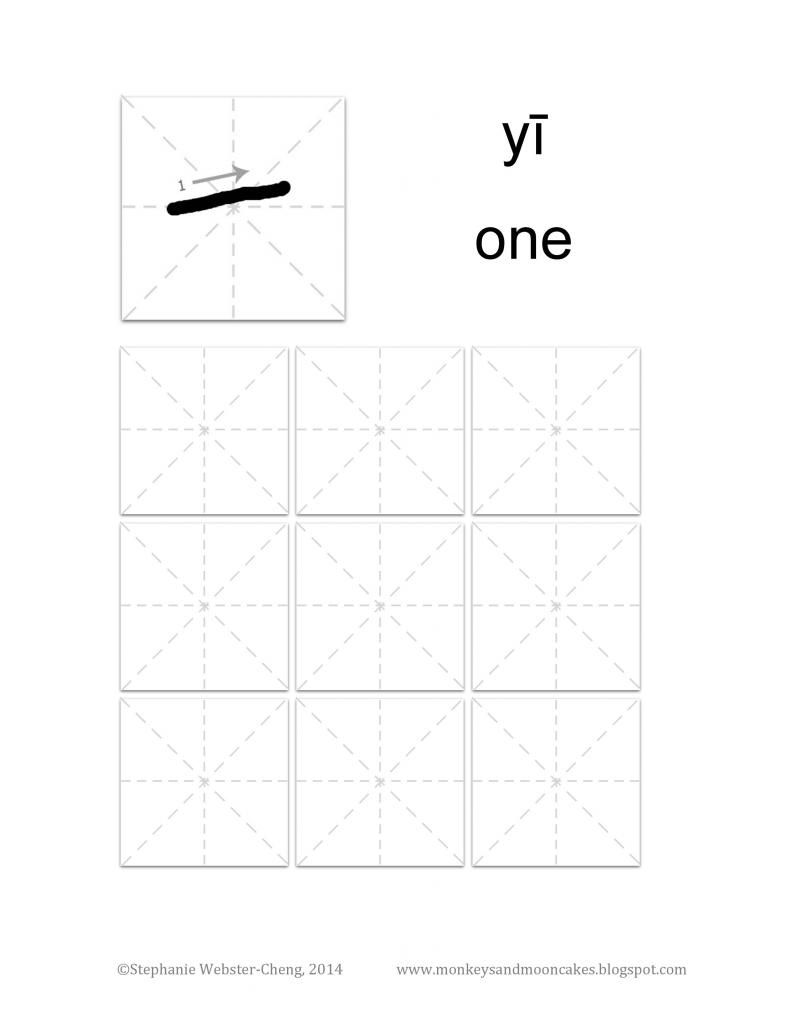
  • 1 practice sheet for each number 1-10.
  • Stroke order and direction of the stroke is shown for each character.
  • Guide lines are shown to give student a general sense of where to place each stroke.
Why numbers 1-10? 
  • With 5 or fewer strokes, these characters are great for beginners. 

Why don't the characters look like Chinese calligraphy?
  • This printable is not intended for calligraphy practice. I decided to show Chinese characters as if written with a pencil or marker (like your kiddo or student will be using).  
Why is stroke order and direction important?
  • Some people don't think that stroke important is important, as long as you are able to write the character. While this is a valid point, I think that having a standard way of writing each character helps with muscle memory. 
Why are they only black and white? Where's the pizazz?
  • I did this so they would be easy (and inexpensive) to print. 

What do you think about this printable? Will you use it in your home or classroom?
post signature

Monday, July 21, 2014

Practice Your Chinese Characters! Beach Edition


One of our favorite beach activities is writing in the sand. Names, secret messages, long squiggly lines--there's something just plain fun about a long blank canvas of wet beach sand that resets itself with each crashing wave. 


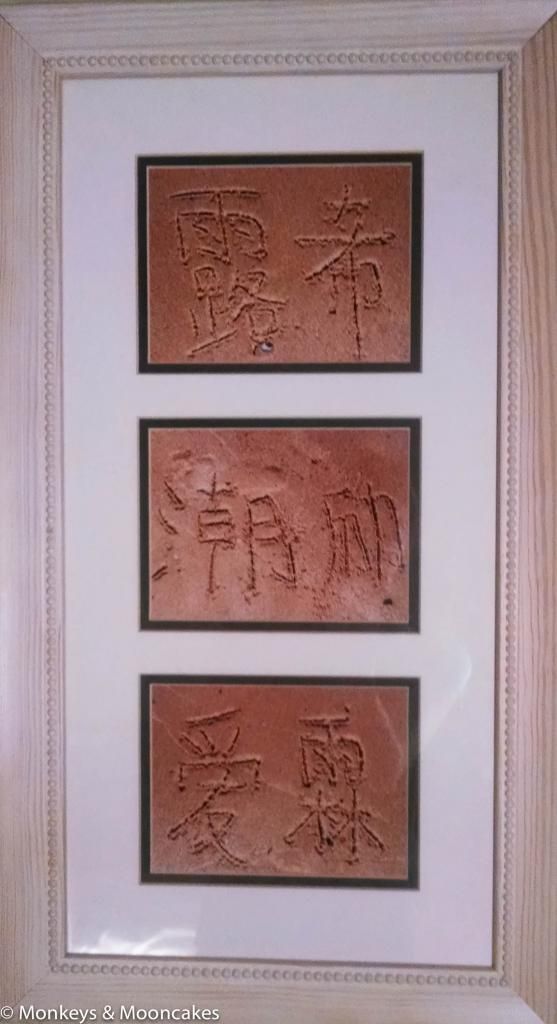
On a recent beach outing, Monkey #1 and I practiced writing Chinese characters (family names) in the sand. She practiced her Chinese name, 露希 Lùxī--literally "dewdrop, hope", and I practiced her brother's, Cháolì--"tide, encouragement," and sister's, Àilín--"love, heavy rain."  


Monkey #2 would have joined in the fun, but he was too busy throwing his body into the crashing waves--it was a good wave-jumping day. 

Can writing in the sand really be that fun? It was. We had to rush to finish the two characters that made up each name before the waves washed them away, leaving us giggling (because we could never seem to finish them in time) and staring at a wet, blank canvas ready for more sand writing. 


What I love about this activity:

1.  The act of writing Chinese characters in the sand is tactile. You feel each stroke as you carve it in the sand. This repetitive carving process helped the characters "stick" in my memory.

2.  As you write these large characters, you focus on each component of the character. 
As I wrote Monkey #3's Chinese name (above, right), I found myself speaking the parts of the characters: hand, roof, friend; rain and forest. This helped me really learn how to write her name (something I should know as her momma=)  
     
3.  It is a challenge! Monkey #1 and I raced against the waves--trying to carve full names before the waves washed them away--and lost almost every time. 


Variations: 

Play with a friend and race the waves. See who can first carve their full name or another set of characters (legibly) before the waves wash them away. 

Which materials work the best? We tried sticks, beach grass, and gnarled roots.

Take photos of the sand characters--turn them into memories to hang in your home. I'm working on this (on the right) because I'm obsessed with beach photography. 

Instead of writing in the sand, form your character with found items from the beach. Monkey #1 used bits of seaweed, beach grass and stones to form the first character of her name.

What Mandarin learning activities are you doing this summer
post signature

Wednesday, May 21, 2014

How to Learn Mandarin Outdoors with Sidewalk Chalk

Welcome to Monkeys & Mooncakes! So glad you're here.  
Spring is in full bloom at our house (lilacs, birds singing, ahhh...) and when the sun is shining, I move Chinese lessons outside. Our blacktop driveway becomes our blackboard, a giant canvas for creative learning.

It's a super simple idea but the change of pace is refreshing after weeks inside and the girls love drawing with sidewalk chalk. 

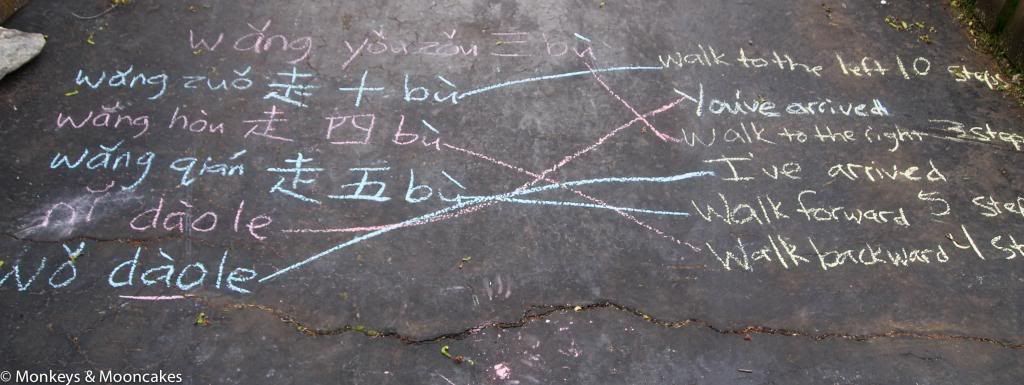
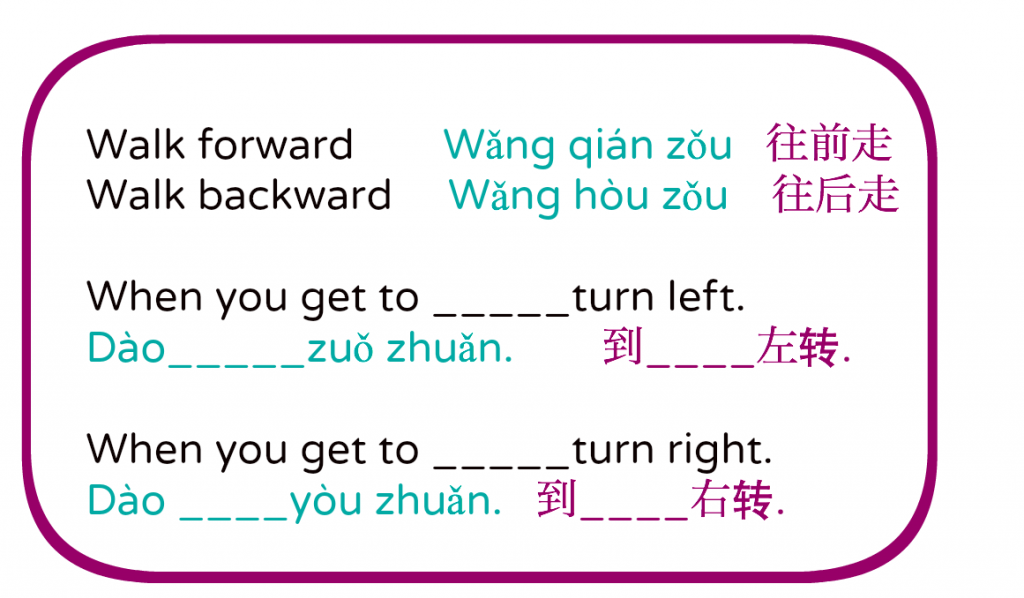
This past month I've been teaching a unit on basic directions: walk forward, walk backwards, turn right, turn left, etc... I designed a couple of simple outside exercises to help the girls review these phrases.

First, I drew a giant matching game on the top half of our driveway: match the directions in Mandarin (including both pinyin and the characters they know) to their English translation. Each of the girls were assigned a color (so they could work independently), and they read their matches out loud (in Mandarin) when they finished

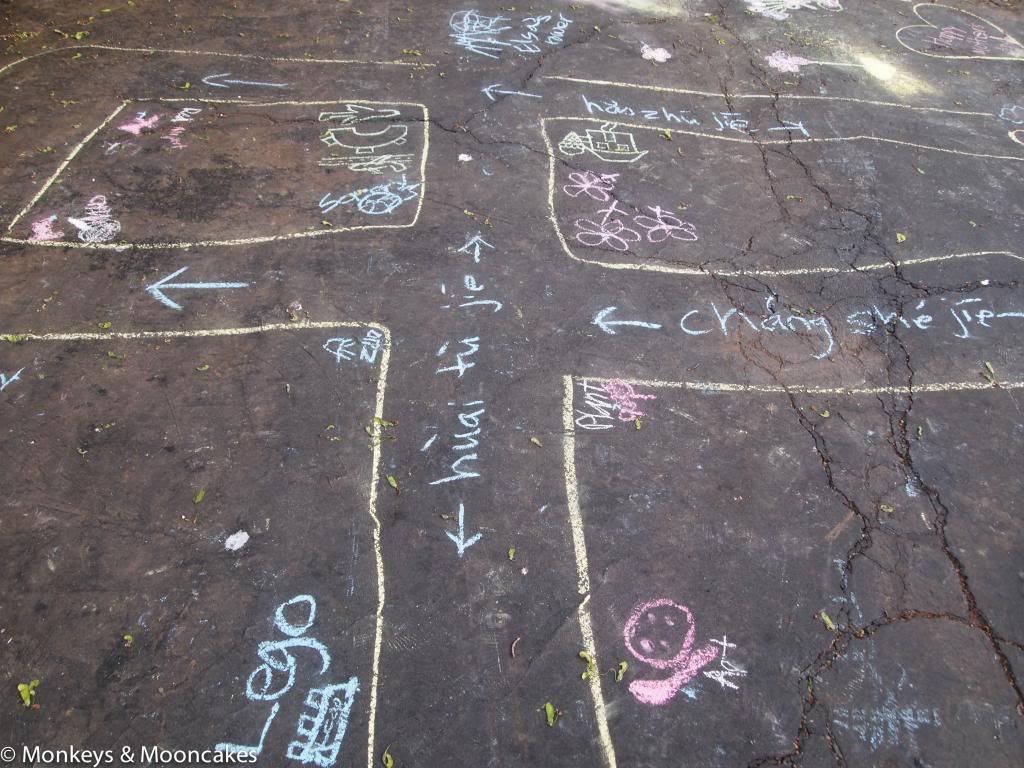
On the bottom half of our driveway, I drew a large city map, adding my own goofy street names in Mandarin (e.g. "bad bunny street," "long snake street," "good pig street"). 

I asked the girls to help design some buildings and landmarks on empty street corners, and they filled in a Lego shop, airport, flower store, and ice cream shop.
   

Then, the girls took turns navigating one other to a specific destination by giving directions to the robot. They called this "The Robot Game." 

When the robot arrived at its intended destination, the operator announced 你到了! (Nǐ dàole "You've arrived") The robot would then notice where she was standing, and answer the question, "你在哪里?" (Nǐ zài nǎlǐ "Where are you?")

What I loved about this activity:

  • It got us all outside and being outdoors is relaxing!
  • It required the girls to move around and interact with each other--actively participate in learning.
  • Sidewalk chalk leads to all sorts of unanticipated creativity--Look at the surprise the girls left me and my friend!

How do you bring Mandarin learning outdoors?

post signature

Monday, May 5, 2014

10 Sensory Activities for Practicing Chinese Characters

Lately I've been seeing all sorts of great ideas on Pinterest for multi-sensory activities that help kids practice writing letters, reading, and spelling by giving them fun, creative, and different ways to learn. 
Multi-sensory learning involves tactile (touch), kinesthetic (movement), visual (what we see), and auditory (what we hear). 

There are oodles of sensory activity ideas circulating on the web (Really...Go to Pinterest and search for "sensory spelling" or "sensory alphabet." Look at those great ideas!)

Multi-sensory isn't just a Pinterest trend, there's some real science behind it:

In 2008, two University of California researchers found that multisensory learning has found to be more effective for learning because it better approximates natural settings. Read more here
And then I began to wonder...

Here are some multi-sensory ideas for practicing Chinese characters:

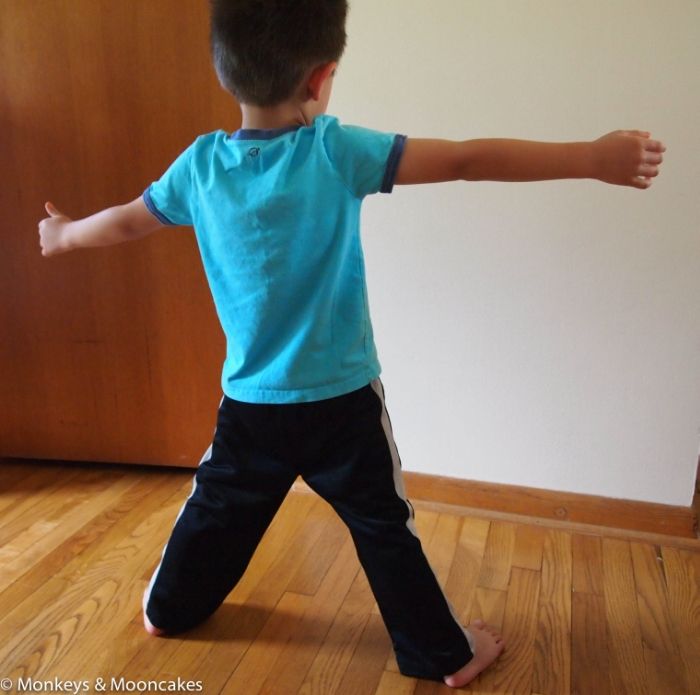
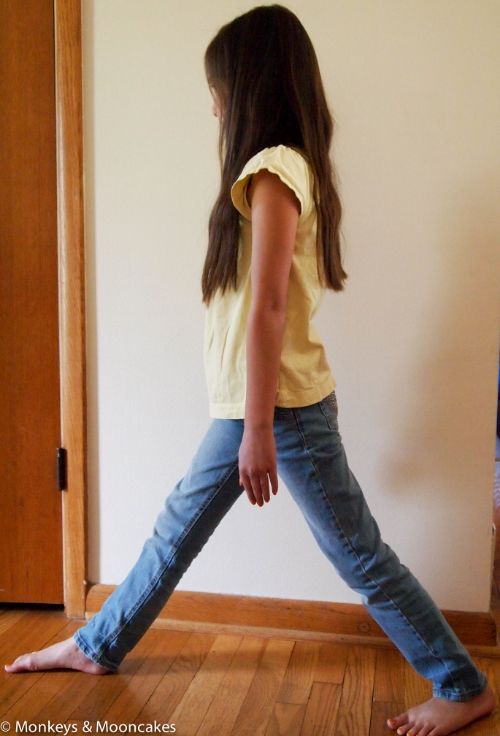
1. Form characters with your body.  Form simple characters like 大 (dà, big) or 人 (rén, person) using your own body.

For a challenge: Partner with friends to form characters with more stokes. How many characters can you form? 

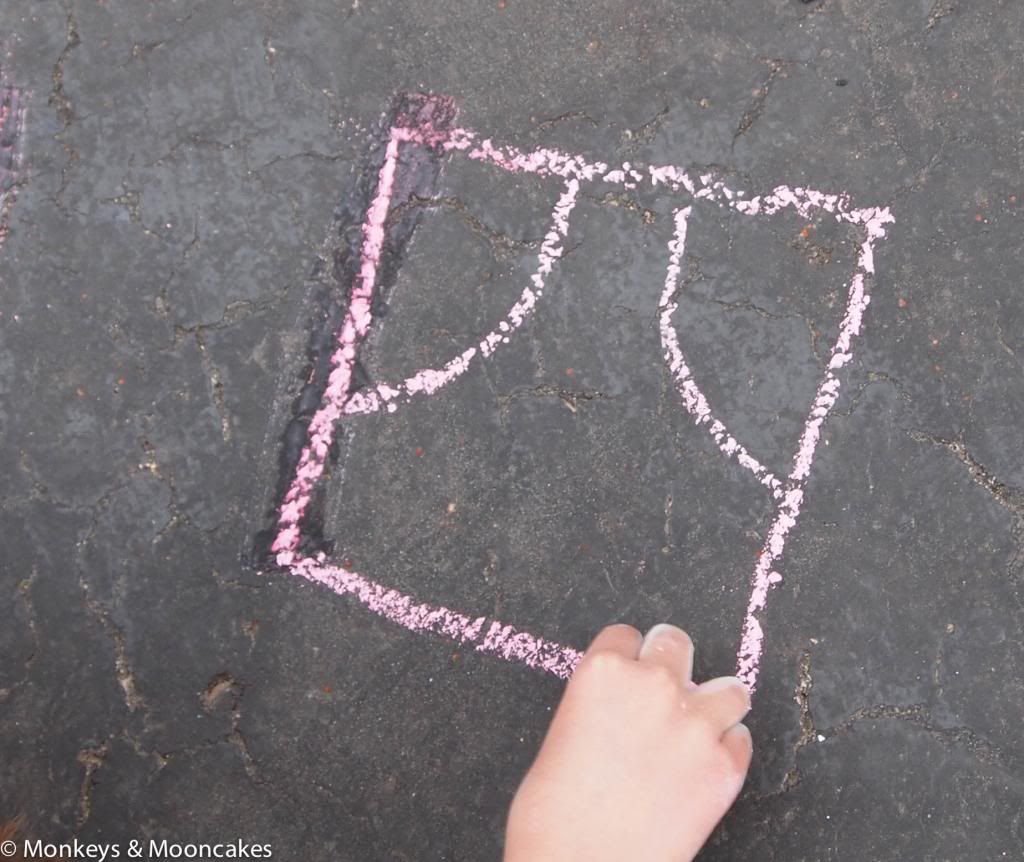
2. Sidewalk chalk characters.  Practice writing characters of all sizes on the sidewalk or a blacktop driveway. 
sì (four)
Make it a game: Partner with a friend to practice characters. If you chalk the beginning strokes, can your friend finish it?

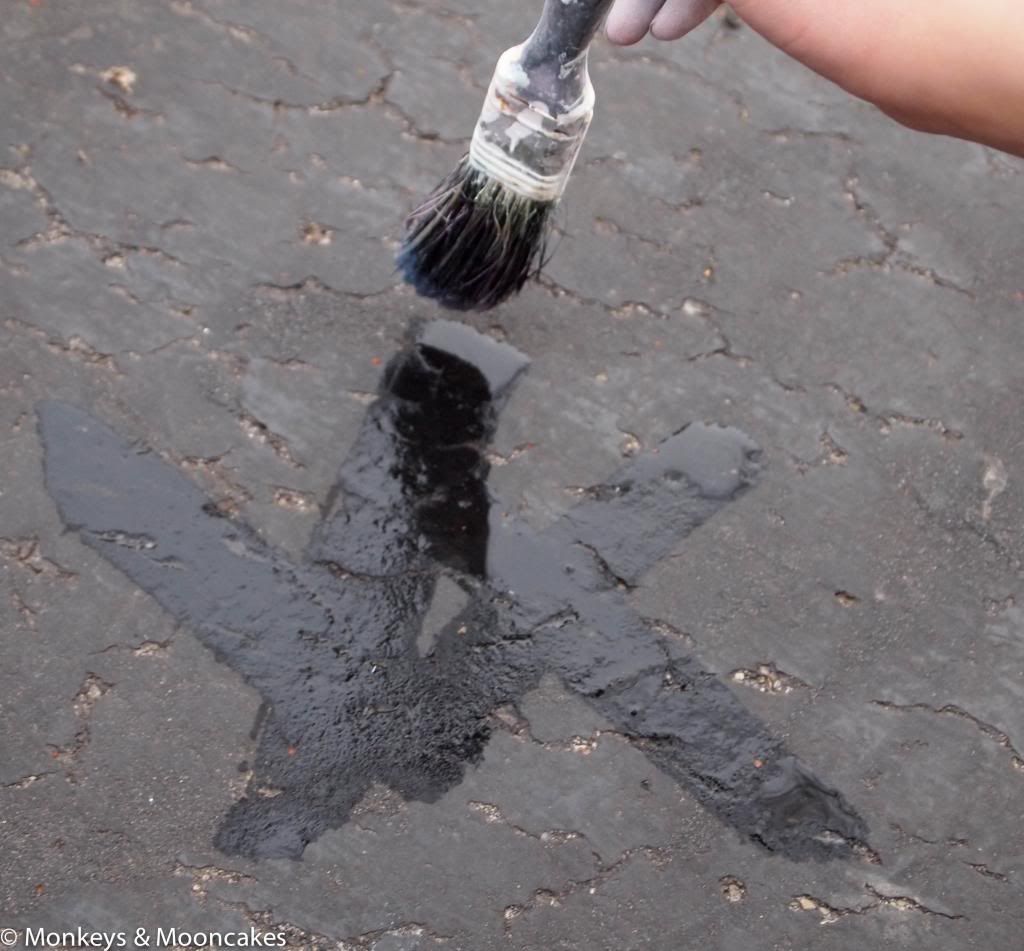
3. Paint characters with water.  Pretend you are practicing calligraphy in a beautiful park in China, and paint the characters with water and a big paint brush on blacktop. If it's raining outside, practice inside on a blackboard. 
nǚ (woman)
Turn it into art: trace over chalk characters with paintbrush dipped in water to give the characters a painted effect.

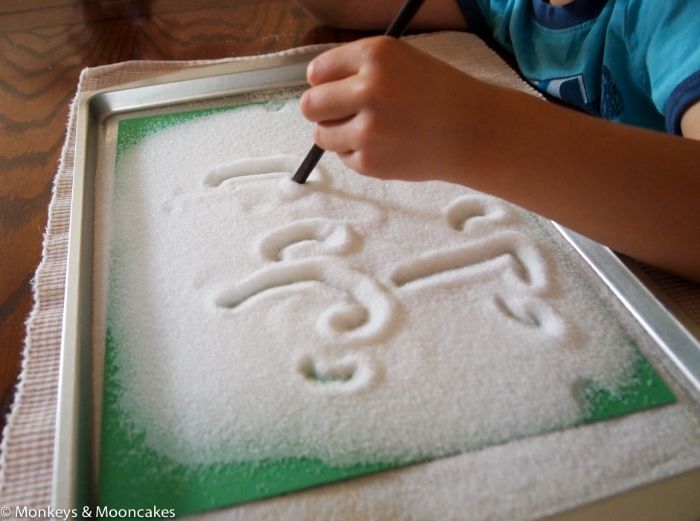
4. Write characters in a salt tray. Pour salt on to a cookie tray (I found these cute trays at the Dollar Store) and write the character with your finger or a chopstick.

xiǎo (small)

Note to parents: Salt can scratch your table's finish (yikes!)--so take this idea outside or cover up your pretty table first.
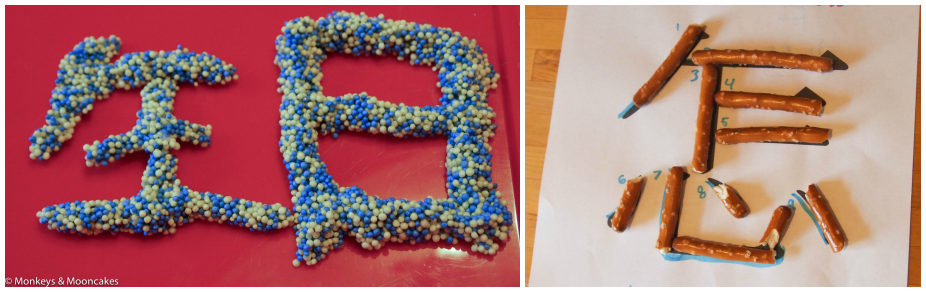
5. Form characters.  Form the character using play dough "snakes," wiki sticks, pipe cleaners, yarn--or if you're hungry, pretzel sticks licorice laces, etc... The possibilities are endless here. 
                shēngrì (birthday)                                                       zěn (how)
Helpful Hint: Print out a large version of the character to practice shaping around. Then, as a challenge, try it without the template. 

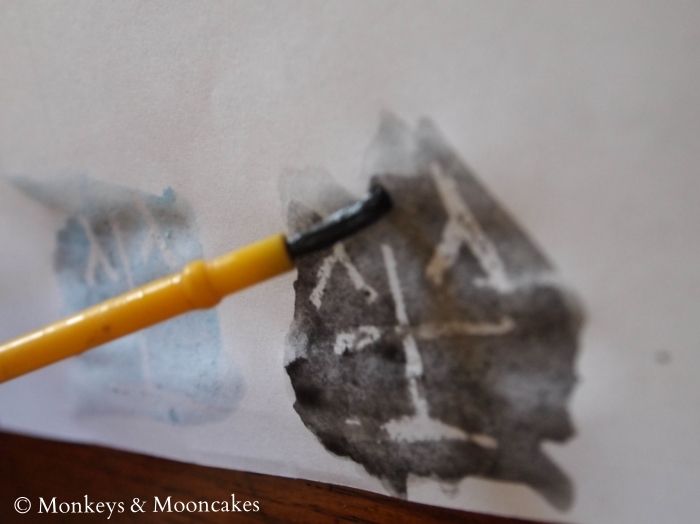
6. "Hide" characters by them on paper with a white crayon. Then paint over the hidden characters with watercolor paint.  Watch as the characters magically appear! We found that the characters were easier to see if we painted over them with dark colors. 
zuò (sit)
Make it a game: Write a secret message to your friend in Chinese and then let your friend magically decode the message with watercolor paint. 

7. Rainbow color characters. Trace over the character with crayons in all colors of the rainbow.
zuò (sit)
 For a challenge: tell your child (in Mandarin, of course!) how many colors or which colors to use.

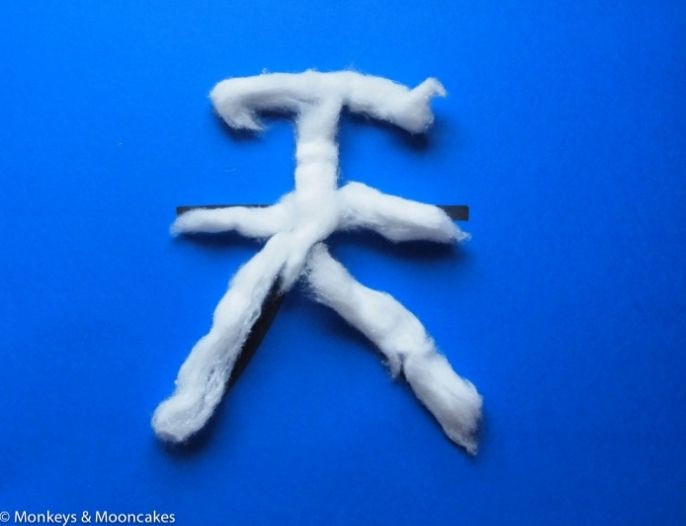
8. Decorate characters with cotton balls, plastic gems, beads, stones, anything that will help you remember their meaning. 
tiān (sky, heaven, or day)
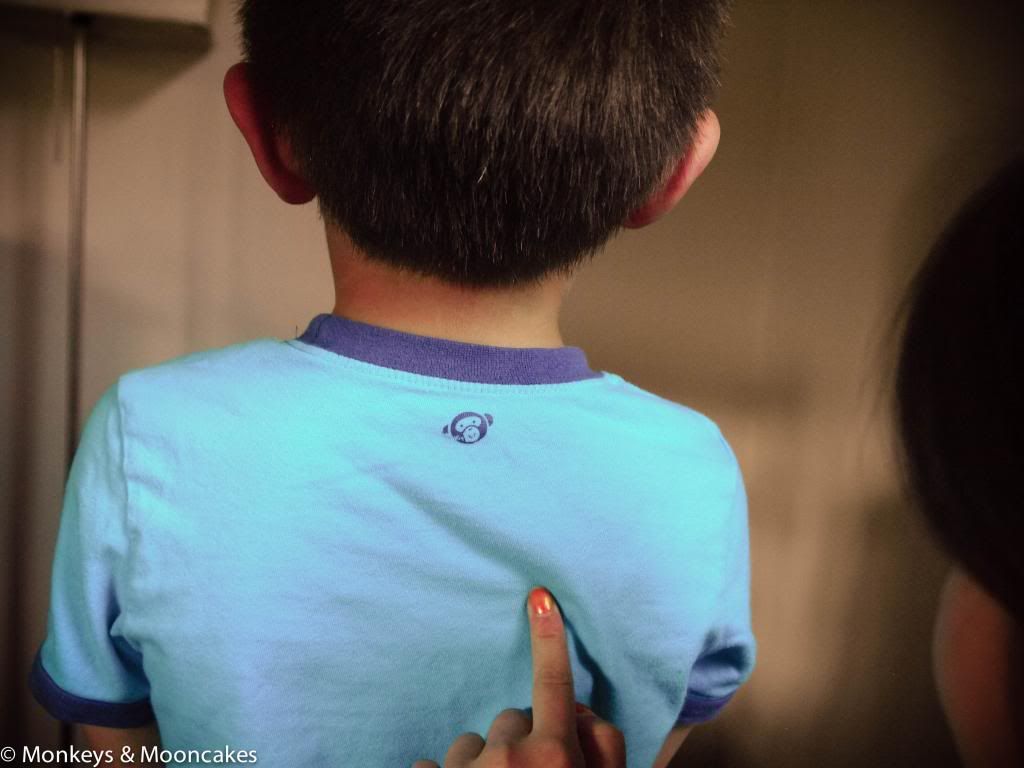
9. Trace characters on a friend's back or palm of their hand. Or draw it with your finger in in the air. Practice with 2 or 3 characters. Can they guess which character is being traced?

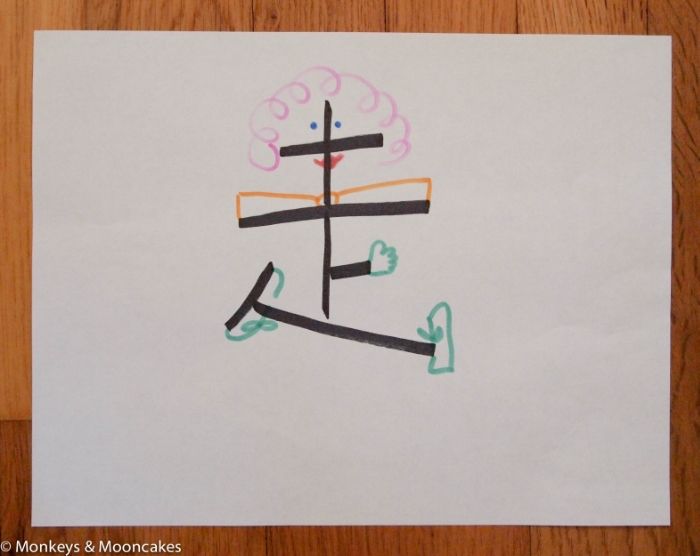
10.  Storytell characters. Ask your child to make up a story about the character and then draw the story on the character in order to bring it to life.  
zǒu (walk) 
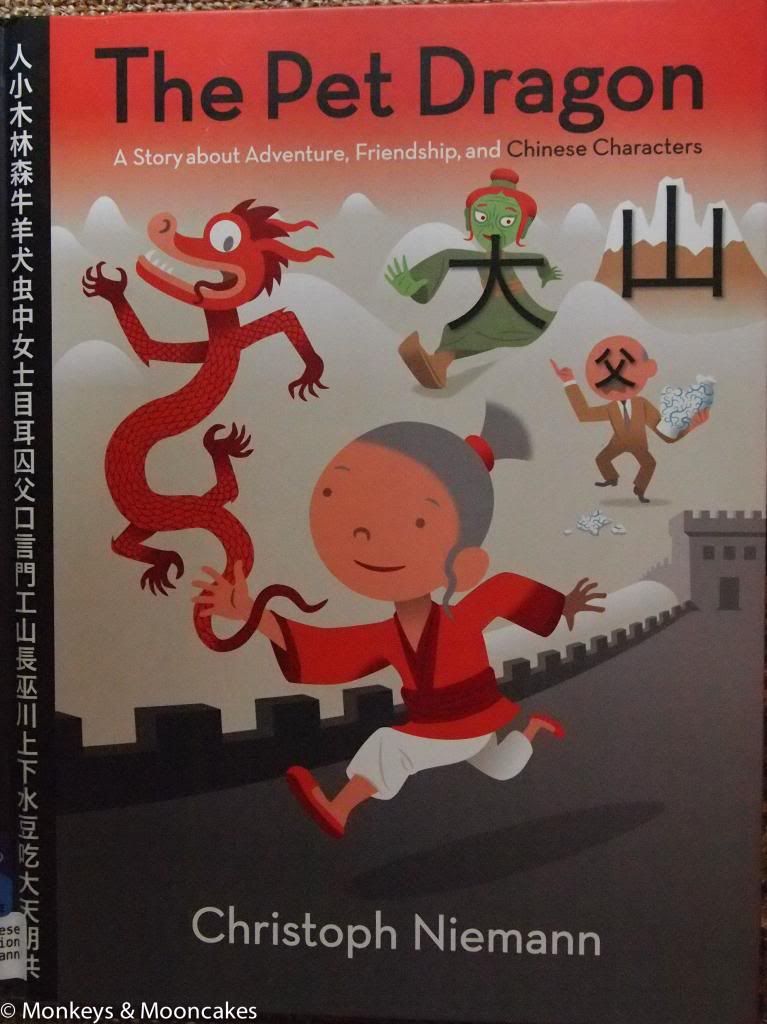
For inspiration: check out The Pet Dragon, a cute book in which graphic designer Christoph Niemann brings Chinese characters to life through his illustrations. 

Click here to read a review I wrote about this book on my old blog: Rice and Pasta, Please!


What types of multi-sensory activities help you practice Chinese characters?

post signature