I hope you all have had a wonderful Chinese New Years. We welcomed in the year of the Monkey last week (along with Valentines Day and the beginning of Lent--busy week!) with family dinners, performances in our community, making banners with friends, and wrapping jiǎozi with classmates. It's a wonderful time of year to share our love of Chinese language and culture with others.
Here are some great ideas and resources I've stumbled across, perfect if you are still celebrating the New Years (you have until Lantern Festival: February 22)
1. Make a Chinese New Year poster.
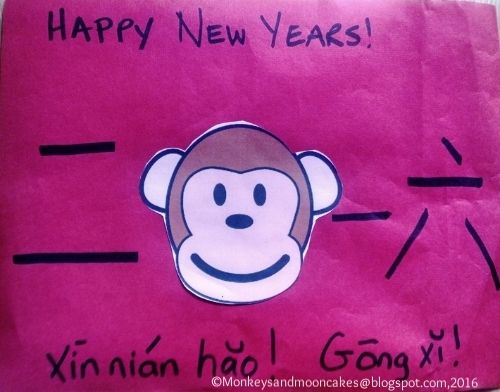
I saw this idea on Hubpages and decided to adapt it for my beginning Mandarin class who just learned how to write numbers one through six (below left)
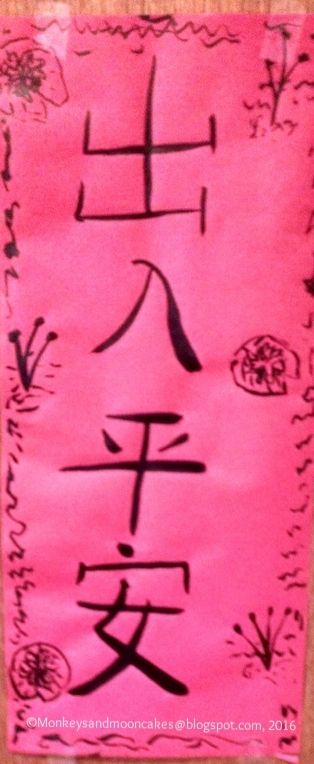
We painted the couplet 出入平安 (Chūrù píng'ān, Peace when you come and when you go)with calligraphy brushes and ink on red paper from our local school supply store. No calligraphy brushes? No problem! You can easily use sharpies (jumbo sized for big characters).
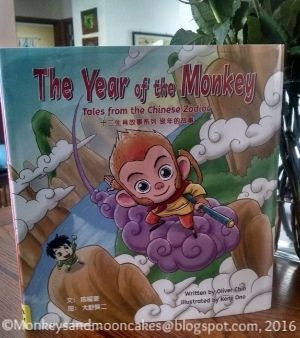
3. Read The Year of the Monkey,Oliver Chin's latest book in the Tales from the Zodiac series (Immedium: 2016)
About the book: The 11th book in this 12 book series, The Year of the Monkey tells the
adventures of Max (son of the famous Monkey King) as he searches to find his
fate.
What we love:
1. The
story is full of Monkey king action. If your kids like Kung Fu Panda, this
book will be a hit.
3.
It's bilingual! No pinyin provided, but if you can read Chinese characters, you
can read it in Mandarin.
4. Share Chinese New Years legends and traditions with friends through this cute video.
I stumbled across this cute and concise video produced by the fast-food chain, Panda Express (Nope, they didn't pay me=) when planning a Chinese New Year lesson for my beginning Mandarin class.
Super cute animation. It tells the origin of the Chinese New Year, the origin of the Zodiac calendars, and how the holiday is celebrated today. Check out Panda Express's CNY website to download free Chinese New Year printables.
5. Learn a New Years Song! Here are two of our favorites:
Gōngxǐ Gōngxǐ by BadaNamu
Sung in Mandarin at the beginning and then translated to English. If the verses are too complicated, learn the chorus: Gōngxǐ gōngxǐ gōngxǐ nǐ (Congratulations to you!), which is what you say to someone during the New Year.
Xīnnián hǎo ya (Happy New Years!) Mandarin lyrics and English translation posted here.
The holidays have passed, and although we haven't had a real winter yet (according to the kids), the winter doldrums have set in and we (...um..that would be me) have begun the countdown to spring.
My mother-in-law shared this great Mandarin poem that was used long ago in China as a way to keep track of the days between Winter Solstice and the spring planting season, The Number Nine Song (数九歌, shǔ jiǔ gē).
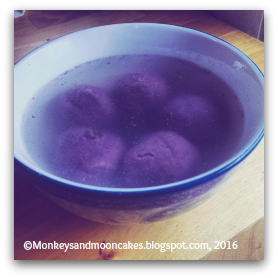
Winter Solstice(冬至, dōngzhì) is a Chinese holiday celebrated by family get-togethers and tāngyuán (汤圆), which are those wonderful glutinous rice dumplings with sweet or savory fillings (my favorite are black sesame paste), floating in a vat of steaming hot water. Yum!
Back to the poem:
Number Nine Song describes the changes in the weather that occur between the Winter Solstice and the beginning of the spring planting season from a child's perspective. Time is counted in increments of 9 days, so the "1st 9" in the poem refers to the first 9 days beginning from the Winter Solstice, the "2nd 9" the 9 days after that, and so on.
Good for intermediate students. Chinese poetry can be confounding (to say the least), but this is a pretty approachable poem for intermediate language learners due to its heavy use of numbers.
It's a riddle!Once you understand that the 9's in the poem refer to increments of 9 days, the poem can be used as a riddle. Have your kids figure out when the 1st 9, 2nd 9, 3rd, 9, etc... occur (Hint: Winter Solstice was December 22 last year).
Great lesson idea for Winter Solstice. Yup, it's already passed this year, but put it on the calendar for next year (December 21, 2016) and plan to eat some steaming hot tāngyuán (or eat those now just because you never need an excuse to eat tāngyuán).
You can hear it performed on a goofy youtube video. There is a goofy youtube videothat animates the poem's text (recited by children). FYI: the third line of the poem slightly differs in the video.
Let me start by saying that I've never been a fan of flash cards as a tool for learning Mandarin. They bring back memories of hours and hours spent falling asleep... ...er...memorizing Mandarin vocab as a student. I'm sure I benefited in some way from my flashcards, but they did not engage me in learning Mandarin the creative and active way I want my kids to learn.
So lately, I've been re-thinking flash cards, using them as a jumping off point for active and creative language learning.
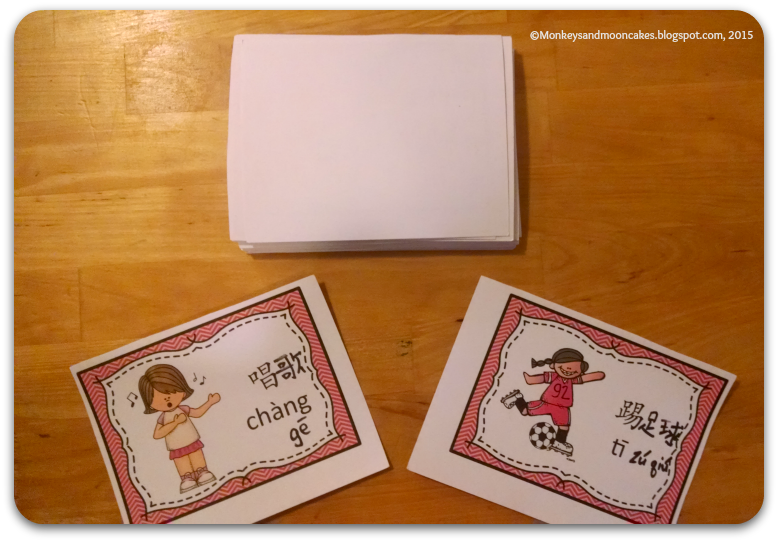
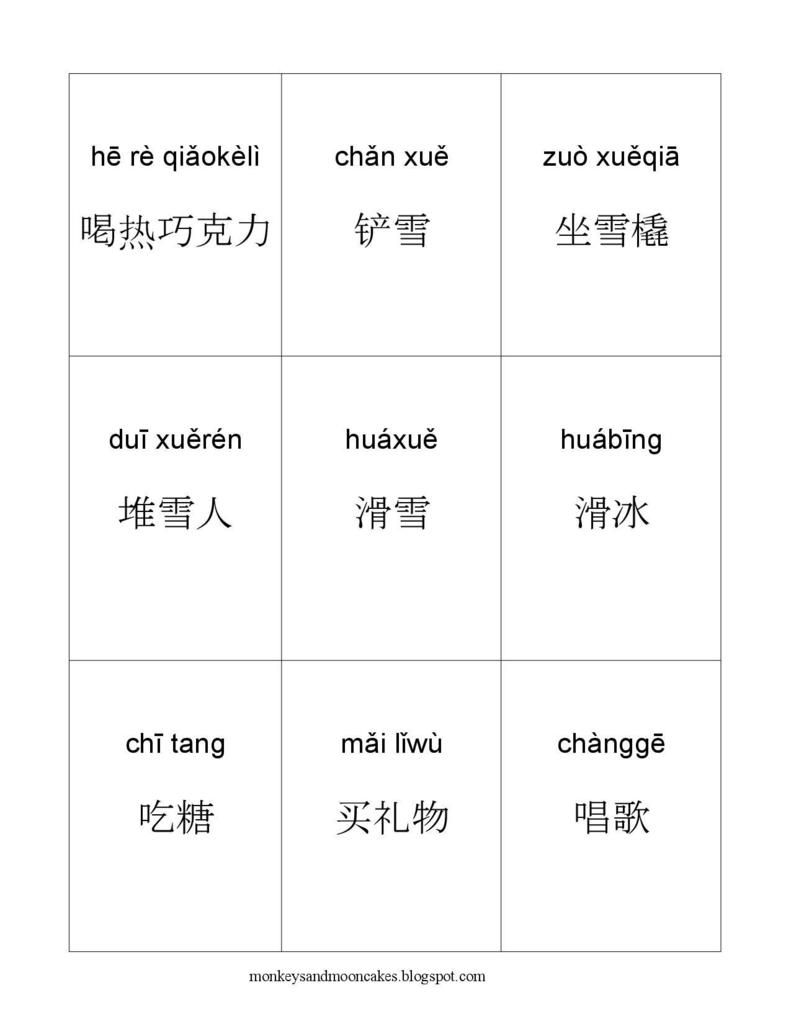
I downloaded this set of action word flashcardsfrom Teachers pay Teachers in effort to expand our verb vocabulary this fall. I liked the cute illustrations on the cards and that they included pinyin (they didn't include the often-used verb-object combinations though, so I wrote on them).
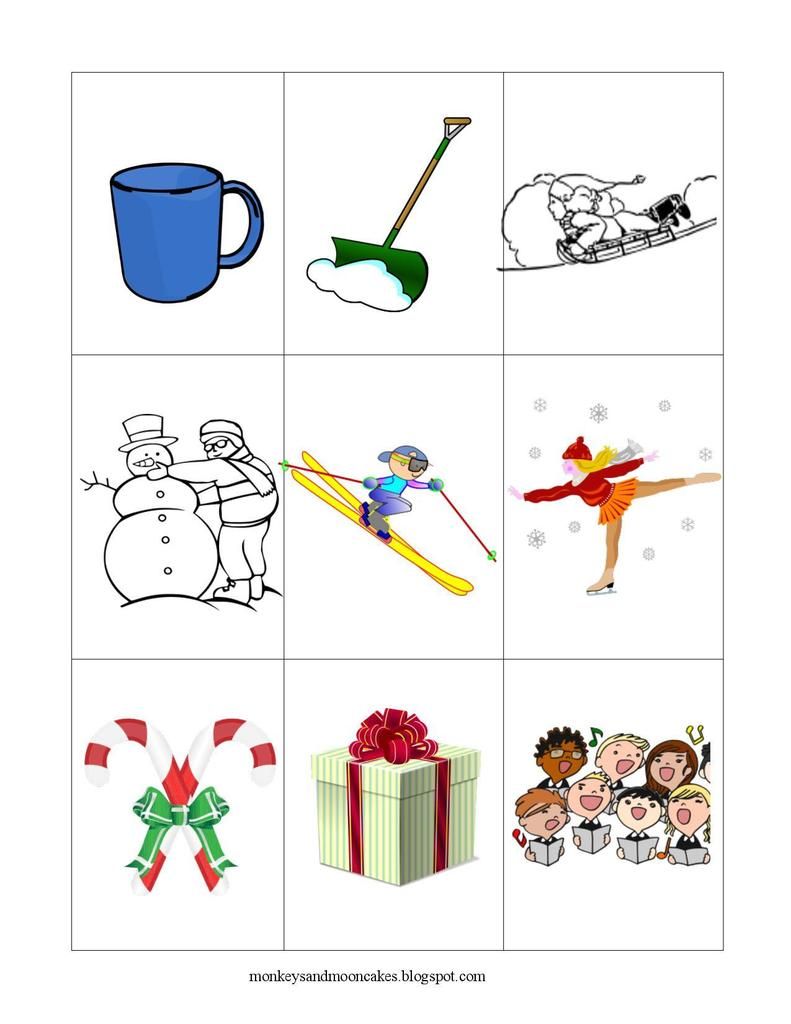
Each week, I've used this set of action cards in a different activity or game. Now that the girls are familiar with most of the vocab, I'm adding my own winter activity verb-object flashcards to the deck (Click here to download).
Read on for 3 fun activities and games that use flashcards in Mandarin language learning.
1-2-3 At a Time
This is a great game to play immediately after introducing a set of 10-12 new verbs. It's an active game for 2 or more players, which can result in fits of giggles.
Introduce a set of 10-12 verbs to your students. Have your students repeat the word in Mandarin after you, while simultaneously performing the action you've selected for the verb.
Once you have gone through the set, place the verb cards face down in a pile.
Choose someone to be the first "actor." Have them choose a card from the deck, and perform the action that goes along with the card they have chosen for the rest of the students, "the audience."
The "actor" must continue to perform the action until the "audience" yells out the correct Mandarin word that matches the action.
Switch "actors" and repeat the process.
Challenge:When your students become familiar with the deck of cards, challenge them by asking the actors to choose 2 cards (and perform 2 actions at a time) until the audience guesses both actions. If this is still too easy, try 3 cards (3 actions). The silliness of performing 2 or more actions at the same time (e.g. singing while drinking water) will make this game a hit with your kids and make the vocab stick in their brains!
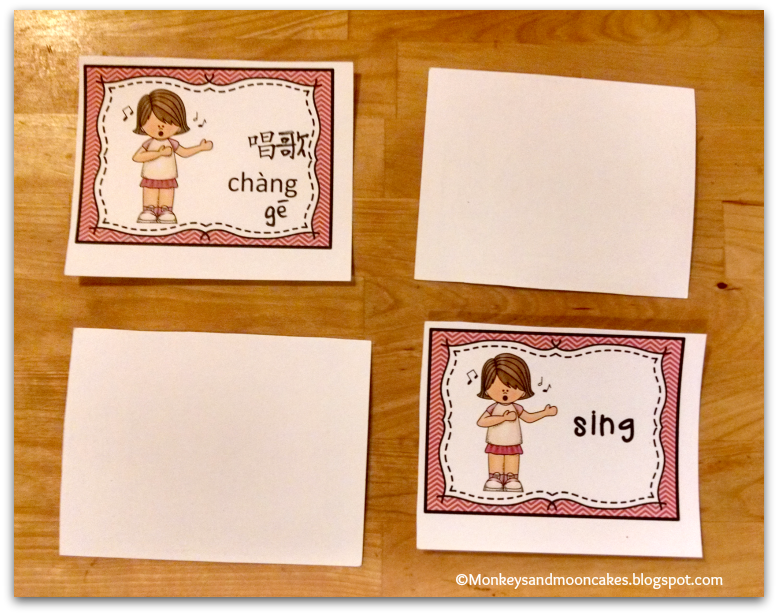
Memory Match
This is another great way to reinforce new Mandarin vocabulary. Play this game just like the well-known childhood game, except you'll be matching the pinyin action card to its corresponding English card.
Tips:
Start with a small stack of new vocab (6-10 action cards and their matches). When your students become familiar with these cards, add in a few extra sets of matching cards.
Each time your student takes a turn, encourage them to say the Mandarin word they choose out loud as a way to familiarize themselves with pronunciation.
Sentence Generator
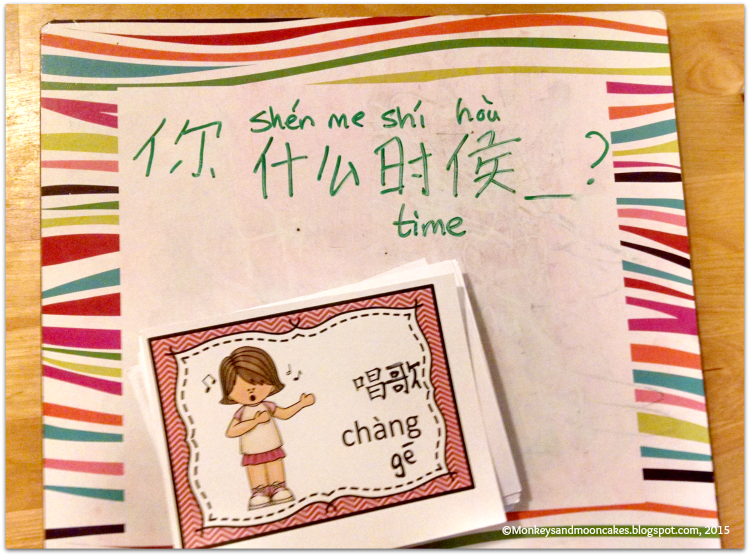
I came up with this activity after noticing that the girls, although familiar with the vocab we had been studying, were struggling to use the new words in sentences they generated by themselves. I decide touse the action flashcards as our "word bank" for a question and answer pattern we were practicing.
We placed the action flashcards face down in a pile, our "word bank.
The "asker" chose an action card from the pile and used it in the sentence pattern we were practicing, “你什么时候 (insert verb from card)?” (When do you ____? Nǐ shénme shíhòu
?)
The "answerer" responded with a truthful answer, or when they got stuck, we broke out another stack of time flashcards and used them to help generate a response.
That's just a snapshot of how we've been using flashcards lately. I'd love to know how you use flashcards in Mandarin language activities and games!
I've included both pinyin and Chinese characters for 9 Mandarin verb-object combinations related to winter activities.
Print on 2 pages to keep the illustration and translation on separate cards or print 2-sided if you want the translation to appear on the opposite side.
October flew by! And although we met for Mandarin class, I ran out of time to share what and how we learned---So sorry!
Since my last post, we have used the dry erase magnet boards a lot. At some point, I decided that we needed more writing space on the cookie sheet so I flipped the pan over and covered the backside with dry erase tape.
Now we have the best of both worlds: magnetic and dry erase!
So how are using these fabulous dry erase tape magnet boards to learn Mandarin?
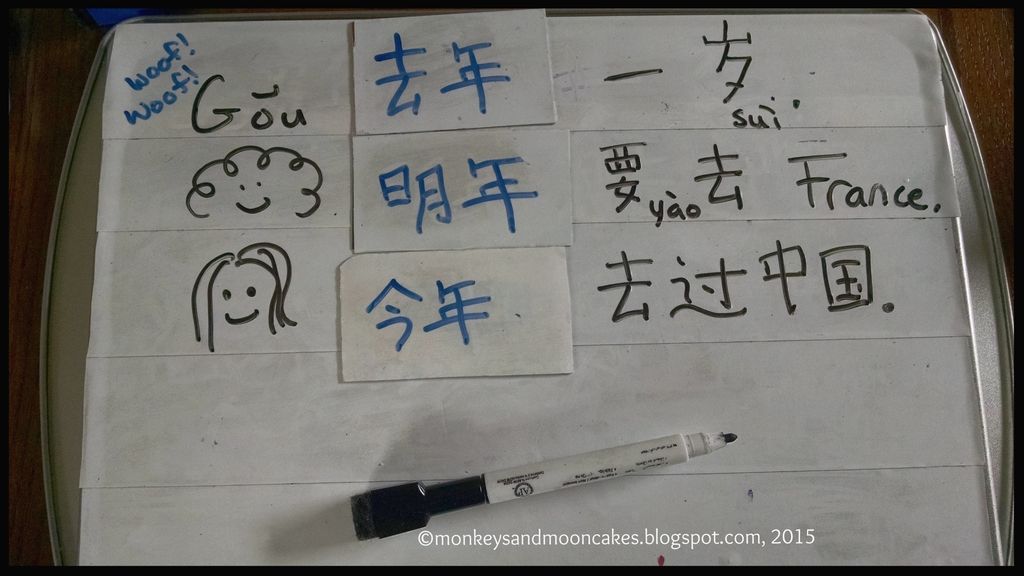
I adapted an activity from a few weeks back (which I will call "Fix the Silly Mistake") to reinforce some new time words I had introduced.
How we played "Fix the Silly Mistake"
1. I wrote 3sentences on the white board that were mostly correct, except for one word per sentence. This one word (written on a magnet) made the sentence false (and very silly).
For example, on the tray pictured above I wrote:
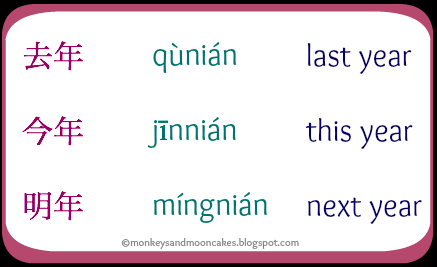
-Dog was 1 year old last year. (The dog in question was born 6 weeks ago)
-Girl A wants to go to France next year. (A was hoping to go to France this year)
-Girl L went to China this year. (L went to China last year)
Okay, so maybe these sentences don't sound very silly here, but trust me, the girls were laughing!
2.The girls first read the sentences: identifying and looking up any characters they did not remember, and translating the sentences to English to double check their comprehension.
3. Then, they discussed how to correct the sentence, and rearranged the magnet words so that the sentences read correctly.
4. Last, they took turns reading the corrected sentence out loud in Mandarin and saying the English translation again to double check.
**More advanced Mandarin language students may not need this translating step, but the girls needed this extra step to reinforce their comprehension. The take-away: We love the flexibility of the dry erase tape magnet board, providing endless possibilities for language learning.I love that it's small and portable too, great for our small house where language learning must be cleaned up to make space for dinner.
What are your "go to" tools for language learning?
Happy (a few days late) Mid-Autumn Festival! 中秋节快乐!Zhōngqiū jié kuàilè!
Did you see the Supermoon eclipse? I hope so! Unfortunately, we were clouded over and did not see one bit of that beautiful moon. No moon cakes for us either (my kids refuse to eat them).
But we did learn how to write "moon" (月亮, yuèliàng) and say:
"Mid-Autumn Festival is on Sunday"
中秋节是星期天。Zhōngqiū jié shì xīngqítiān.
&
"Mid-Autumn Festival is September 27."
中秋节是九月二十七号。Zhōngqiūjié shì jiǔyuè èrshíqīhào.
I noticed that my daughter and her friend were struggling a little with sentence order as they translated these English sentences into Mandarin. I remember going through this as a beginning Mandarin student -- knowing which words to say but struggling with putting them together in the right order in Mandarin.
Then, yesterday I saw dry erase tape at our local hardware store and thought, "How cool is that! What project could I make to justify buying that super cool office supply?"
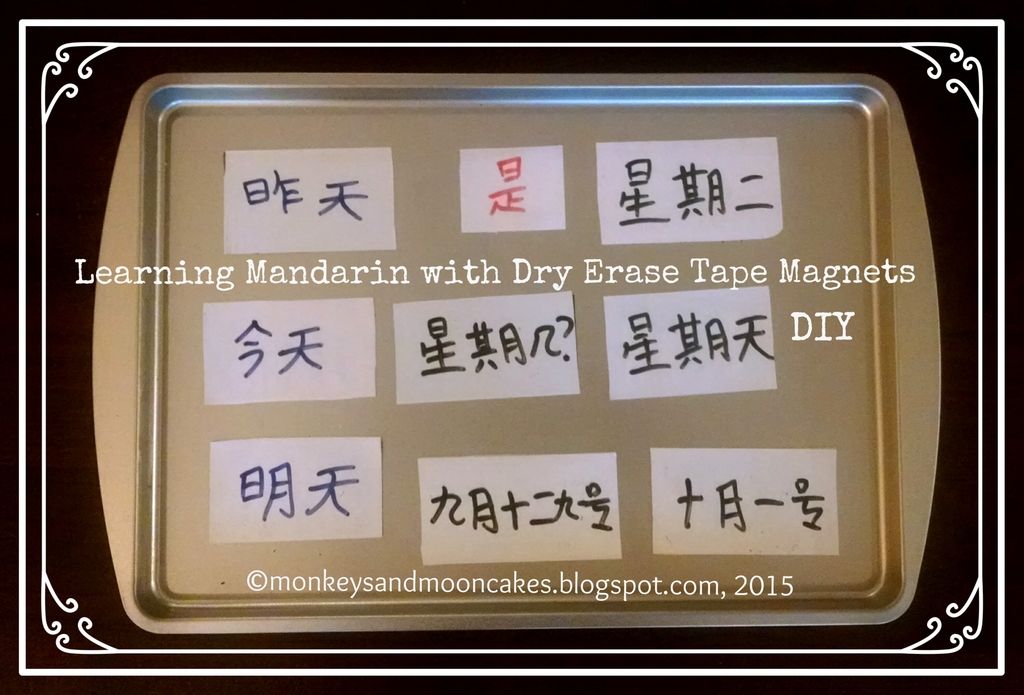
A few hours later, Eureka! I was making dry erase magnets on which I wrote Mandarin phrases and words that the girls could then rearrange to make sentence construction just a little easier.
magnets (I used the many freebies we receive in the mail from doctors, dentists, etc...)
cookie sheet (I bought mine at the Dollar Store)
dry erase markers
StepsThis is so easy peasy. Just 3 simple steps.
Stick dry erase tape onto magnets. It removes very easily as well.
Cut to size. The cheapo freebie magnets are thin and easy to trim down.
Write your Mandarin words and phrases on the magnets with dry erase markers and stick them to the pan. And done!
Now,here's how we used the magnets
I spoke sentences in Mandarin which the girls, then, had to piece together using magnets on the cookie tray.
I built a question out of magnets on the tray, and they had to answer it by swapping out the question word/phrase (i.e. 星期几? Xīngqí jǐ几月几号? Jǐyuè jǐhào) for the correct answer magnet or by writing the answer on a blank magnet.
I asked a question out loud that the girls then had to answer by: 1st--forming their answer with magnets on the tray, 2nd--reading their Mandarin sentence out loud, and 3rd--translating the sentence into English.
I used the magnets to form a sentence that had an error (i.e. Mid-Autumn Festival is on Friday. 中秋节是星期五。Zhōngqiū jié shì xīngqíwǔ), and then asked them to correct the error.
So that's what we did in a nutshell. I'm excited to explore other ways we can use this learning tool in our Mandarin lessons.
If you make dry erase magnets for your Mandarin learning, leave a comment below. I'd love to know how you used them!